


Assessment of genetic diversity of sweet potato in Puerto Rico
- PMID: 25551388
- PMCID: PMC4281141
- DOI: 10.1371/journal.pone.0116184
Assessment of genetic diversity of sweet potato in Puerto Rico
Abstract
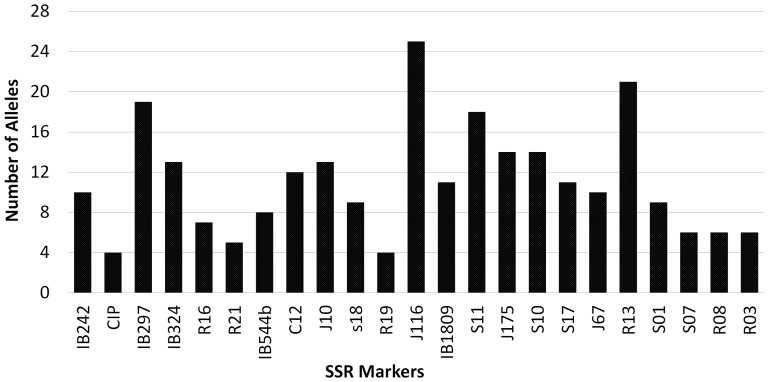
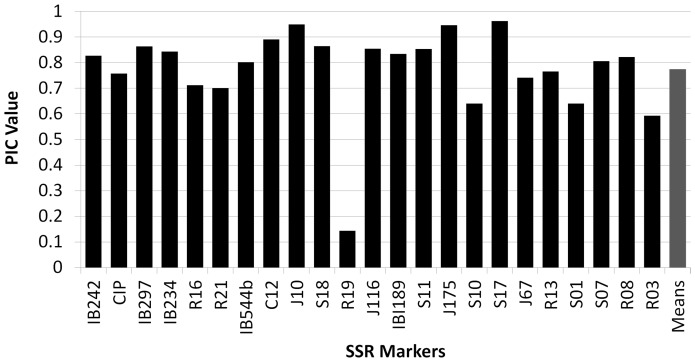
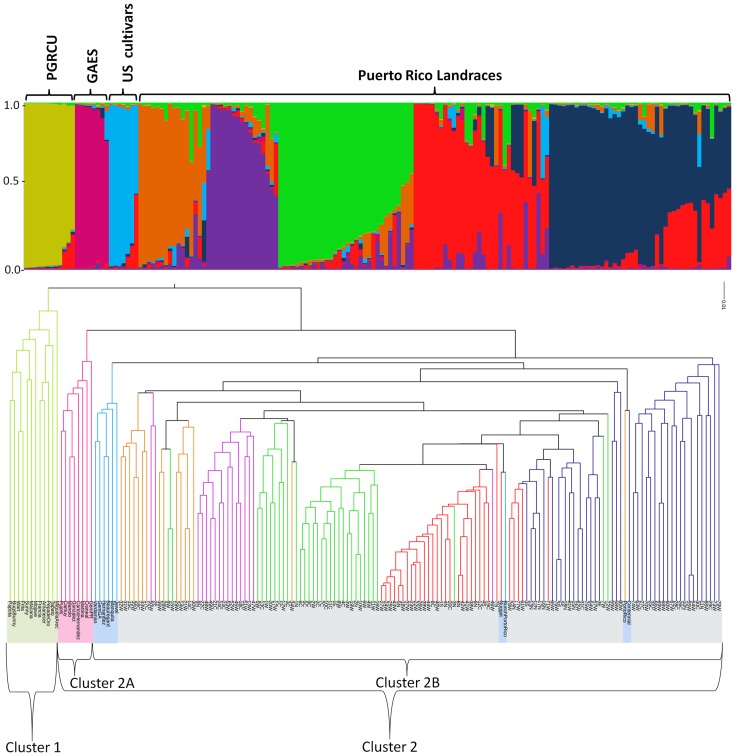
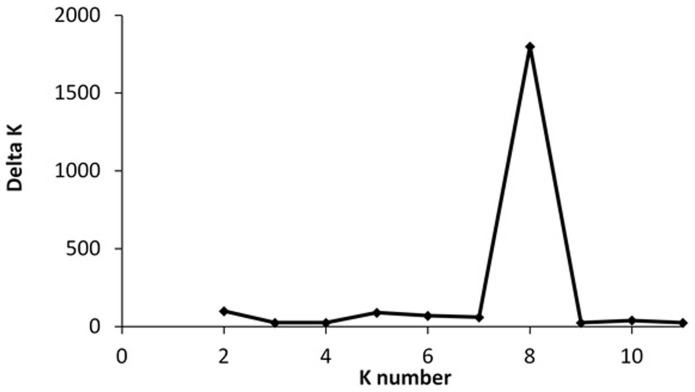
Sweet potato (Ipomoea batatas L.) is the seventh most important food crop due to its distinct advantages, such as adaptability to different environmental conditions and high nutritional value. Assessing the genetic diversity of this important crop is necessary due to the constant increase of demand for food and the need for conservation of agricultural and genetic resources. In Puerto Rico (PR), the genetic diversity of sweet potato has been poorly understood, although it has been part of the diet since Pre-Columbus time. Thus, 137 landraces from different localities around PR were collected and subjected to a genetic diversity analysis using 23 SSR-markers. In addition, 8 accessions from a collection grown in Gurabo, PR at the Agricultural Experimental Station (GAES), 10 US commercial cultivars and 12 Puerto Rican accessions from the USDA repository collection were included in this assessment. The results of the analysis of the 23 loci showed 255 alleles in the 167 samples. Observed heterozygosity was high across populations (0.71) while measurements of total heterozygosity revealed a large genetic diversity throughout the population and within populations. UPGMA clustering method revealed two main clusters. Cluster 1 contained 12 PR accessions from the USDA repository collection, while cluster 2 consisted of PR landraces, US commercial cultivars and the PR accessions from GAES. Population structure analysis grouped PR landraces in five groups including four US commercial cultivars. Our study shows the presence of a high level of genetic diversity of sweet potato across PR which can be related to the genetic makeup of sweet potato, human intervention and out-crossing nature of the plant. The history of domestication and dispersal of sweet potato in the Caribbean and the high levels of genetic diversity found through this study makes sweet potato an invaluable resource that needs to be protected and further studied.
Conflict of interest statement
Figures
References
-
- Food and Agriculture Organization of the United Nations (2010) The state of the world's plant genetic resources for food and agriculture. FAO, Rome, Italy.
-
- Food and Agriculture Organization of the United Nations (2011) FAOSTAT database. Available at http://faostat.fao.org/. Accessed 29 October 2014.
-
- Burri BJ (2011) Evaluating sweet potato as an intervention food to prevent vitamin A deficiency. Comprehensive Reviews in Food Science and Food Safety 10(2):118–130.
-
- O′Brien PJ (1972) The sweet potato: Its origin and dispersal. Am Anthropol 74:343–365.
-
- Zhang D, Rossel G, Kriegner A, Hijmans R (2004) AFLP assessment of diversity in sweet potato from Latin America and the Pacific region: Its implications on the dispersal of the crop. Genet Resour Crop Evol 51:115–120.
MeSH terms
Substances
LinkOut - more resources
Full Text Sources
Other Literature Sources
Research Materials
