Safety and immunogenicity of an intranasal Sendai virus-based human parainfluenza virus type 1 vaccine in 3- to 6-year-old children
- PMID: 25552633
- PMCID: PMC4340902
- DOI: 10.1128/CVI.00618-14
Safety and immunogenicity of an intranasal Sendai virus-based human parainfluenza virus type 1 vaccine in 3- to 6-year-old children
Abstract
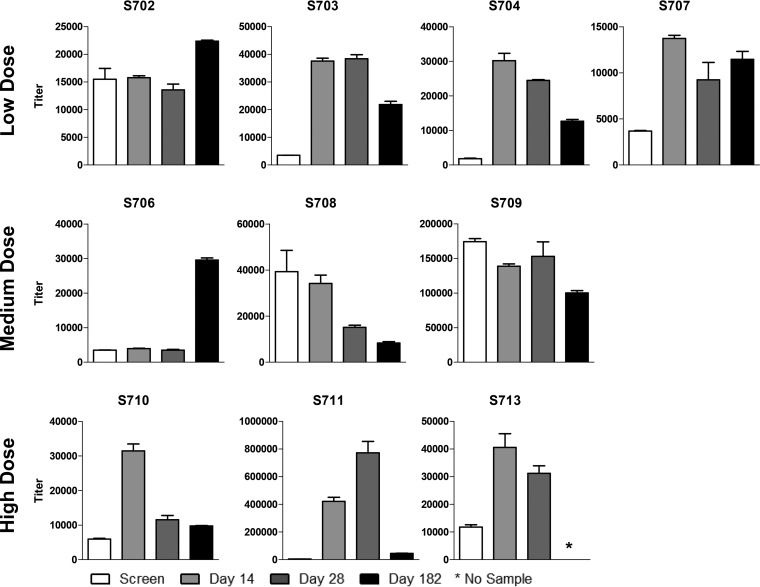
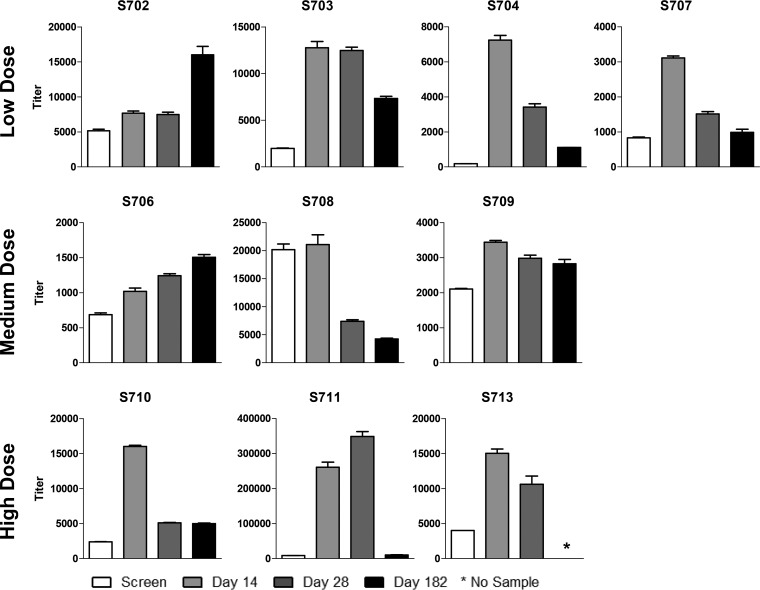
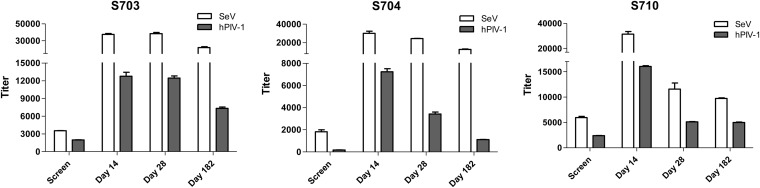
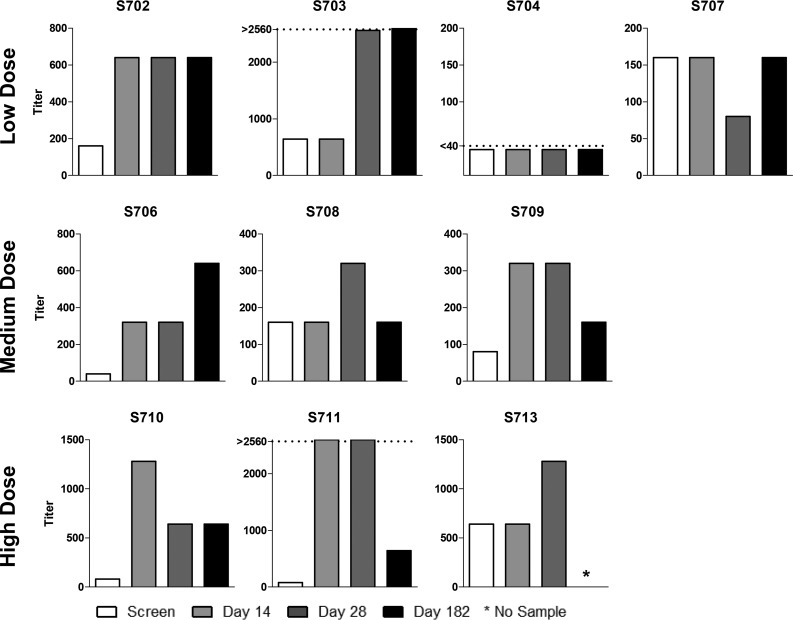
Human parainfluenza virus type 1 (hPIV-1) is the most common cause of laryngotracheobronchitis (croup), resulting in tens of thousands of hospitalizations each year in the United States alone. No licensed vaccine is yet available. We have developed murine PIV-1 (Sendai virus [SeV]) as a live Jennerian vaccine for hPIV-1. Here, we describe vaccine testing in healthy 3- to 6-year-old hPIV-1-seropositive children in a dose escalation study. One dose of the vaccine (5 × 10(5), 5 × 10(6), or 5 × 10(7) 50% egg infectious doses) was delivered by the intranasal route to each study participant. The vaccine was well tolerated by all the study participants. There was no sign of vaccine virus replication in the airway in any participant. Most children exhibited an increase in antibody binding and neutralizing responses toward hPIV-1 within 4 weeks from the time of vaccination. In several children, antibody responses remained above incoming levels for at least 6 months after vaccination. Data suggest that SeV may provide a benefit to 3- to 6-year-old children, even when vaccine recipients have preexisting cross-reactive antibodies due to previous exposures to hPIV-1. Results encourage the testing of SeV administration in young seronegative children to protect against the serious respiratory tract diseases caused by hPIV-1 infections.
Copyright © 2015, American Society for Microbiology. All Rights Reserved.
Figures
References
-
- Karron RA, Collins PL. 2007. Parainfluenza viruses, p 1497–1526. In Knipe DM, Howley PM, Griffin DE, Lamb RA, Martin MA, Roizman B, Straus SE (ed), Fields virology. Lippincott Williams & Wilkins, Philadelphia, PA.
-
- Fulginiti VA, Eller JJ, Sieber OF, Joyner JW, Minamitani M, Meiklejohn G. 1969. Respiratory virus immunization. I. A field trial of two inactivated respiratory virus vaccines; an aqueous trivalent parainfluenza virus vaccine and an alum-precipitated respiratory syncytial virus vaccine. Am J Epidemiol 89:435–448. - PubMed
-
- Bartlett EJ, maro-Carambot E, Surman SR, Newman JT, Collins PL, Murphy BR, Skiadopoulos MH. 2005. Human parainfluenza virus type I (HPIV1) vaccine candidates designed by reverse genetics are attenuated and efficacious in African green monkeys. Vaccine 23:4631–4646. doi: 10.1016/j.vaccine.2005.04.035. - DOI - PubMed
-
- Chin J, Magoffin RL, Shearer LA, Schieble JH, Lennette EH. 1969. Field evaluation of a respiratory syncytial virus vaccine and a trivalent parainfluenza virus vaccine in a pediatric population. Am J Epidemiol 89:449–463. - PubMed
Publication types
MeSH terms
Substances
Grants and funding
LinkOut - more resources
Full Text Sources
Other Literature Sources