


DNA analysis of soil extracts can be used to investigate fine root depth distribution of trees
- PMID: 25552675
- PMCID: PMC4313792
- DOI: 10.1093/aobpla/plu091
DNA analysis of soil extracts can be used to investigate fine root depth distribution of trees
Abstract
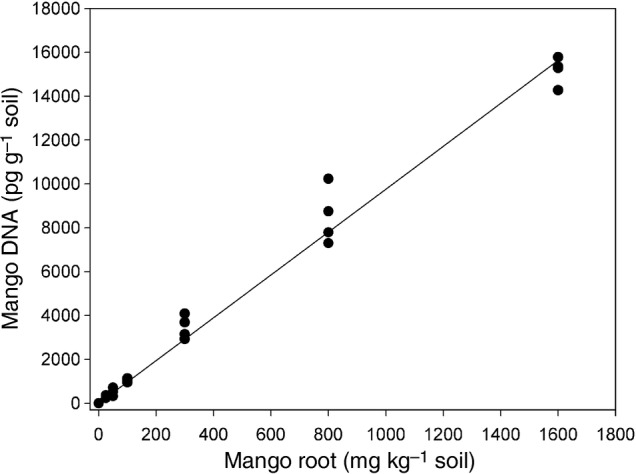
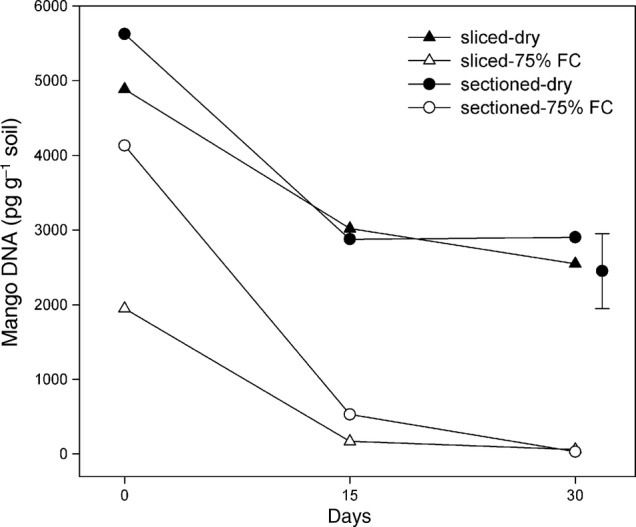
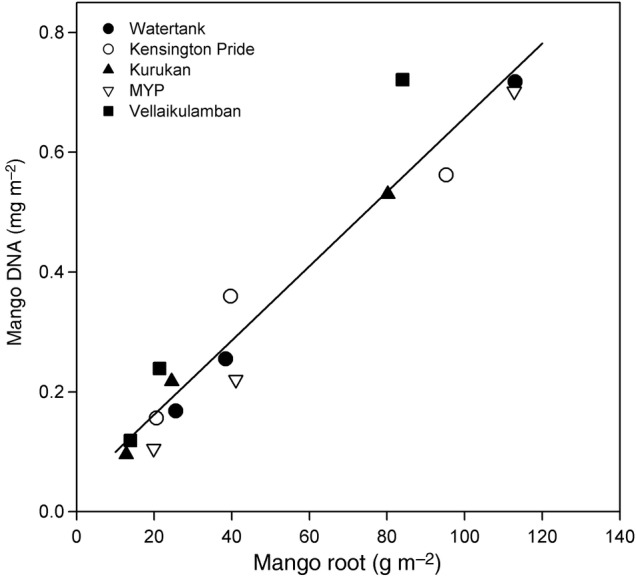
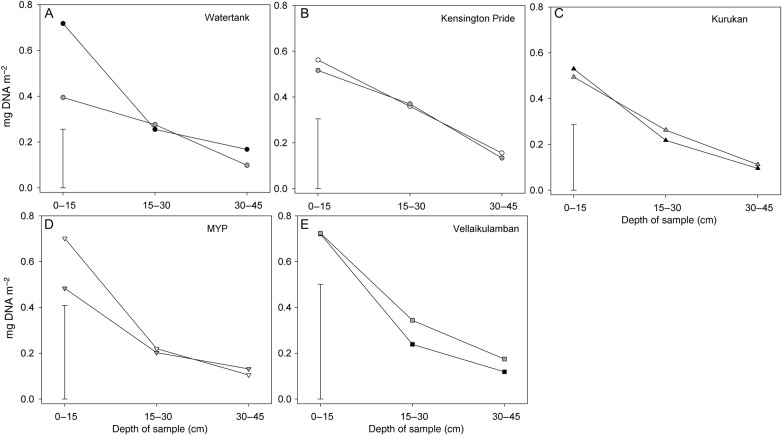
Understanding the root distribution of trees by soil coring is time -: consuming as it requires the separation of roots from soil and classification of roots into particular size classes. This labour-intensive process can limit sample throughput and therefore sampling intensity. We investigated the use of quantitative polymerase chain reaction (qPCR) on soil DNA extractions to determine live fine root DNA density (RDD, mg DNA m(-2)) for mango (Mangifera indica) trees. The specificity of the qPCR was tested against DNA extracted from 10 mango cultivars and 14 weed species. All mango cultivars and no weeds were detected. Mango DNA was successfully quantified from control soil spiked with mango roots and weed species. The DNA yield of mango root sections stored in moist soil at 23-28 °C declined after 15 days to low concentrations as roots decayed, indicating that dead root materials in moist soil would not cause false-positive results. To separate large roots from samples, a root separation method for field samples was used to target the root fragments remaining in sieved (minimum 2 mm aperture) soil for RDD comparisons. Using this method we compared the seasonal RDD values of fine roots for five mango rootstock cultivars in a field trial. The mean cultivar DNA yields by depth from root fragments in the sieved soil samples had the strongest relationship (adjusted multiple R(2) = 0.9307, P < 0.001) with the dry matter (g m(-2)) of fine (diameter <0.64 mm) roots removed from the soil by sieving. This method provides a species-specific and rapid means of comparing the distribution and concentration of live fine roots of trees in orchards using soil samples up to 500 g.
Keywords: DNA persistence; fine-roots; root DNA concentration; root DNA density (RDD).
Published by Oxford University Press on behalf of the Annals of Botany Company.
Figures
References
-
- Avilan L, Meneses L. Effect of the physical characteristics of the soil on the root distribution of mango trees (Mangifera indica L.) Turrialba. 1979;29:117–122.
-
- Bally ISE. Advances in research and development of mango industry. Revista Brasileira de Fruticultura. 2011;33:57–63. doi: 10.1590/S0100-29452011000500008. - DOI
-
- Blaikie SJ, Kulkarni VJ, Muller WJ. Effects of morphactin and paclobutrazol flowering treatments on shoot and root phenology in mango cv. Kensington Pride. Scientia Horticulturae. 2004;101:51–68. doi: 10.1016/j.scienta.2003.09.009. - DOI
-
- Butnor JR, Johnsen KH, McInnis D, Stover DB, Roth BE, Day FP. Using ground-penetrating radar to estimate tree root mass—comparing results from two Florida surveys. In: Allred BJ, Daniels JJ, Reza Ehsani ME, editors. Handbook of agricultural geophysics. Boca Raton, FL: CRC Press; 2008. pp. 375–382.
-
- Coehlo EF, Borges AL. Irrigation and fertirrigation of mango. 2004;645:119–128.
LinkOut - more resources
Full Text Sources
Other Literature Sources
