Impact of the revised International Prognostic Scoring System, cytogenetics and monosomal karyotype on outcome after allogeneic stem cell transplantation for myelodysplastic syndromes and secondary acute myeloid leukemia evolving from myelodysplastic syndromes: a retrospective multicenter study of the European Society of Blood and Marrow Transplantation
- PMID: 25552702
- PMCID: PMC4349280
- DOI: 10.3324/haematol.2014.116715
Impact of the revised International Prognostic Scoring System, cytogenetics and monosomal karyotype on outcome after allogeneic stem cell transplantation for myelodysplastic syndromes and secondary acute myeloid leukemia evolving from myelodysplastic syndromes: a retrospective multicenter study of the European Society of Blood and Marrow Transplantation
Abstract
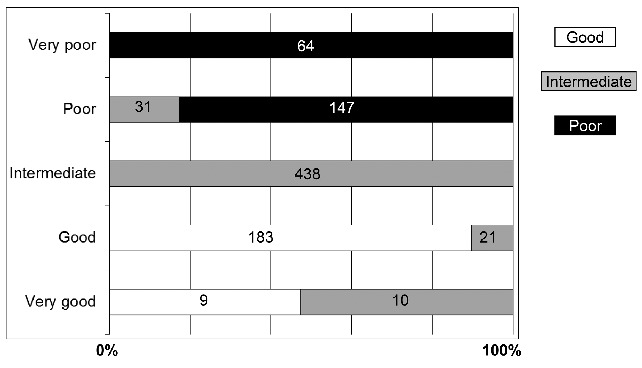
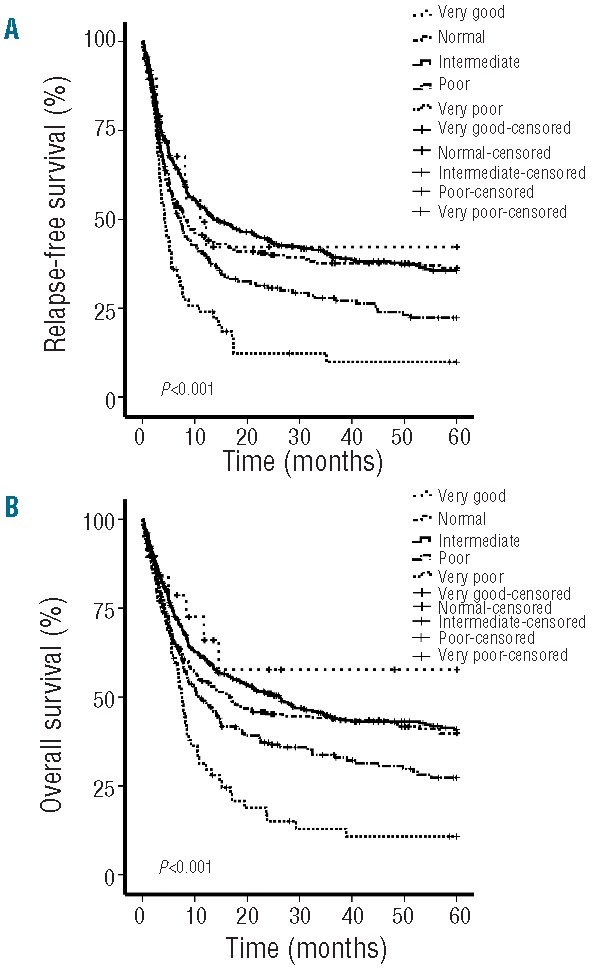
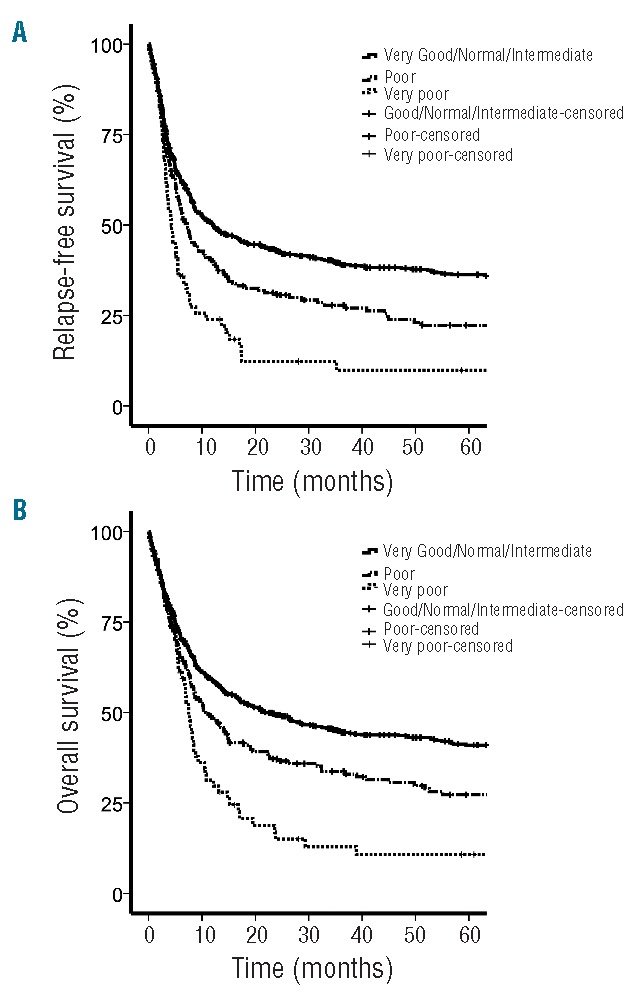
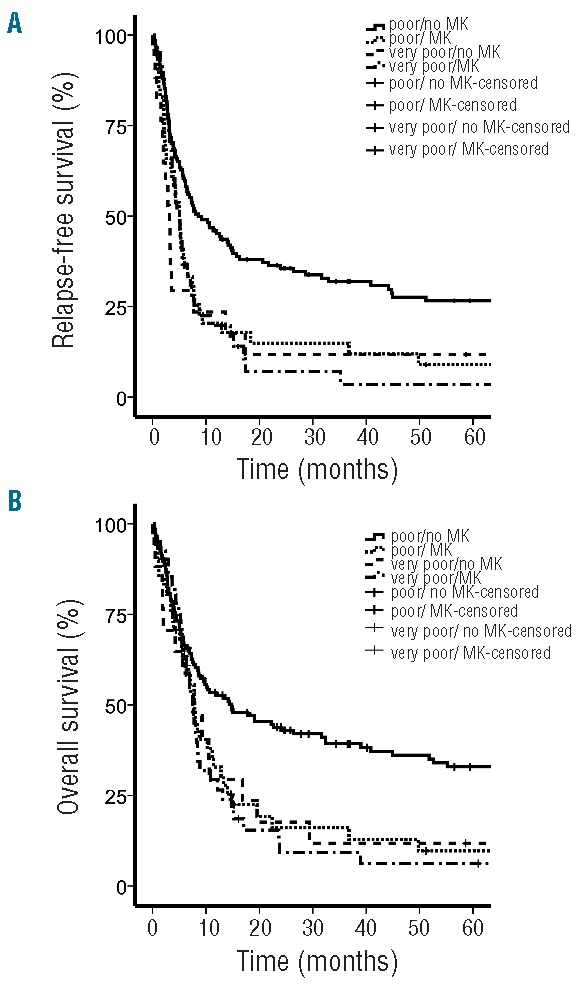
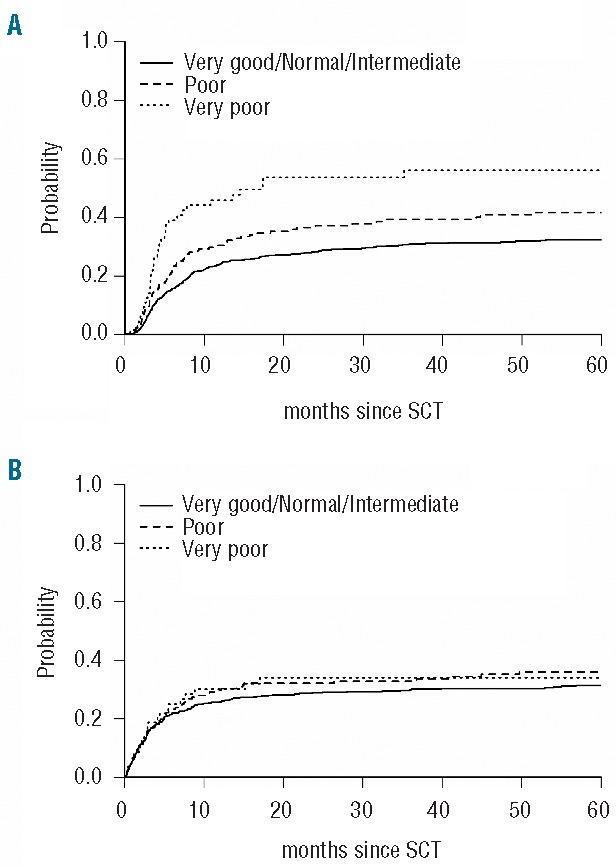
The aim of this study was to determine the impact of the revised 5-group International Prognostic Scoring System cytogenetic classification on outcome after allogeneic stem cell transplantation in patients with myelodysplastic syndromes or secondary acute myeloid leukemia who were reported to the European Society for Blood and Marrow Transplantation database. A total of 903 patients had sufficient cytogenetic information available at stem cell transplantation to be classified according to the 5-group classification. Poor and very poor risk according to this classification was an independent predictor of shorter relapse-free survival (hazard ratio 1.40 and 2.14), overall survival (hazard ratio 1.38 and 2.14), and significantly higher cumulative incidence of relapse (hazard ratio 1.64 and 2.76), compared to patients with very good, good or intermediate risk. When comparing the predictive performance of a series of Cox models both for relapse-free survival and for overall survival, a model with simplified 5-group cytogenetics (merging very good, good and intermediate cytogenetics) performed best. Furthermore, monosomal karyotype is an additional negative predictor for outcome within patients of the poor, but not the very poor risk group of the 5-group classification. The revised International Prognostic Scoring System cytogenetic classification allows patients with myelodysplastic syndromes to be separated into three groups with clearly different outcomes after stem cell transplantation. Poor and very poor risk cytogenetics were strong predictors of poor patient outcome. The new cytogenetic classification added value to prediction of patient outcome compared to prediction models using only traditional risk factors or the 3-group International Prognostic Scoring System cytogenetic classification.
Copyright© Ferrata Storti Foundation.
Figures
References
-
- de Witte T, Hagemeijer A, Suciu S, et al. Value of allogeneic versus autologous stem cell transplantation and chemotherapy in patients with myelodysplastic syndromes and secondary acute myeloid leukemia. Final results of a prospective randomized European Intergroup Trial. Haematologica. 2010;95(10):1754–1761. - PMC - PubMed
-
- Kroger N. Allogeneic stem cell transplantation for elderly patients with myelodysplastic syndrome. Blood. 2012; 119(24):5632–5639. - PubMed
-
- Kroger N, Bacher U, Bader P, et al. NCI First International Workshop on the Biology, Prevention, and Treatment of Relapse after Allogeneic Hematopoietic Stem Cell Transplantation: report from the Committee on Disease-Specific Methods and Strategies for Monitoring Relapse following Allogeneic Stem Cell Transplantation. Part I: Methods, acute leukemias, and myelodysplastic syndromes. Biology of Blood and Marrow Transplantation. 2010; 16(9):1187–1211. - PMC - PubMed
-
- Alessandrino EP, Porta Della MG, Bacigalupo A, et al. WHO classification and WPSS predict posttransplantation outcome in patients with myelodysplastic syndrome: a study from the Gruppo Italiano Trapianto di Midollo Osseo (GITMO). Blood. 2008;112(3):895–902. - PubMed
Publication types
MeSH terms
Substances
LinkOut - more resources
Full Text Sources
Other Literature Sources
Medical