


Bisphenol-A exposure during adolescence leads to enduring alterations in cognition and dendritic spine density in adult male and female rats
- PMID: 25554518
- PMCID: PMC6116732
- DOI: 10.1016/j.yhbeh.2014.12.007
Bisphenol-A exposure during adolescence leads to enduring alterations in cognition and dendritic spine density in adult male and female rats
Abstract
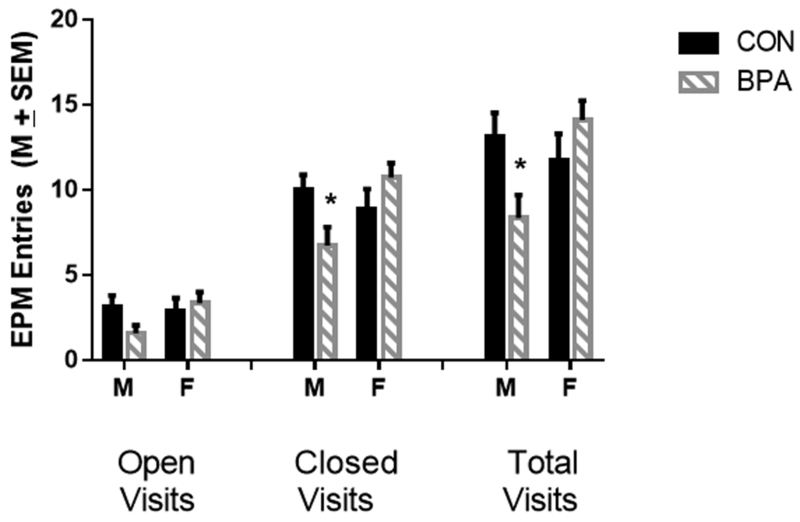
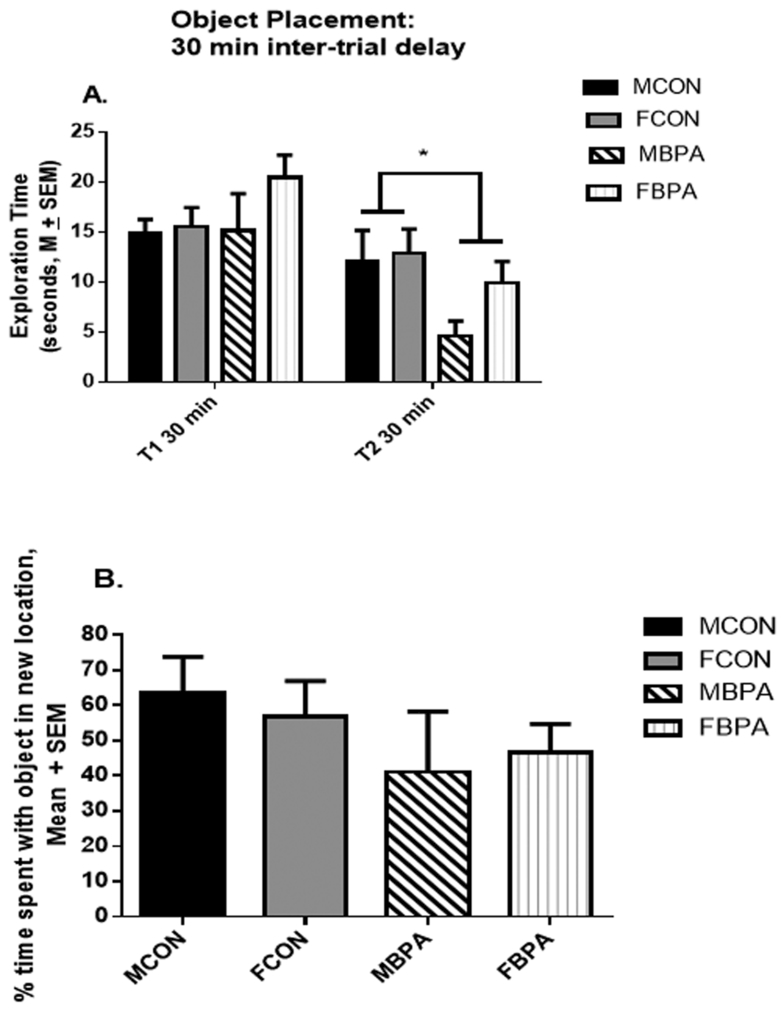
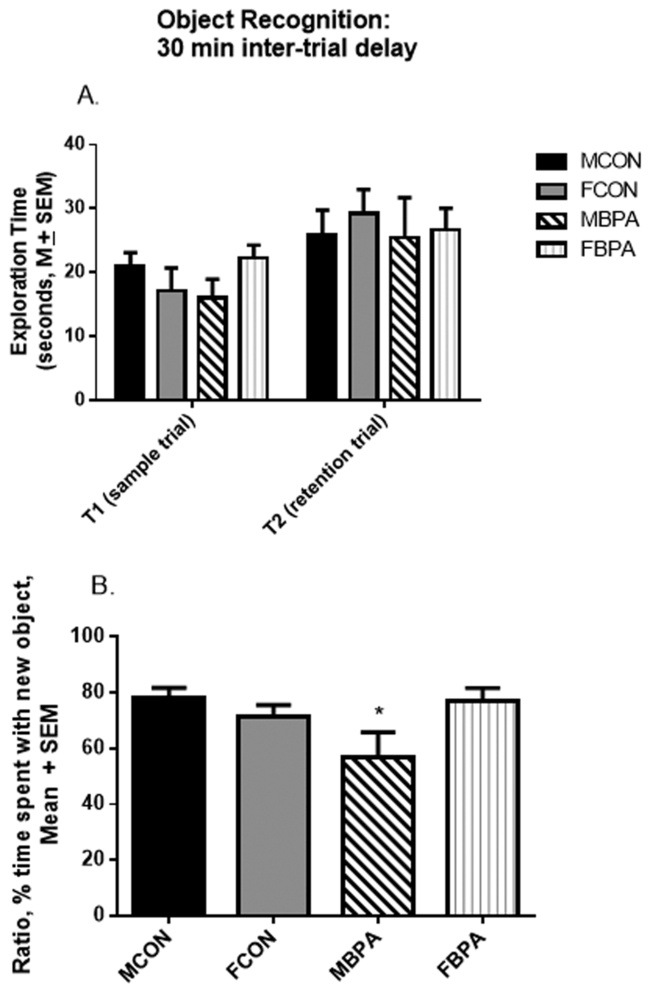
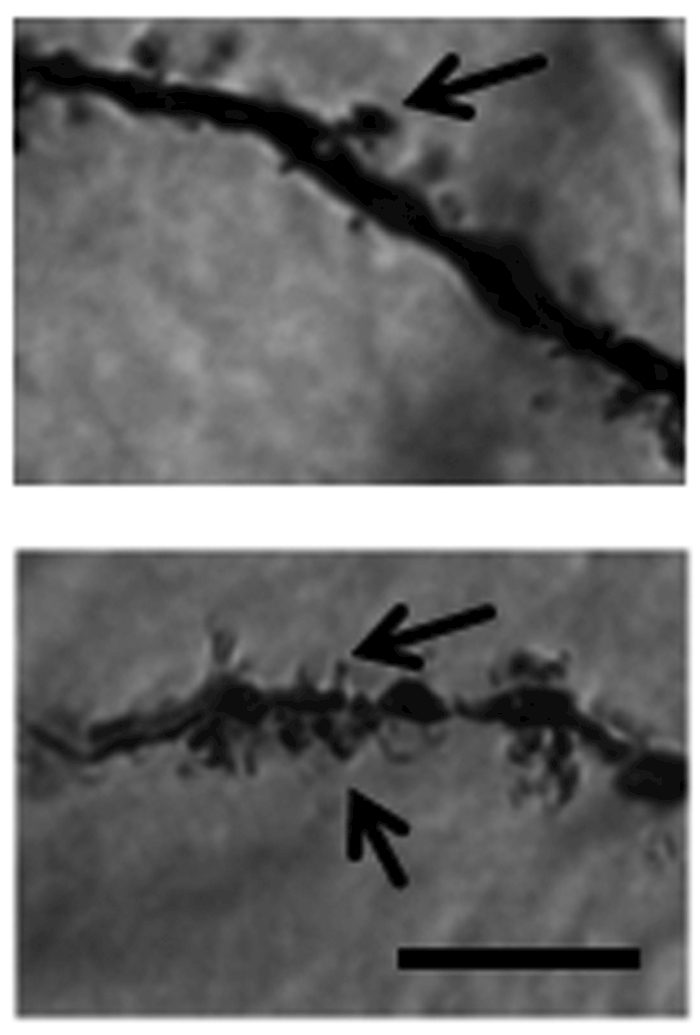
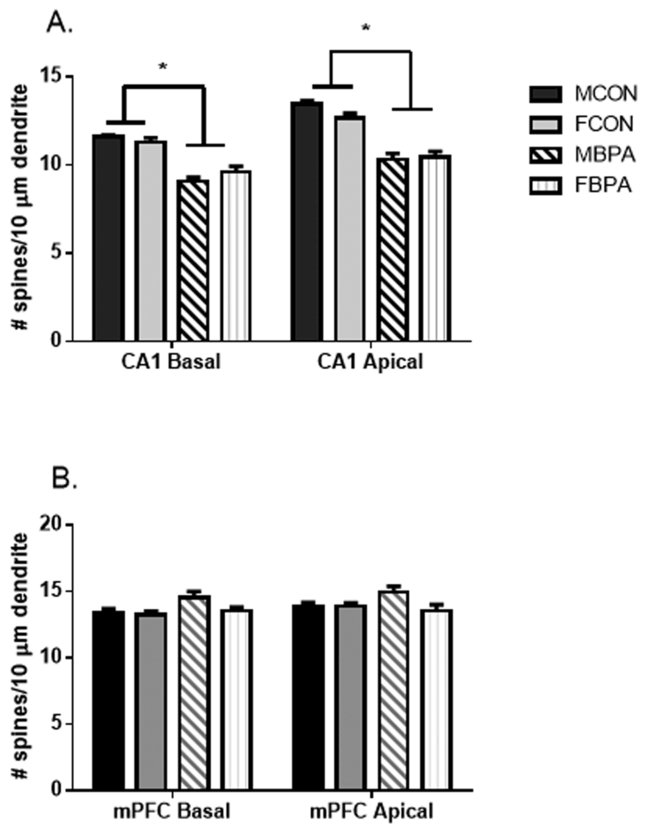
We have previously demonstrated that adolescent exposure of rats to bisphenol-A (BPA), an environmental endocrine disrupter, increases anxiety, impairs spatial memory, and decreases dendritic spine density in the CA1 region of the hippocampus (CA1) and medial prefrontal cortex (mPFC) when measured in adolescents in both sexes. The present study examined whether the behavioral and morphological alterations following BPA exposure during adolescent development are maintained into adulthood. Male and female, adolescent rats received BPA, 40μg/kg/bodyweight, or control treatments for one week. In adulthood, subjects were tested for anxiety and locomotor activity, spatial memory, non-spatial visual memory, and sucrose preference. Additionally, stress-induced serum corticosterone levels and dendritic spine density in the mPFC and CA1 were measured. BPA-treated males, but not females, had decreased arm visits on the elevated plus maze, but there was no effect on anxiety. Non-spatial memory, object recognition, was also decreased in BPA treated males, but not in females. BPA exposure did not alter spatial memory, object placement, but decreased exploration during the tasks in both sexes. No significant group differences in sucrose preference or serum corticosterone levels in response to a stress challenge were found. However, BPA exposure, regardless of sex, significantly decreased spine density of both apical and basal dendrites on pyramidal cells in CA1 but had no effect in the mPFC. Current data are discussed in relation to BPA dependent changes, which were present during adolescence and did, or did not, endure into adulthood. Overall, adolescent BPA exposure, below the current reference safe daily limit set by the U.S.E.P.A., leads to alterations in some behaviors and neuronal morphology that endure into adulthood.
Keywords: Adolescence; Anxiety; Bisphenol-A; Exploration; Memory; Spine density.
Copyright © 2015 Elsevier Inc. All rights reserved.
Figures
References
-
- Abdi H, 2010. Coefficient of variation, in: Salkind N (Ed.), Encyclopedia of Research Design. Sage, Thousand Oaks, CA: pp 1–5.
-
- Andreollo NA, dos Santos EF, Araujo MR, Lopes LR, 2012. Rat’s age versus human’s age: what is the relationship?. ABCD, Arq. Bras. Cir. Dig. 25(1), 49–51. - PubMed
-
- Atchley DB, Weaver KL, Eckel LA, 2005. Taste responses to dilute sucrose solutions are modulated by stage of the estrous cycle and fenfluramine treatment in female rats. Physiol. Behav. 86, 265–271. - PubMed
-
- Beck KD, Luine VN, 2002. Sex differences in behavioral and neurochemical profiles after chronic stress: role of housing conditions. Physiol. Behav. 75 (5), 661–673. - PubMed
-
- Biedermann S, Tschudin P, Grob K, 2010. Transfer of bisphenol A from thermal printer paper to the skin. Anal. Bioanal. Chem. 398, 571–576. - PubMed
Publication types
MeSH terms
Substances
Grants and funding
LinkOut - more resources
Full Text Sources
Other Literature Sources
Miscellaneous
