


Esophageal cancer in a family with hamartomatous tumors and germline PTEN frameshift and SMAD7 missense mutations
- PMID: 25554686
- PMCID: PMC4355394
- DOI: 10.1016/j.cancergen.2014.11.002
Esophageal cancer in a family with hamartomatous tumors and germline PTEN frameshift and SMAD7 missense mutations
Abstract
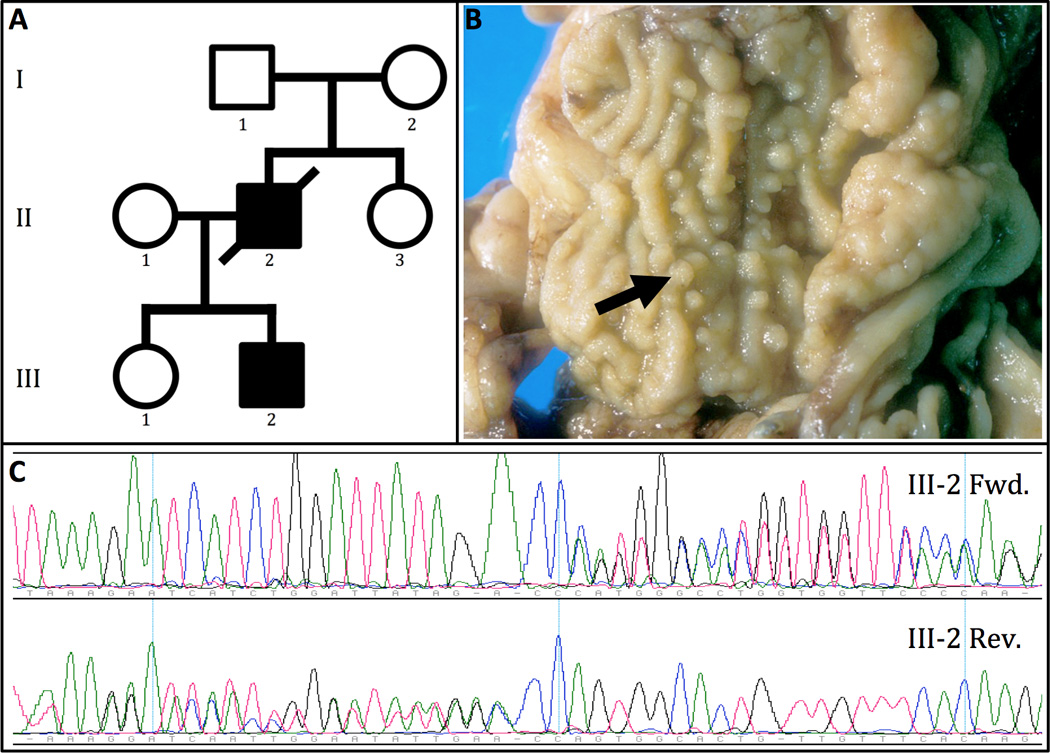
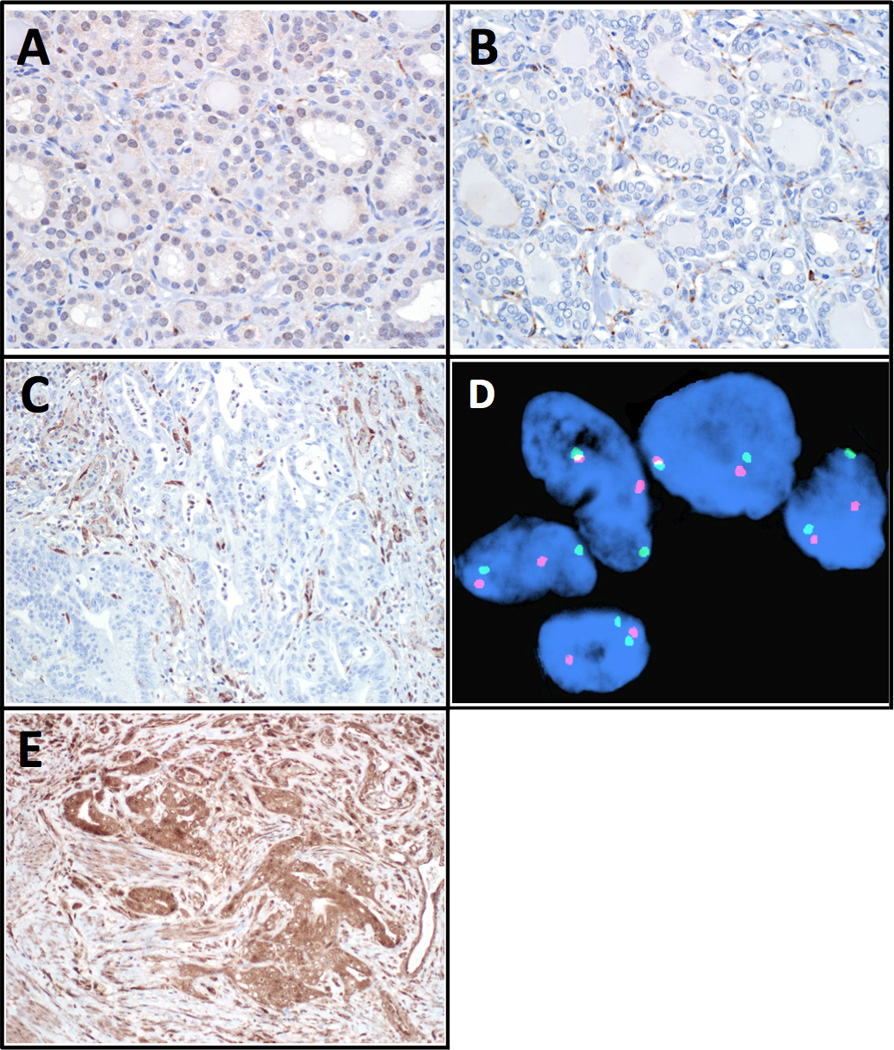
Germline mutations in the PTEN tumor-suppressor gene cause autosomal-dominant conditions such as Cowden and Bannayan-Riley-Ruvalcaba syndromes with variable presentations, including hamartomatous gastrointestinal tumors, dermatologic abnormalities, neurologic symptoms, and elevated cancer risk. We describe a father and son with extensive hamartomatous gastrointestinal polyposis who both developed early-onset esophageal cancer. Exome sequencing identified a novel germline PTEN frameshift mutation (c.568_569insC, p.V191Sfs*11). In addition, a missense mutation of SMAD7 (c.115G>A, p.G39R) with an allele frequency of 0.3% in the Exome Variant Server was detected in both affected individuals. Fluorescence in situ hybridization for PTEN in the resected esophageal cancer specimen demonstrated no PTEN copy loss in malignant cells; however, results of an immunohistochemical analysis demonstrated a loss of PTEN protein expression. While the risks of many cancers are elevated in the PTEN hamartoma tumor syndromes, association between esophageal adenocarcinoma and these syndromes has not been previously reported. Esophageal adenocarcinoma and extensive polyposis/ganglioneuromatosis could represent less common features of these syndromes, potentially correlating with this novel PTEN frameshift and early protein termination genotype. Alternatively, because simultaneous disruption of both the PTEN and TGF-β/SMAD4 pathways is associated with development of esophageal cancer in a mouse model and because SMAD4 mutations cause gastrointestinal hamartomas in juvenile polyposis syndrome, the SMAD7 mutation may represent an additional modifier of these individuals' PTEN-mutant phenotype.
Keywords: Cowden syndrome; PTEN; PTEN hamartoma tumor syndrome; SMAD7; esophageal cancer.
Copyright © 2015 Elsevier Inc. All rights reserved.
Figures
References
-
- Li J, Yen C, Liaw D, Podsypanina K, Bose S, Wang SI, et al. PTEN, a putative protein tyrosine phosphatase gene mutated in human brain, breast, and prostate cancer. Science. 1997;275:1943–1947. - PubMed
-
- Nelen MR, Padberg GW, Peeters EA, Lin AY, van den Helm B, Frants RR, et al. Localization of the gene for Cowden disease to chromosome 10q22-23. Nat Genet. 1996;13:114–116. - PubMed
-
- Liaw D, Marsh DJ, Li J, Dahia PL, Wang SI, Zheng Z, et al. Germline mutations of the PTEN gene in Cowden disease, an inherited breast and thyroid cancer syndrome. Nat Genet. 1997;16:64–67. - PubMed
-
- Mester J, Eng C. When overgrowth bumps into cancer: the PTEN-opathies. Am J Med Genet C Semin Med Genet. 2013;163:114–121. - PubMed
Publication types
MeSH terms
Substances
Grants and funding
LinkOut - more resources
Full Text Sources
Other Literature Sources
Medical
Research Materials
Miscellaneous
