


Implementation of the third universal definition of myocardial infarction after coronary artery bypass grafting: a survey study in Western Europe
- PMID: 25559013
- PMCID: PMC4330065
- DOI: 10.1161/JAHA.114.001401
Implementation of the third universal definition of myocardial infarction after coronary artery bypass grafting: a survey study in Western Europe
Abstract
Background: Diagnosing a postoperative myocardial infarction in patients undergoing coronary artery bypass grafting is challenging, as the normally used criteria are more difficult to interpret. The rate of implementation of the consensus-based new diagnostic criteria for postoperative myocardial infarction proposed by the third universal definition of myocardial infarction is unknown. Therefore, the primary objective of this study was to address the implementation of the third universal definition of postoperative myocardial infarction following coronary artery bypass grafting.
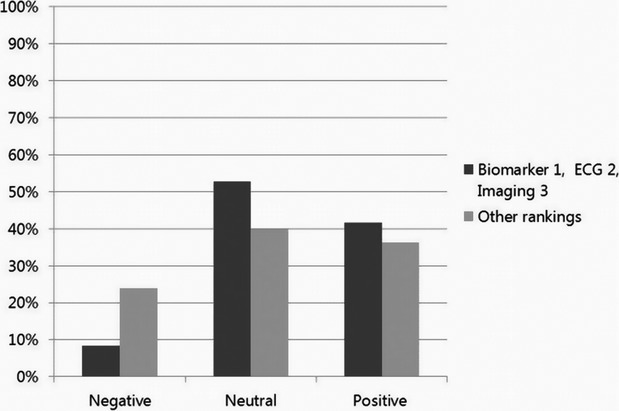
Methods and results: We conducted a web-based survey by sending 4 waves of invitations via e-mail to cardiothoracic surgeons in 12 Western European countries. Of the 302 participating cardiothoracic specialists, from 182 different centers, 213 (71%) were aware that troponin is the preferred biomarker and 112 (37%) knew that using a cut-off level of >10 times the 99th percentile is recommended. Overall, 90 (30%) participants (strongly) agreed with implementation of this cut-off level in their clinical practice. Troponin was used in clinical practice by 149 (49%) of the participants. In total, 117 (89%) of the 131 participants with a local guideline confirmed ECG changes as a diagnostic criterion in that guideline. ST segmental changes (75, 64%) were used more often for diagnosing postoperative myocardial infarction than Q waves (64, 55%) or new left bundle branch blocks (34, 29%).
Conclusions: Cardiac biomarkers and ECG changes were not used in concordance with the third universal definition, and only a minority had a positive attitude toward implementation of the proposed cut-off level for troponin in their clinical practice.
Keywords: coronary artery bypass graft surgery; diagnosis; myocardial infarction; troponin.
© 2015 The Authors. Published on behalf of the American Heart Association, Inc., by Wiley Blackwell.
Figures
References
-
- Ramsay J, Shernan S, Fitch J, Finnegan P, Todaro T, Filloon T, Nussmeier NA. Increased creatine kinase MB level predicts postoperative mortality after cardiac surgery independent of new Q waves. J Thorac Cardiovasc Surg. 2005; 129:300-306. - PubMed
-
- Chen JC, Kaul P, Levy JH, Haverich A, Menasché P, Smith PK, Carrier M, Verrier ED, Van de Werf F, Burge R, Finnegan P, Mark DB, Shernan SK. Myocardial infarction following coronary artery bypass graft surgery increases healthcare resource utilization. Crit Care Med. 2007; 35:1296-1301. - PubMed
-
- Croal CBL, Hillis GS, Gibson PH, Fazal MT, El‐Shafei H, Gibson G, Jeffrey RR, Buchan KG, West D, Cuthbertson BH. Relationship between postoperative cardiac troponin I levels and outcome of cardiac surgery. Circulation. 2006; 114:1468-1475. - PubMed
-
- Thielmann M, Massoudy P, Jaeger BR, Neuhäuser M, Marggraf G, Sack S, Erbel R, Jakob H. Emergency re‐revascularization with percutaneous coronary intervention, reoperation, or conservative treatment in patients with acute perioperative graft failure following coronary artery bypass surgery. Eur J Cardiothorac Surg. 2006; 30:117-125. - PubMed
Publication types
MeSH terms
Substances
LinkOut - more resources
Full Text Sources
Medical
