


Bullying and suicidal ideation and behaviors: a meta-analysis
- PMID: 25560447
- PMCID: PMC4702491
- DOI: 10.1542/peds.2014-1864
Bullying and suicidal ideation and behaviors: a meta-analysis
Abstract
Background and objectives: Over the last decade there has been increased attention to the association between bullying involvement (as a victim, perpetrator, or bully-victim) and suicidal ideation/behaviors. We conducted a meta-analysis to estimate the association between bullying involvement and suicidal ideation and behaviors.
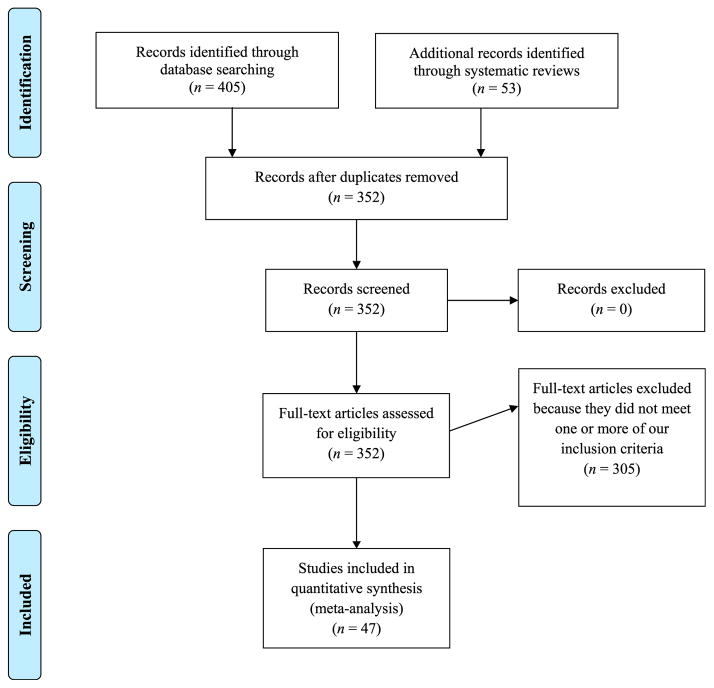
Methods: We searched multiple online databases and reviewed reference sections of articles derived from searches to identify cross-sectional studies published through July 2013. Using search terms associated with bullying, suicide, and youth, 47 studies (38.3% from the United States, 61.7% in non-US samples) met inclusion criteria. Seven observers independently coded studies and met in pairs to reach consensus.
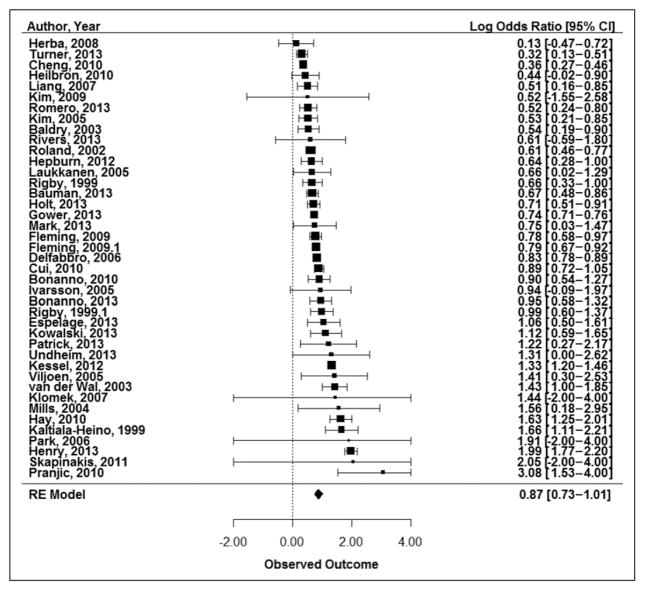
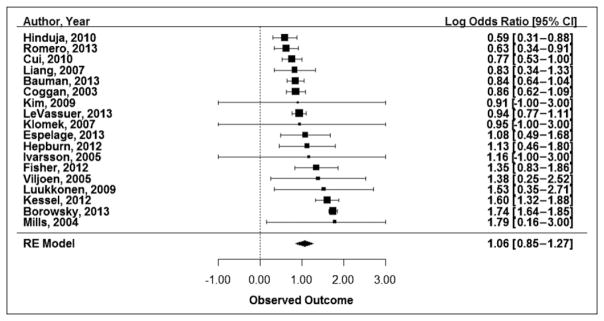
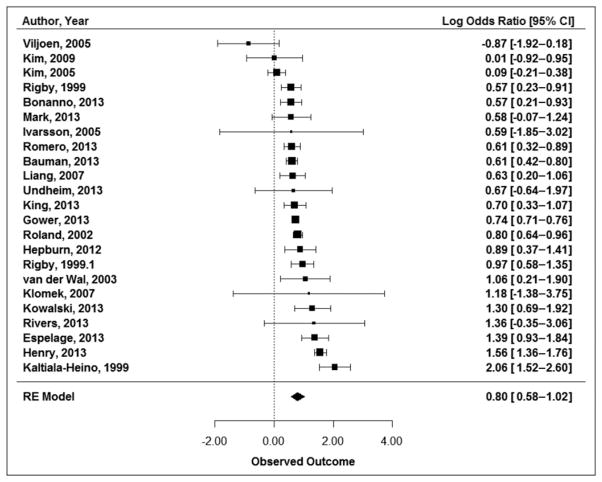
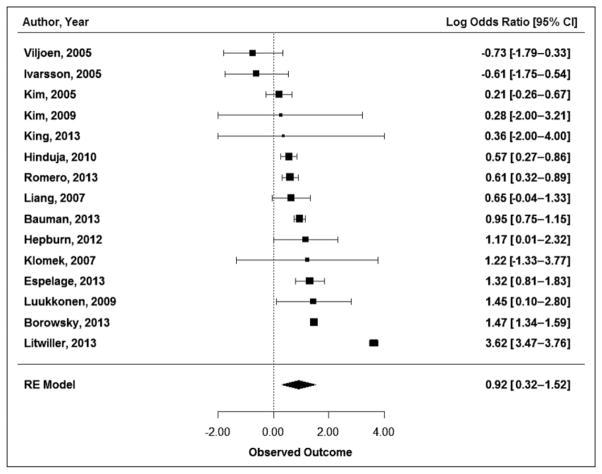
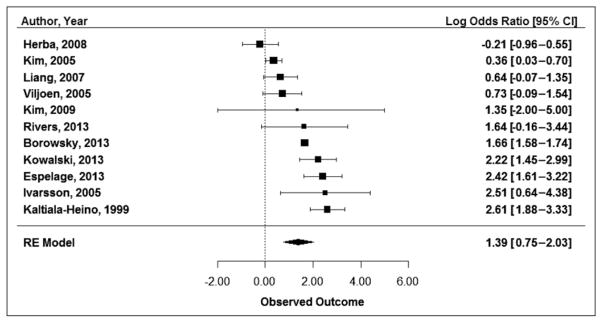
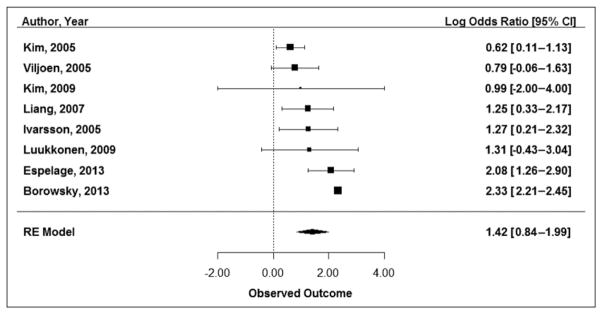
Results: Six different meta-analyses were conducted by using 3 predictors (bullying victimization, bullying perpetration, and bully/victim status) and 2 outcomes (suicidal ideation and suicidal behaviors). A total of 280 effect sizes were extracted and multilevel, random effects meta-analyses were performed. Results indicated that each of the predictors were associated with risk for suicidal ideation and behavior (range, 2.12 [95% confidence interval (CI), 1.67-2.69] to 4.02 [95% CI, 2.39-6.76]). Significant heterogeneity remained across each analysis. The bullying perpetration and suicidal behavior effect sizes were moderated by the study's country of origin; the bully/victim status and suicidal ideation results were moderated by bullying assessment method.
Conclusions: Findings demonstrated that involvement in bullying in any capacity is associated with suicidal ideation and behavior. Future research should address mental health implications of bullying involvement to prevent suicidal ideation/behavior.
Keywords: bullying; meta-analysis; suicidal behaviors; suicidal ideation; suicidality; victimization; youth.
Copyright © 2015 by the American Academy of Pediatrics.
Conflict of interest statement
Figures
References
-
- Kaltiala-Heino R, Fröjd S, Marttunen M. Involvement in bullying and depression in a 2-year follow-up in middle adolescence. Eur Child Adolesc Psychiatry. 2010;19(1):45–55. - PubMed
-
- Poteat VP, Espelage DL. Predicting psychosocial consequences of homophobic victimization in middle school students. J Early Adolesc. 2007;27(2):175–191.
-
- Klomek AB, Sourander A, Niemelä S, et al. Childhood bullying behaviors as a risk for suicide attempts and completed suicides: a population-based birth cohort study. J Am Acad Child Adolesc Psychiatry. 2009;48(3):254–261. - PubMed
-
- Laukkanen E, Honkalampi K, Hintikka J, Hintikka U, Lehtonen J. Suicidal ideation among help-seeking adolescents: association with a negative self-image. Arch Suicide Res. 2005;9(1):45–55. - PubMed
Publication types
MeSH terms
Grants and funding
LinkOut - more resources
Full Text Sources
Other Literature Sources
Medical
Miscellaneous
