


Global analysis of myocardial peptides containing cysteines with irreversible sulfinic and sulfonic acid post-translational modifications
- PMID: 25561502
- PMCID: PMC4349981
- DOI: 10.1074/mcp.M114.044347
Global analysis of myocardial peptides containing cysteines with irreversible sulfinic and sulfonic acid post-translational modifications
Abstract
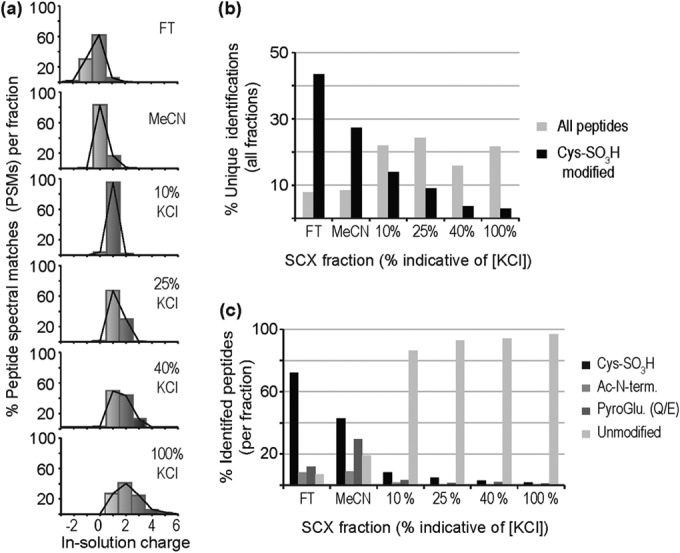
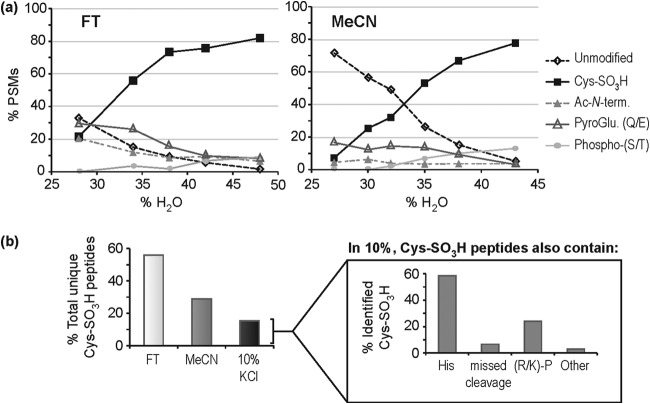
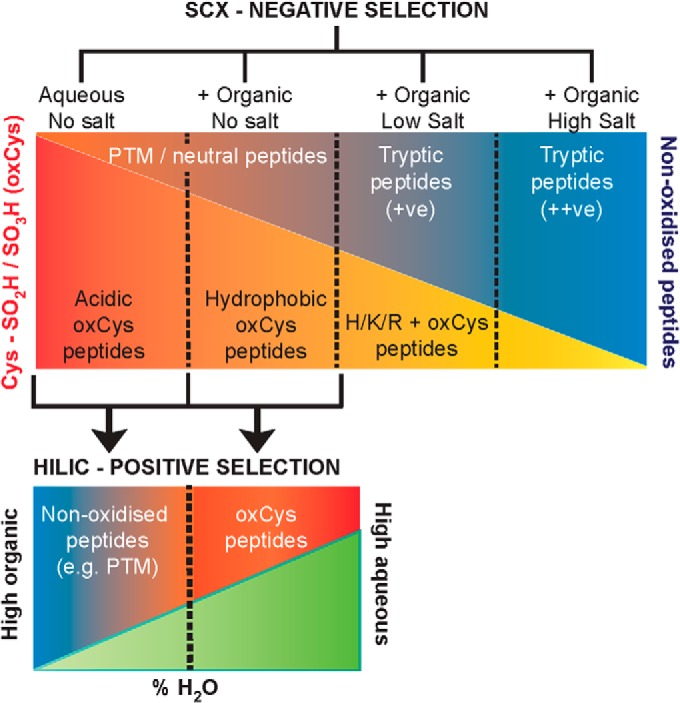
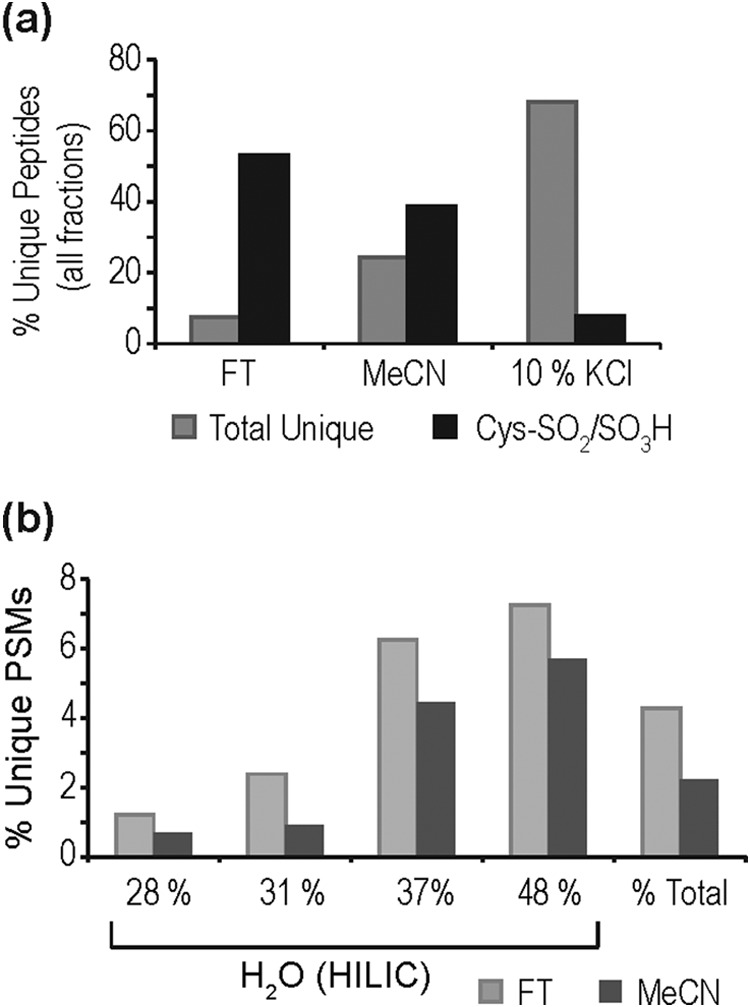
Cysteine (Cys) oxidation is a crucial post-translational modification (PTM) associated with redox signaling and oxidative stress. As Cys is highly reactive to oxidants it forms a range of post-translational modifications, some that are biologically reversible (e.g. disulfides, Cys sulfenic acid) and others (Cys sulfinic [Cys-SO2H] and sulfonic [Cys-SO3H] acids) that are considered "irreversible." We developed an enrichment method to isolate Cys-SO2H/SO3H-containing peptides from complex tissue lysates that is compatible with tandem mass spectrometry (MS/MS). The acidity of these post-translational modification (pKa Cys-SO3H < 0) creates a unique charge distribution when localized on tryptic peptides at acidic pH that can be utilized for their purification. The method is based on electrostatic repulsion of Cys-SO2H/SO3H-containing peptides from cationic resins (i.e. "negative" selection) followed by "positive" selection using hydrophilic interaction liquid chromatography. Modification of strong cation exchange protocols decreased the complexity of initial flowthrough fractions by allowing for hydrophobic retention of neutral peptides. Coupling of strong cation exchange and hydrophilic interaction liquid chromatography allowed for increased enrichment of Cys-SO2H/SO3H (up to 80%) from other modified peptides. We identified 181 Cys-SO2H/SO3H sites from rat myocardial tissue subjected to physiologically relevant concentrations of H2O2 (<100 μm) or to ischemia/reperfusion (I/R) injury via Langendorff perfusion. I/R significantly increased Cys-SO2H/SO3H-modified peptides from proteins involved in energy utilization and contractility, as well as those involved in oxidative damage and repair.
© 2015 by The American Society for Biochemistry and Molecular Biology, Inc.
Figures
References
-
- Dröge W. (2002) Free radicals in the physiological control of cell function. Physiol. Rev. 82, 47–95 - PubMed
-
- Valko M., Leibfritz D., Moncol J., Cronin M. T. D., Mazur M., Telser J. (2007) Free radicals and antioxidants in normal physiological functions and human disease. Int. J. Biochem. Cell Biol. 39, 44–84 - PubMed
-
- Gygi S. P., Rist B., Gerber S. A., Turecek F., Gelb M. H., Aebersold R. (1999) Quantitative analysis of complex protein mixtures using isotope-coded affinity tags. Nat. Biotechnol. 17, 994–999 - PubMed
-
- Hägglund P., Bunkenborg J., Maeda K., Svensson B. (2008) Identification of thioredoxin disulfide targets using a quantitative proteomics approach based on isotope-coded affinity tags. J. Proteome Res. 7, 5270–5276 - PubMed
-
- Sethuraman M., McComb M. E., Heibeck T., Costello C. E., Cohen R. A. (2004) Isotope-coded affinity tag approach to identify and quantify oxidant-sensitive protein thiols. Mol. Cell. Proteomics 3, 273–278 - PubMed
Publication types
MeSH terms
Substances
LinkOut - more resources
Full Text Sources
Research Materials
