


Mouse-human experimental epigenetic analysis unmasks dietary targets and genetic liability for diabetic phenotypes
- PMID: 25565211
- PMCID: PMC4340475
- DOI: 10.1016/j.cmet.2014.12.014
Mouse-human experimental epigenetic analysis unmasks dietary targets and genetic liability for diabetic phenotypes
Abstract
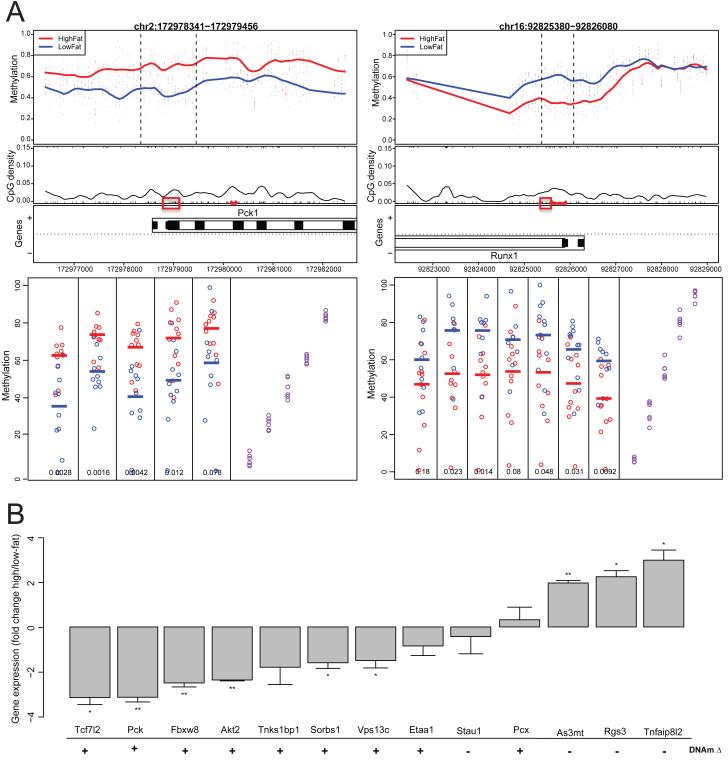
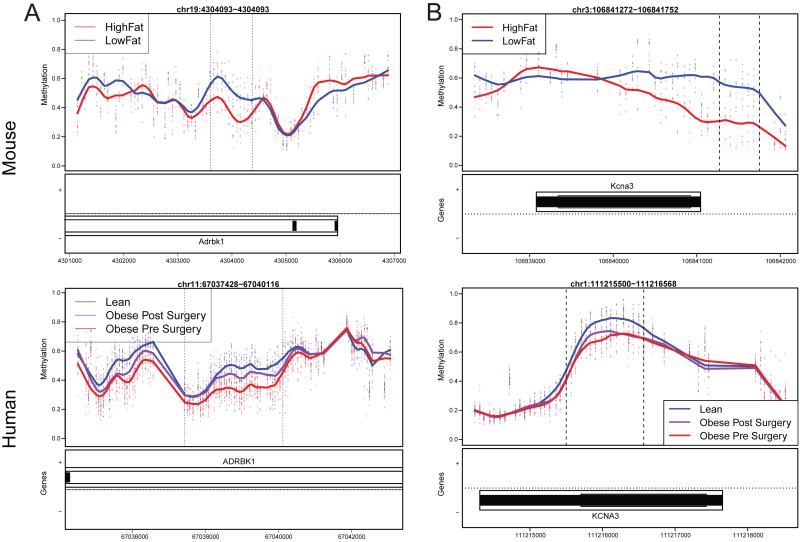
Using a functional approach to investigate the epigenetics of type 2 diabetes (T2D), we combine three lines of evidence-diet-induced epigenetic dysregulation in mouse, epigenetic conservation in humans, and T2D clinical risk evidence-to identify genes implicated in T2D pathogenesis through epigenetic mechanisms related to obesity. Beginning with dietary manipulation of genetically homogeneous mice, we identify differentially DNA-methylated genomic regions. We then replicate these results in adipose samples from lean and obese patients pre- and post-Roux-en-Y gastric bypass, identifying regions where both the location and direction of methylation change are conserved. These regions overlap with 27 genetic T2D risk loci, only one of which was deemed significant by GWAS alone. Functional analysis of genes associated with these regions revealed four genes with roles in insulin resistance, demonstrating the potential general utility of this approach for complementing conventional human genetic studies by integrating cross-species epigenomics and clinical genetic risk.
Copyright © 2015 Elsevier Inc. All rights reserved.
Figures



Comment in
-
Genetics: Epigenetic mechanisms underlying type 2 diabetes mellitus.Nat Rev Endocrinol. 2015 May;11(5):261-2. doi: 10.1038/nrendo.2015.31. Epub 2015 Mar 10. Nat Rev Endocrinol. 2015. PMID: 25752279 No abstract available.
References
-
- Almgren P, Lehtovirta M, Isomaa B, Sarelin L, Taskinen MR, Lyssenko V, Tuomi T, et al. Heritability and familiality of type 2 diabetes and related quantitative traits in the Botnia Study. Diabetologia. 2011;54:2811–2819. - PubMed
-
- Barres R, Kirchner H, Rasmussen M, Yan J, Kantor FR, Krook A, Naslund E, et al. Weight loss after gastric bypass surgery in human obesity remodels promoter methylation. Cell Rep. 2013;3:1020–1027. - PubMed
-
- Beale EG, Hammer RE, Antoine B, Forest C. Disregulated glyceroneogenesis: PCK1 as a candidate diabetes and obesity gene. Trends Endocrinol. Metab. 2004;15:129–135. - PubMed
MeSH terms
Substances
Grants and funding
LinkOut - more resources
Full Text Sources
Other Literature Sources
Medical
Molecular Biology Databases
Research Materials
