


Anthropogenic disturbance and evolutionary parameters: a lemon shark population experiencing habitat loss
- PMID: 25567949
- PMCID: PMC3352521
- DOI: 10.1111/j.1752-4571.2010.00125.x
Anthropogenic disturbance and evolutionary parameters: a lemon shark population experiencing habitat loss
Abstract
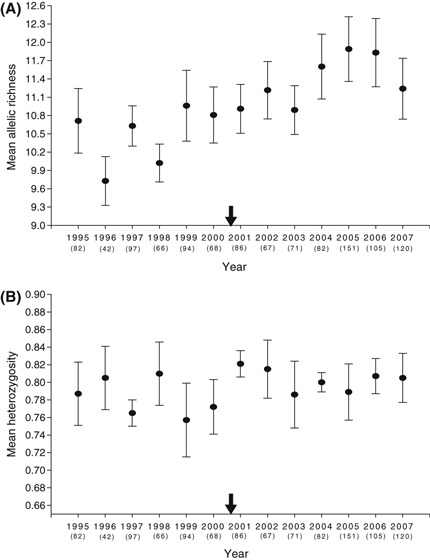
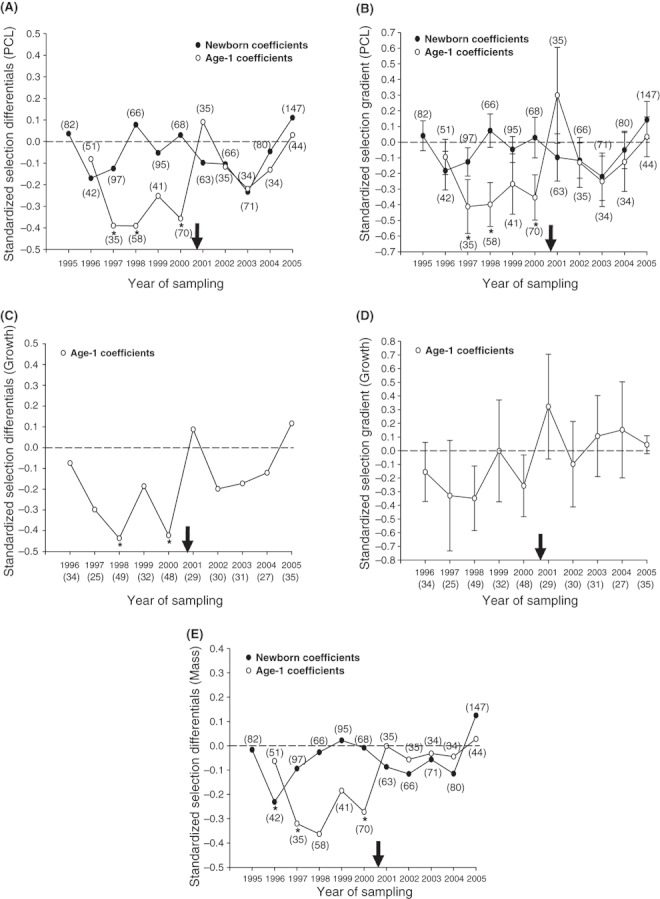
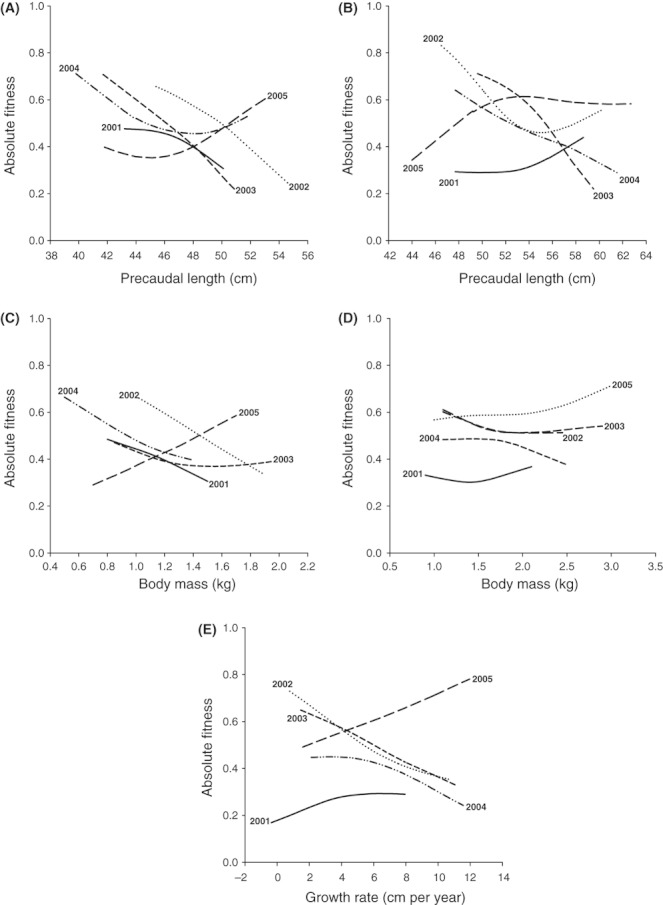
The level of genetic variation in natural populations influences evolutionary potential, and may therefore influence responses to selection in the face of future environmental changes. By combining long-term monitoring of marked individuals with genetic pedigree reconstruction, we assessed whether habitat loss influenced genetic variation in a lemon shark (Negaprion brevirostris) population at an isolated nursery lagoon (Bimini, Bahamas). We also tracked changes in the strength and direction of natural selection. Contrary to initial expectations, we found that after the habitat loss neutral genetic variation increased, as did additive genetic variance for juvenile morphological traits (body length and mass). We hypothesize that these effects might result from philopatric behavior in females coupled with a possible influx of male genotypes from other nursery sites. We also found changes in the strength of selection on morphological traits, which weakened considerably after the disturbance; habitat loss therefore changed the phenotypes favored by natural selection. Because such human-induced shifts in the adaptive landscape may be common, we suggest that conservation biologists should not simply focus on neutral genetic variation per se, but also on assessing and preserving evolutionary parameters, such as additive genetic variation and selection.
Keywords: additive genetic variance; evolutionary potential; heritability; heterozygosity; human disturbance; selection.
Figures
References
-
- Alleaume-Beharira M, Pen IR, Ronce O. Geographical patterns of adaptation within a species’ range: interactions between drift and gene flow. Journal of Evolutionary Biology. 2006;19:203–215. - PubMed
-
- Bell G, Gonzalez A. Evolutionary rescue can prevent extinction following environmental change. Ecology Letters. 2009;12:942–948. - PubMed
-
- Bishop JM, Leslie AJ, Bourquin SL, O'Ryan C. Reduced effective population size in an overexploited population of the Nile crocodile (Crocodylus niloticus. Biological Conservation. 2009;142:2335–2341.
-
- Both C, Bouwhuis S, Lessells CM, Visser ME. Climate change and population declines in a long-distance migratory bird. Nature. 2006;441:81–83. - PubMed
LinkOut - more resources
Full Text Sources
