. 2015 Jan 7;7(269):269ra1.
doi: 10.1126/scitranslmed.3010524.

The human IgG anti-carbohydrate repertoire exhibits a universal architecture and contains specificity for microbial attachment sites

Affiliations

The human IgG anti-carbohydrate repertoire exhibits a universal architecture and contains specificity for microbial attachment sites

Christoph Schneider et al. Sci Transl Med. .

Abstract

Despite the paradigm that carbohydrates are T cell-independent antigens, isotype-switched glycan-specific immunoglobulin G (IgG) antibodies and polysaccharide-specific T cells are found in humans. We used a systems-level approach combined with glycan array technology to decipher the repertoire of carbohydrate-specific IgG antibodies in intravenous and subcutaneous immunoglobulin preparations. A strikingly universal architecture of this repertoire with modular organization among different donor populations revealed an association between immunogenicity or tolerance and particular structural features of glycans. Antibodies were identified with specificity not only for microbial antigens but also for a broad spectrum of host glycans that serve as attachment sites for viral and bacterial pathogens and/or exotoxins. Tumor-associated carbohydrate antigens were differentially detected by IgG antibodies, whereas non-IgG2 reactivity was predominantly absent. Our study highlights the power of systems biology approaches to analyze immune responses and reveals potential glycan antigen determinants that are relevant to vaccine design, diagnostic assays, and antibody-based therapies.


Figures

Fig. 1
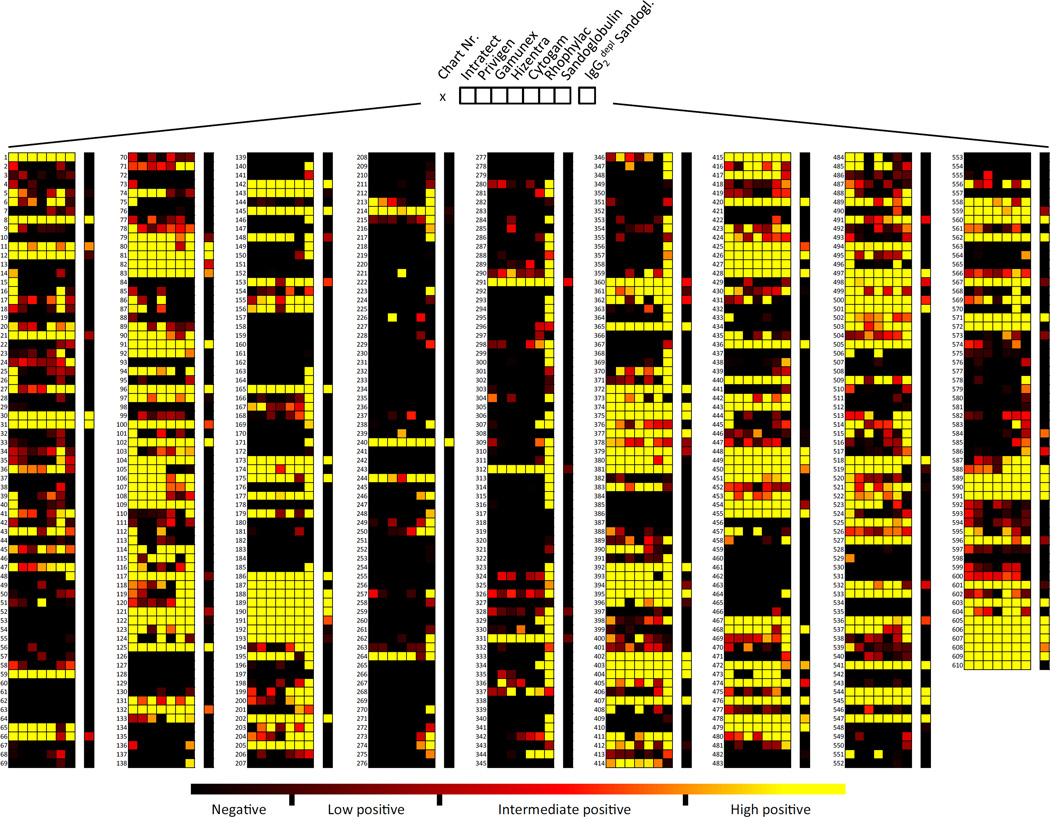
Fig. 1. Comprehensive heat map depicting IgG antibody binding activities of IVIG/SCIG preparations to the 610 printed glycans on Consortium for Functional Glycomics (CFG) glycan array version 5.1
Each column represents a specific IVIG/SCIG preparation, each row an individual glycan. Color code with computed categorization of binding intensity is indicated, as outlined in the Materials and methods section.
Fig. 2
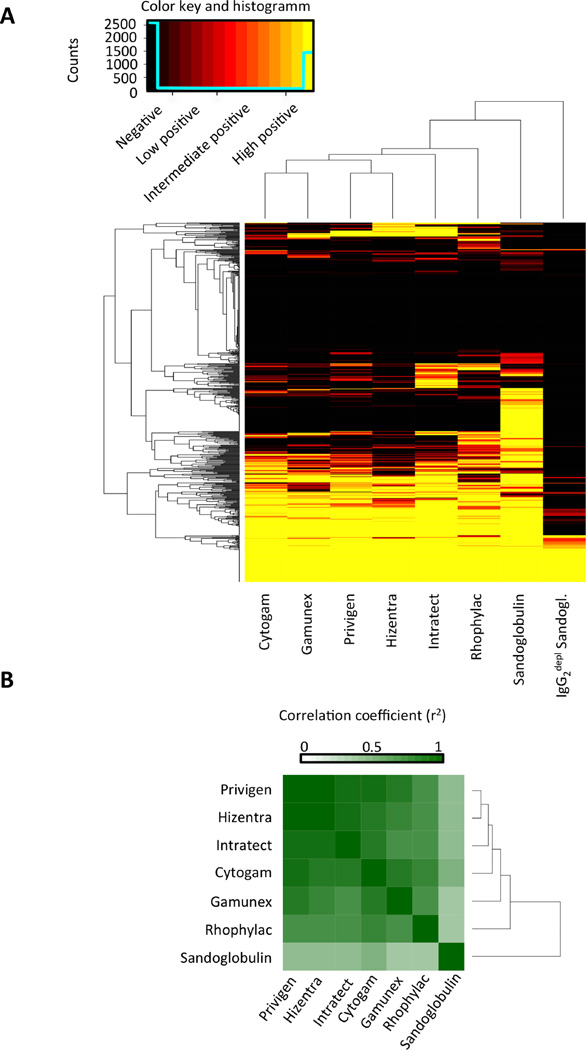
Fig. 2. Diverse commercial IVIG/SCIG preparations recognize carbohydrate structures on CFG glycan array version 5.1 with similar binding profiles
(A) The ordered (by dendrogram algorithm) glycan-binding reactivity matrix for IgG antibodies in IVIG/SCIG. The color key and distribution histogram indicates reactivity levels as outlined in materials and methods. (B) The dendrogrammed correlation matrix for IVIG/SCIG preparations in color code representation.
Fig. 3
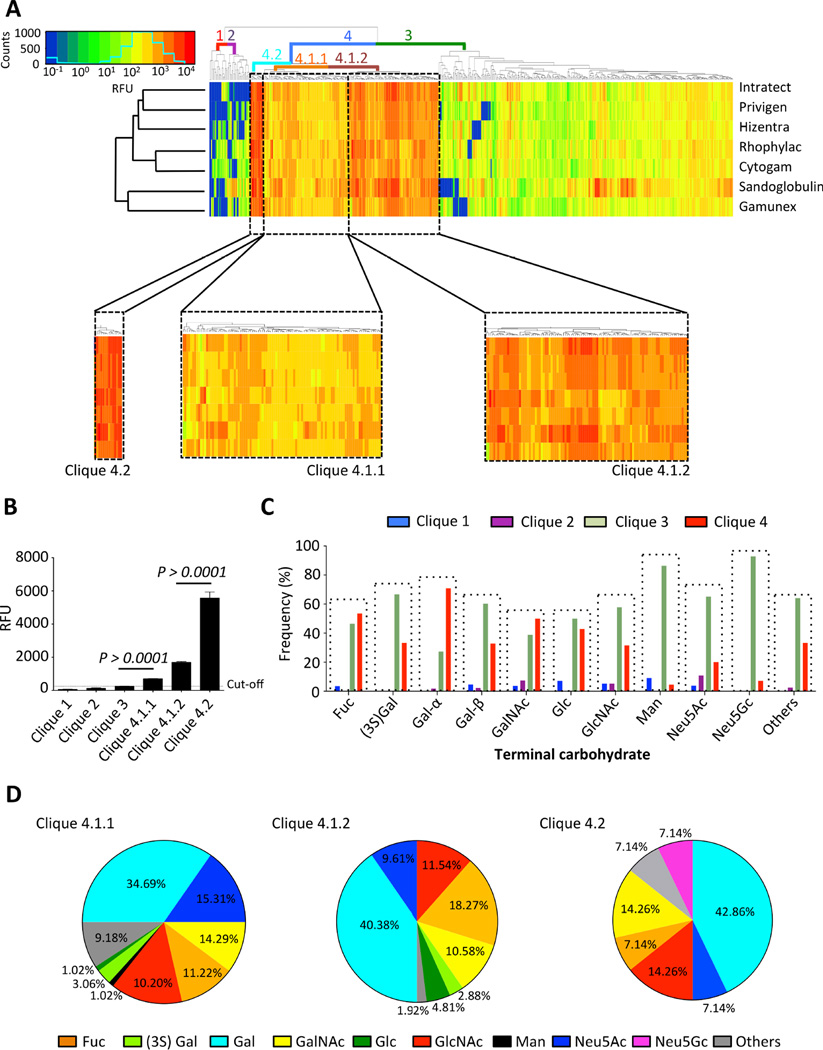
Fig. 3. The immunogenicity of glycans correlates with distinct terminal carbohydrate moieties, as revealed by systematic analysis of polyclonal IgG from healthy donor populations
(A) The cliques of antibodies with highly correlated reactivities in the IgG repertoire of IVIG/SCIG preparations computed by the dendrogram clustering algorithm. Color coded lines indicate part of the dendrogram tree linked to cliques 1–4, and subordinate cliques 4.1.1, 4.1.2 and 4.2. The color key and distribution histogram is depicted. (B) Only cliques 4.1.1, 4.1.2 and 4.2 showed averaged RFU levels that were considerably higher than the isotype-controlled cut-off level, determined as outlined in the materials and methods section. Statistical analysis was performed using an unpaired t-test (n=7). Bars show mean ± SEM. (C) The clique distribution (clique 4: positive binding; cliques 1–3: no binding) of glycans with distinct terminal carbohydrate moieties. (D) Percentage of glycans with specific terminal carbohydrates represented in cliques 4.1.1, 4.1.2 and 4.2.
Fig. 4
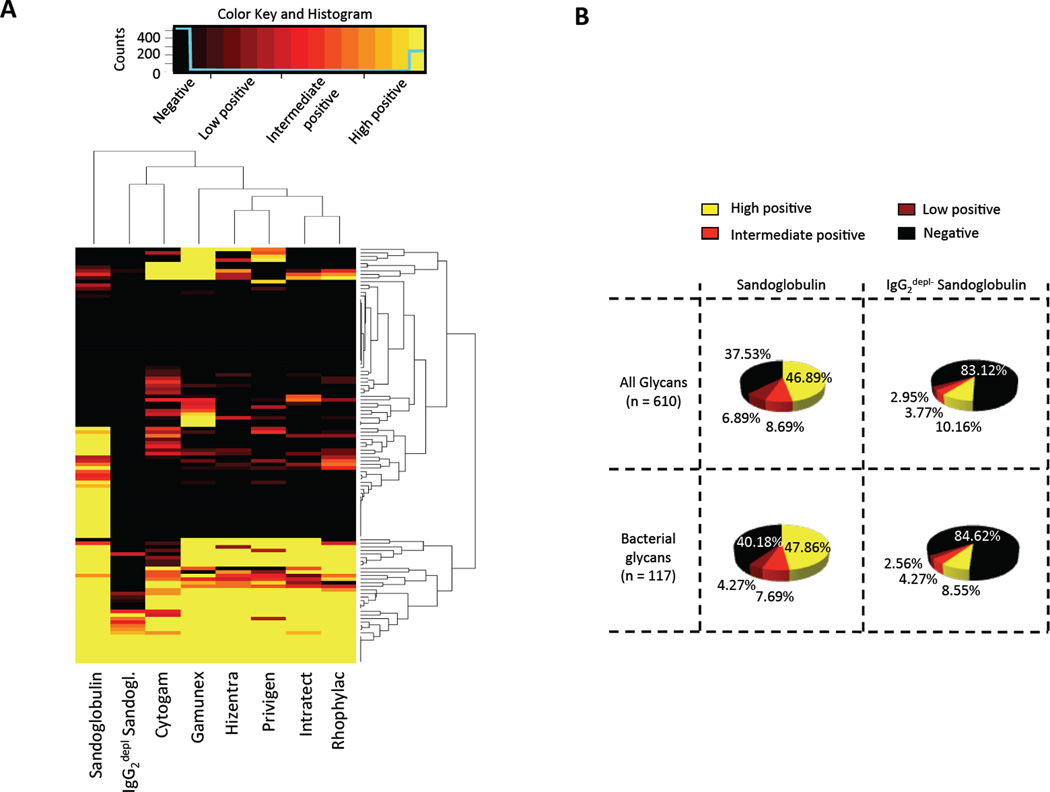
Fig. 4. Reactivity of IVIG/SCIG preparations with bacterial glycan antigens as identified using the Bacterial Carbohydrate Structure Data Base (BCSDB)
(A) Dendrogrammed glycan-reactivity matrix for identified bacterial antigens. The color key and distribution histogram indicates reactivity levels as outlined in materials and methods. (B) Comparison of IgG2-depleted Sandoglobulin and complete Sandoglobulin in terms of binding capacity to bacterial glycans and to the total of printed glycans on the array. Sectors of circle graphs indicate categories of signal intensity as defined in the Materials and methods section. Note: reactivity or non-reactivity to individual glycan epitopes on the array may not reflect overall reactivity to pathogens or functional properties of the individual preparations.
Fig. 5
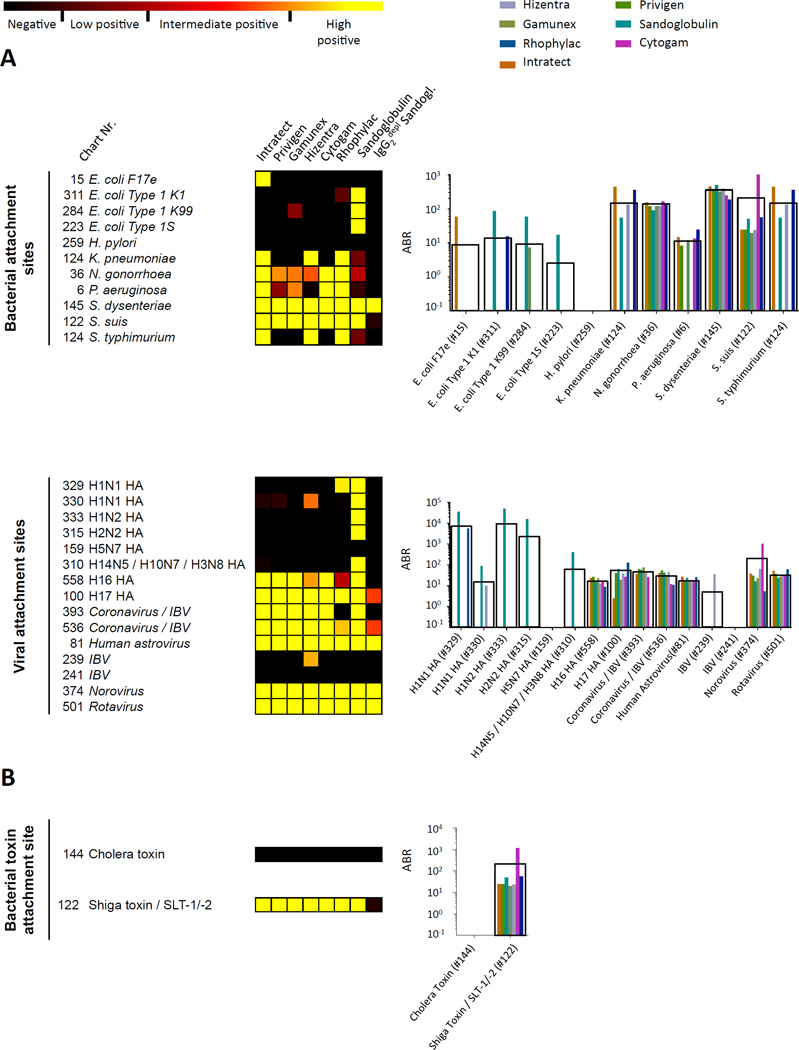
Fig. 5. Differential recognition of attachment sites for distinct viruses, bacteria (A) and bacterial toxins (B) by commercial IVIG/SCIG preparations
On the left, heat map presentation, on the right, corresponding antigen binding ratio (ABR) values based on isotype controls, as outlined in the Materials and methods section, black boxes indicate average ABR values.
Fig. 6
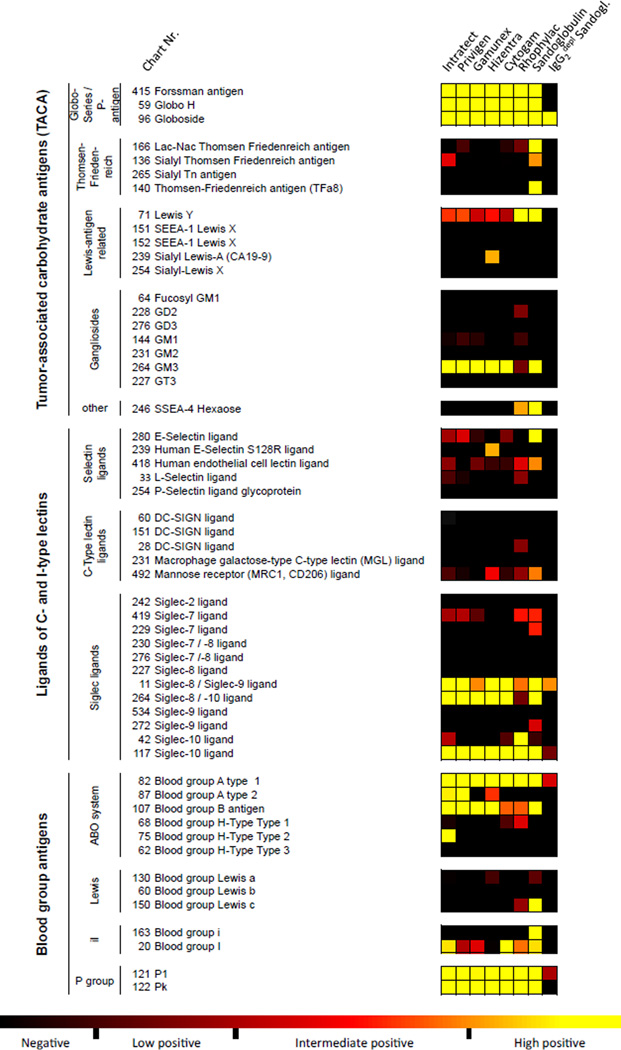
Fig. 6. Differential recognition of known, biologically relevant, carbohydrate-structures by IVIG/SCIG preparations
Color code with computed categorization of binding intensity is indicated, as outlined in the Materials and methods section.

References

    1. Brusic V, Gottardo R, Kleinstein SH, Davis MM, committee Hs. Computational resources for high-dimensional immune analysis from the Human Immunology Project Consortium. Nat Biotech. 2014;32:146–148. - PMC - PubMed
    1. Pulendran B, Li S, Nakaya HI. Systems vaccinology. Immunity. 2010;33:516–529. - PMC - PubMed
    1. Pulendran B. Learning immunology from the yellow fever vaccine: innate immunity to systems vaccinology. Nat Rev Immunol. 2009;9:741–747. - PubMed
    1. Li S, Rouphael N, Duraisingham S, Romero-Steiner S, Presnell S, Davis C, Schmidt DS, Johnson SE, Milton A, Rajam G, Kasturi S, Carlone GM, Quinn C, Chaussabel D, Palucka AK, Mulligan MJ, Ahmed R, Stephens DS, Nakaya HI, Pulendran B. Molecular signatures of antibody responses derived from a systems biology study of five human vaccines. Nat Immunol. 2014;15:195–204. - PMC - PubMed
    1. von Gunten S, Smith D, Cummings R, Riedel S, Miescher S, Schaub A, Hamilton R, Bochner BS. Intravenous immunoglobulin contains a broad repertoire of anti-carbohydrate antibodies that is no restricted to the IgG2 subclass. J Allergy Clin Immunol. 2009;123:1268–1276. - PMC - PubMed

Publication types