


Detection of Theileria equi and Babesia caballi using microscopic and molecular methods in horses in suburb of Urmia, Iran
- PMID: 25568706
- PMCID: PMC4279624
Detection of Theileria equi and Babesia caballi using microscopic and molecular methods in horses in suburb of Urmia, Iran
Abstract
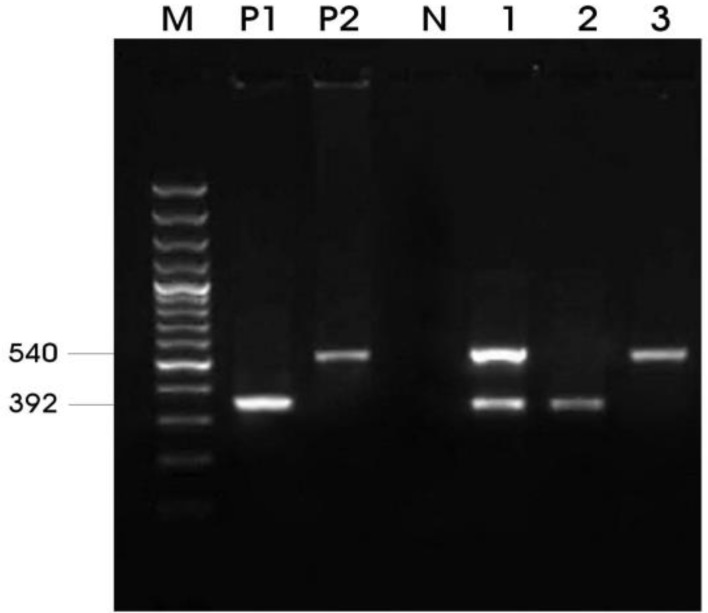
Equine piroplasmosis is a severe disease of horses caused by the intra-erythrocyte protozoan, Theileria equi and Babesia caballi. The aim of this study was to identify equine piroplasmosis based on molecular and morphometrical features in horses in suburb of Urmia, West Azerbaijan province, Iran. From April to September 2011, a total number of 240 blood samples were collected randomly from horses of 25 villages. The specimens were transferred to the laboratory and the blood smears stained with Geimsa, and the morphological and biometrical data of parasite in any infected erythrocyte were considered. Extracted DNA from each blood sample was used in multiplex PCR in order to confirm the presence of B. caballi and T. equi. Microscopic observation on 240 blood smears determined that 15 (6.25%) and 5 (2.80%) samples were infected by T. equi and B. caballi, respectively. The mixed infections occurred in 2 (0.83%) samples. The results of the PCR assays showed 26 (10.83%), 14 (5.83%) and 4 (1.66%) were distinguished as T. equi, B. caballi and mixed infection, respectively. Differences in infection rates were statistically nonsignificant between male and female horses and among different age groups. Our findings indicated that T. equi and B. caballi were prevalent in horse population.
Keywords: Babesia caballi; Horse; Iran; Multiplex PCR; Theileria equi.
Figures
References
-
- Mehlhorn H, Schein E. Redescription of Babesia equi Laveran, 1901 as Theileria equi Mehlhorn, Schein 1998. Parasitol Res. 1998;84(6):467–475. - PubMed
-
- Alhassan A, Govind Y, Thanh NT, et al. Comparative evaluation of the sensitivity of LAMP, PCR and in vitro culture methods for the diagnosis of equine piroplasmosis. Parasitol Res. 2007;100(5):1165–1168. - PubMed
-
- Schein E. Equine babesiosis. In: Ristic M, editor. Babesiosis of Domestic Animals and Man. Boca Raton, USA: CRS Press ; 1988. pp. 197–208.
-
- Uilenberg G. Babesia-a historical overview. Vet Parasitol. 2006;138(1-2):3–10. - PubMed
-
- Friedhoff KT, Tenter AM, Muller I. Hemoparasites of equines: Impact on international trade of horses. Rev Sci Tech. 1990;9(4):1187–1194. - PubMed
LinkOut - more resources
Full Text Sources
Miscellaneous