. 2015 Jan 8;11(1):e1004601.
doi: 10.1371/journal.ppat.1004601. eCollection 2015 Jan.

Preferential use of central metabolism in vivo reveals a nutritional basis for polymicrobial infection

Affiliations

Preferential use of central metabolism in vivo reveals a nutritional basis for polymicrobial infection

Christopher J Alteri et al. PLoS Pathog. .

Abstract

The human genitourinary tract is a common anatomical niche for polymicrobial infection and a leading site for the development of bacteremia and sepsis. Most uncomplicated, community-acquired urinary tract infections (UTI) are caused by Escherichia coli, while another bacterium, Proteus mirabilis, is more often associated with complicated UTI. Here, we report that uropathogenic E. coli and P. mirabilis have divergent requirements for specific central pathways in vivo despite colonizing and occupying the same host environment. Using mutants of specific central metabolism enzymes, we determined glycolysis mutants lacking pgi, tpiA, pfkA, or pykA all have fitness defects in vivo for P. mirabilis but do not affect colonization of E. coli during UTI. Similarly, the oxidative pentose phosphate pathway is required only for P. mirabilis in vivo. In contrast, gluconeogenesis is required only for E. coli fitness in vivo. The remarkable difference in central pathway utilization between E. coli and P. mirabilis during experimental UTI was also observed for TCA cycle mutants in sdhB, fumC, and frdA. The distinct in vivo requirements between these pathogens suggest E. coli and P. mirabilis are not direct competitors within host urinary tract nutritional niche. In support of this, we found that co-infection with E. coli and P. mirabilis wild-type strains enhanced bacterial colonization and persistence of both pathogens during UTI. Our results reveal that complementary utilization of central carbon metabolism facilitates polymicrobial disease and suggests microbial activity in vivo alters the host urinary tract nutritional niche.


Conflict of interest statement

The authors have declared that no competing interests exist.

Figures
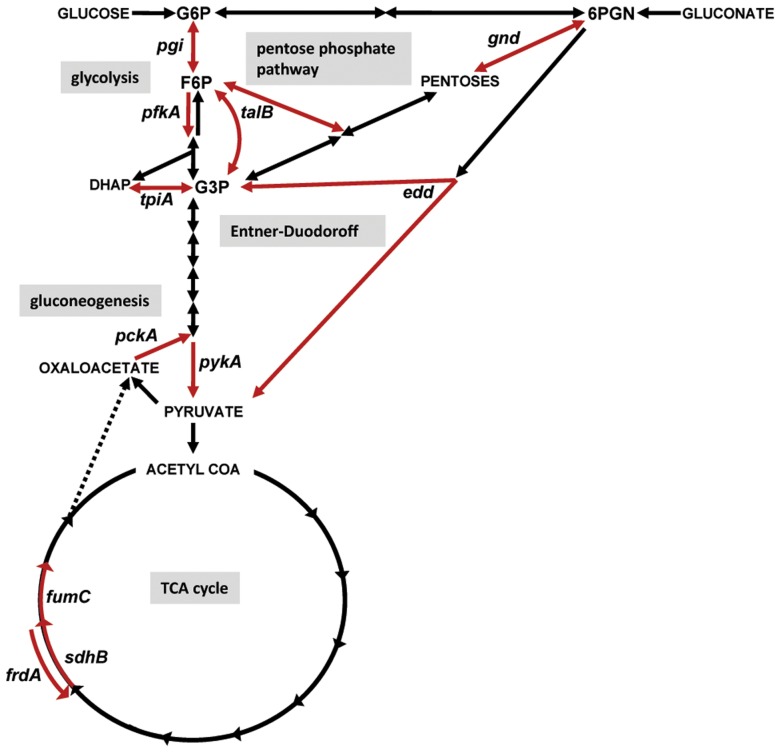
Figure 1
Figure 1. Diagram of central metabolism and map of the specific pathways disrupted by targeted mutations in uropathogenic E. coli and P. mirabilis.
Carbon sources or biochemical intermediates shared between pathways are indicated in capital letters or abbreviated: G6P, glucose-6-phosphate; F6P, fructose-6-phosphate; G3P, glyceraldehyde-3-phosphate; 6PGN, 6-phosphogluconate. Reactions are denoted with arrows. Specific reactions (red arrows) were targeted by deletion or insertion in E. coli CFT073 or P. mirabilis HI4320, respectively. In glycolysis: pgi, glucose-6-phosphate isomerase; pfkA, 6-phosphofructokinase transferase; tpiA, triosephosphate isomerase; pykA, pyruvate kinase; in pentose phosphate pathway: gnd, 6-phosphogluconate dehydrogenase; talB, transaldolase; in Entner-Duodoroff pathway: edd, 6-phosphogluconate dehydratase; in gluconeogenesis: pckA, phosphoenolpyruvate carboxykinase; and in the TCA cycle: sdhB, succinate dehydrogenase; fumC, fumarate hydratase; frdA, fumarate reductase.
Figure 2
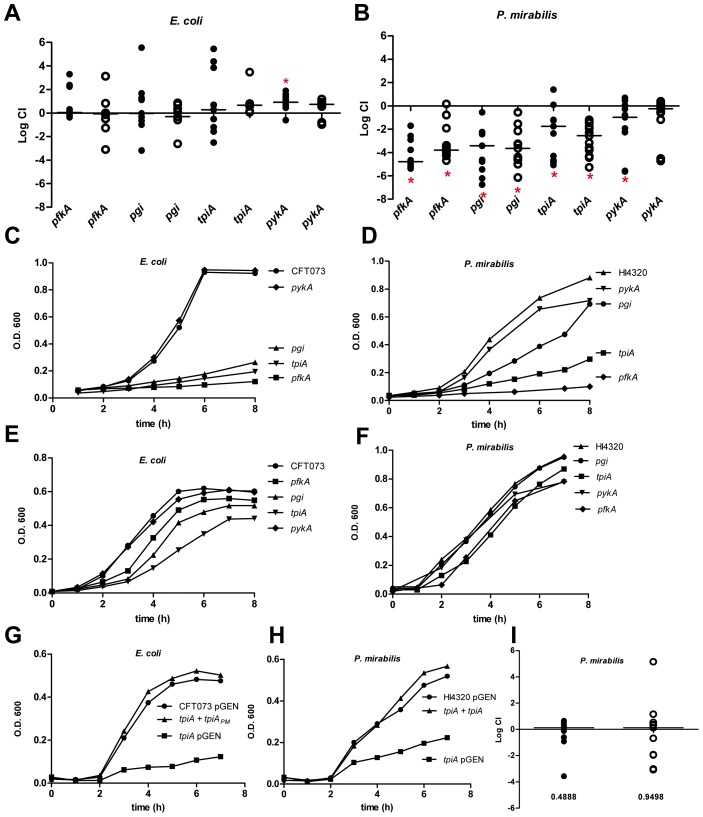
Figure 2. Glycolysis is required for P. mirabilis but is dispensible for E. coli during experimental urinary tract infection.
In vivo competitive indices (CI) were determined following co-challenge infections of susceptible female CBA/J mice with a 1∶1 ratio of either wild-type (A) E. coli CFT073 or (B) P. mirabilis HI4320 and their respective glycolysis mutant strains. E. coli were recovered at 48 h post-inoculation (hpi). P. mirabilis was recovered at 7 d post-inoculation (dpi). Each dot represents bladder (closed symbols) and kidneys (open symbols) from an individual animal. Bars indicate the median CI. Significant differences in colonization (*P<0.05) were determined with the Wilcoxon signed-rank test. A CI<1 indicates a fitness defect. Growth of (C, E) E. coli CFT073 or (D, F) P. mirabilis HI4320 wild-type strains and mutants in: pgi, glucose-6-phosphate isomerase; pfkA, 6-phosphofructokinase transferase; tpiA, triosephosphate isomerase; and pykA, pyruvate kinase during culture in defined medium containing 0.2% glucose as the sole carbon source (C, D) or in LB medium (E, F). A representative growth curve is shown for each panel. Restoration of wild-type growth in triosephosphate isomerase mutants (G) growth in MOPS defined medium containing 0.2% glucose of E. coli CFT073 (pGEN), UPEC tpiA (pGEN), and the E. coli CFT073 tpiA mutant containing pGEN into which the tpiA gene from P. mirabilis was cloned. (H) P. mirabilis HI4320 containing empty vector (pGEN), HI4320 tpiA (pGEN), and complemented HI4320 tpiA mutant containing pGEN-tpiA in minimal salts medium containing 0.2% glucose. (I) In vivo complementation of P. mirabilis tpiA mutant bacteria. Competitive indices were determined following an in vivo co-challenge infection of female CBA/J mice with P. mirabilis HI4320 (pGEN) and HI4320 (tpiA pGEN-tpiA). Bacteria were recovered at 7 dpi. Each dot represents the CI in bladders (closed symbols) and kidneys (open symbols) from an individual animal. Bars represent the median CI. P-values are indicated on the graph.
Figure 3
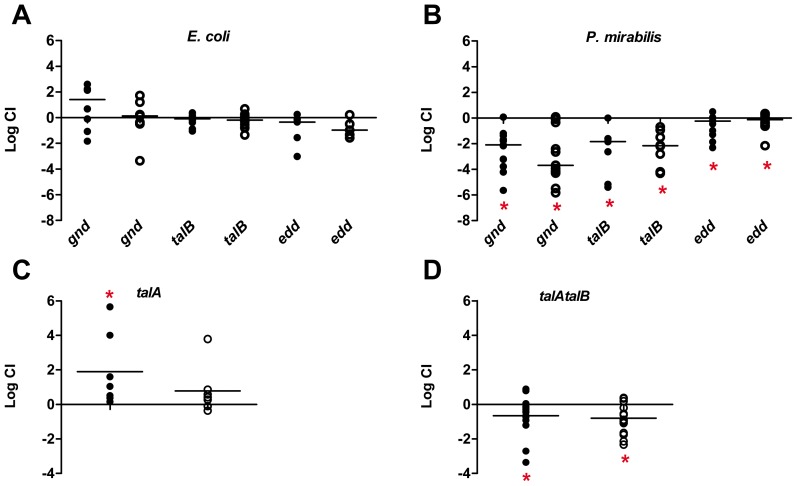
Figure 3. In vivo role for the pentose phosphate pathway and the Entner-Doudoroff pathway for pathogen colonization of the urinary tract.
Competitive indices (CI) were determined following co-challenge infections of female CBA/J mice with a 1∶1 ratio of either wild-type (A) UPEC CFT073 or (B) P. mirabilis HI4320 and their respective mutants in the following genes: gnd, 6-phosphogluconate dehydrogenase; talB, transaldolase; and edd, 6-phosphoglyconate dehydrase. The contribution of multiple transaldolase isoenzymes in E. coli were assessed using co-challenge infections with wild-type E. coli CFT073 and (C) talA or (D) talAtalB mutant strains. E. coli CFT073 was cultured from bladders and kidneys at 48 hpi. P. mirabilis HI4320 was cultured from organs at 7 dpi. Each dot represents bladder (closed symbols) and kidneys (open symbols) from an individual animal. Bars indicate the median CI. Significant differences in colonization (*P<0.05) were determined by Wilcoxon signed-rank test. A CI<1 indicates a fitness defect.
Figure 4
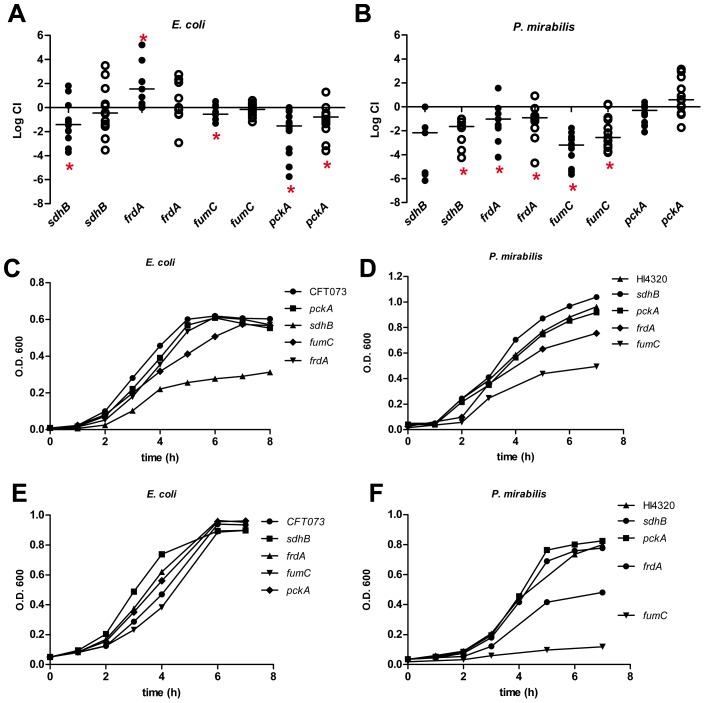
Figure 4. Contribution of the TCA cycle and gluconeogenesis during UTI.
Competitive indices (CI) were determined following co-challenge infections of female CBA/J mice with a 1∶1 ratio of either wild-type (A) E. coli CFT073 or (B) P. mirabilis HI4320 and their respective mutants in the following genes: sdhB, succinate dehydrogenase; fumC, fumarate hydratase; frdA, fumarate reductase; and pckA, phosphoenolpyruvate carboxykinase. E. coli was cultured from bladders and kidneys at 48 hpi. P. mirabilis was cultured from organs at 7 dpi. Each dot represents bladder (closed symbols) and kidneys (open symbols) from an individual animal. Bars indicate the median CI. Significant differences in colonization (*P<0.05) were determined by the Wilcoxon signed-rank test. A CI<1 indicates a fitness defect. Growth of (C, E) E. coli CFT073 and (D, F) P. mirabilis HI4320 wild-type and mutant strains in: sdhB, fumC, frdA, and pckA in LB medium (C, D) or defined medium containing 0.2% glucose (E, F) as the carbon source. A representative growth curve is shown for each panel.
Figure 5
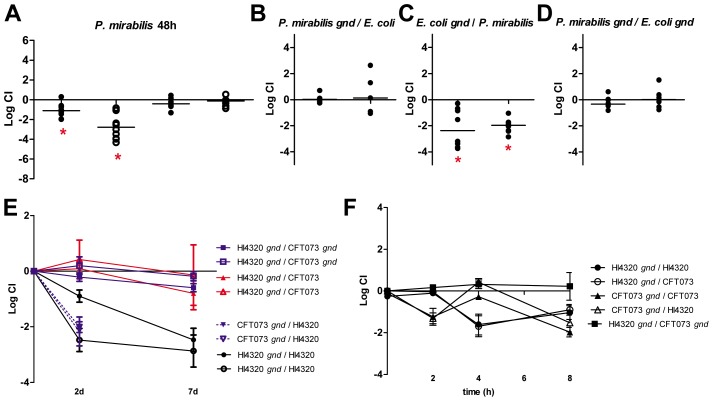
Figure 5. Polymicrobial infection alters central metabolism requirements for E. coli and P. mirabilis.
(A) Competitive indices (CI) were determined following co-challenge infections of female CBA/J mice with a 1∶1 ratio of wild-type: mutant bacteria for gnd (oxidative pentose phosphate pathway) and pckA (gluconeogenesis) for P. mirabilis at 48 hpi. Each dot represents bladder (closed symbols) and kidneys (open symbols) from an individual animal. Competitive indices (CI) were determined 48 hpi for mixed infections of (B) wild-type E. coli CFT073 and P. mirabilis HI4320 gnd, (C) wild-type HI4320 and CFT073 gnd, and (D) HI4320 gnd and CFT073 gnd mutant constructs. Each circle represents bladder or kidneys from an individual animal. In (A–D) bars indicate the median CI and significant differences in colonization (*) (P<0.05) were determined by Wilcoxon signed-rank test. (E) In vivo CI at 48 h and 7 d post-infection. (F) CI during logarithmic growth in LB medium. For (A–F) a CI<1 indicates a fitness defect. For mixed infections CFU/ml were determined following plating of serial dilutions on LB agar with and without tetracycline. CFU from tetracycline-containing plates (P. mirabilis are TetR) were subtracted from total CFU recovered on LB agar without antibiotics to determine CFU/ml for E. coli (TetS).
Figure 6
Figure 6. Polymicrobial urinary tract infection with E. coli and P. mirabilis enhances persistent bacterial colonization.
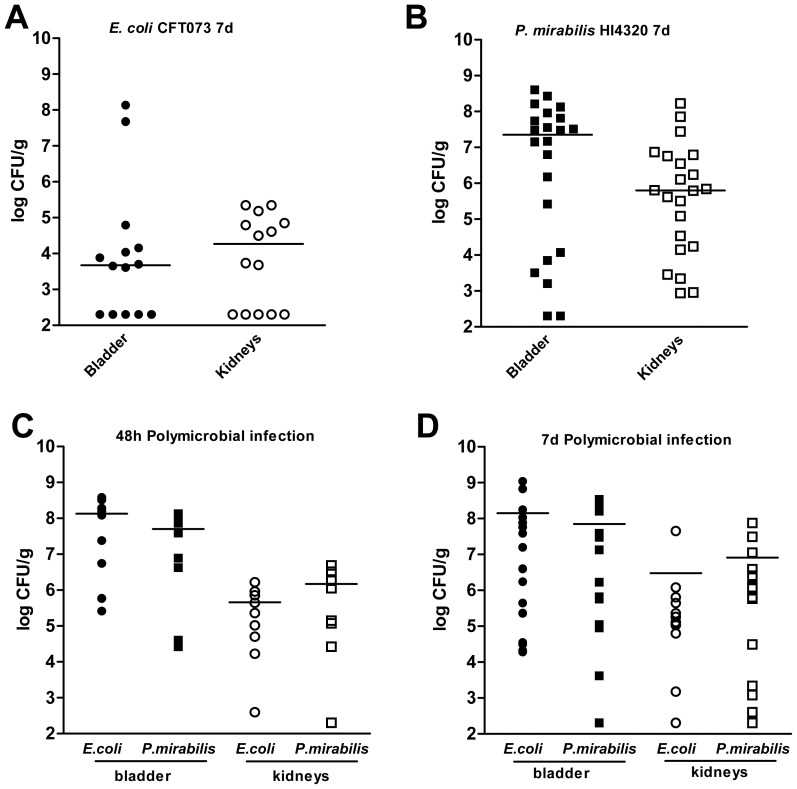
Colonization levels following independent infections of female CBA/J mice with (A) UPEC strain CFT073 or (B) P. mirabilis HI4320. Colonization levels at (C) 48 hpi and (D) 7 dpi following polymicrobial infection of female CBA/J mice inoculated with a mixture of CFT073 and HI4320. The CFU/g of tissue for UPEC (circles) and P. mirabilis (squares) from bladders (closed symbols) and kidneys (open symbols) from individual animals at 48 hpi for (C) or 7 dpi for (A, B, D). Bars indicate the median values.
Figure 7
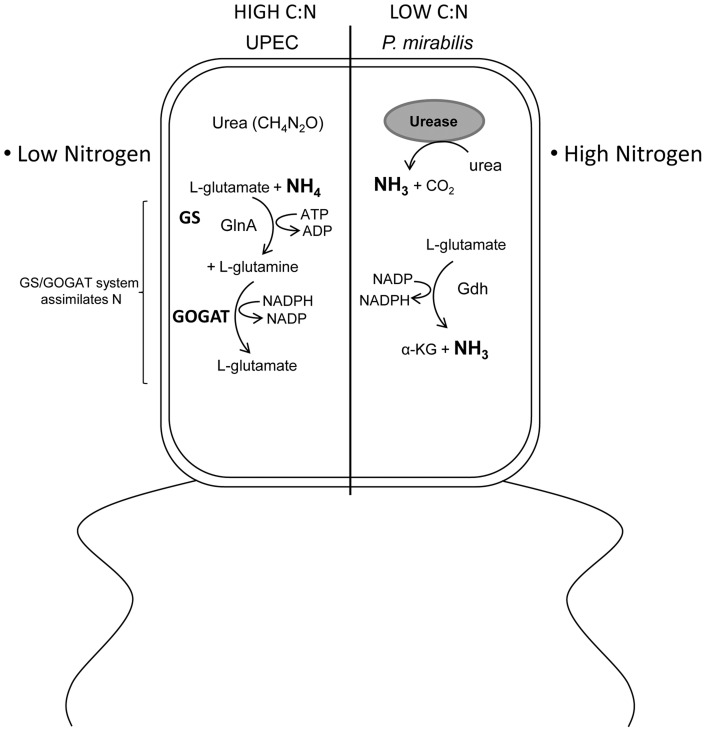
Figure 7. Model describing the differential effect of E. coli and P. mirabilis metabolism on the C/N ratio within the urinary tract.
The urinary tract environment has a low C/N ratio due to the dilute mixture of amino acids and peptides as the primary carbon source and the abundance of urea in urine providing a substantial nitrogen contribution. E. coli is unable to utilize or sense the nitrogen sequestered in urea because it lacks urease, which liberates ammonia from urea. In contrast, P. mirabilis is urease positive; consequently, P. mirabilis senses a physiologically lower C/N ratio than E. coli. This results in E. coli activation of the glutamine synthetase and glutamate oxo-glutarate aminotransferase system (GS/GOGAT) to assimilate nitrogen while P. mirabilis assimilates nitrogen, via glutamate dehydrogenase (Gdh) due to the apparent excess nitrogen available from ammonia produced by urea hydrolysis. This difference in physiological nitrogen availability explains the dramatic difference between E. coli and P. mirabilis central carbon pathway requirements for fitness during urinary tract infection.

References

    1. Eisenreich W, Dandekar T, Heesemann J, Goebel W (2010) Carbon metabolism of intracellular bacterial pathogens and possible links to virulence. Nat Rev Microbiol 8: 401–412. - PubMed
    1. Somerville GA, Proctor RA (2009) At the crossroads of bacterial metabolism and virulence factor synthesis in Staphylococci. Microbiol Mol Biol Rev 73: 233–248. - PMC - PubMed
    1. Poncet S, Milohanic E, Maze A, Nait Abdallah J, Ake F, et al. (2009) Correlations between carbon metabolism and virulence in bacteria. Contrib Microbiol 16: 88–102. - PubMed
    1. Rohmer L, Hocquet D, Miller SI (2011) Are pathogenic bacteria just looking for food? Metabolism and microbial pathogenesis. Trends Microbiol 19: 341–348. - PMC - PubMed
    1. Smith H (2000) Questions about the behaviour of bacterial pathogens in vivo. Philos Trans R Soc Lond B Biol Sci 355: 551–564. - PMC - PubMed

Publication types

MeSH terms