Review
. 2015 Apr;25(4):234-40.
doi: 10.1016/j.tcb.2014.12.006. Epub 2015 Jan 5.

Integrins and cancer: regulators of cancer stemness, metastasis, and drug resistance

Affiliations
Review

Integrins and cancer: regulators of cancer stemness, metastasis, and drug resistance

Laetitia Seguin et al. Trends Cell Biol. 2015 Apr.

Abstract

Interactions between cancer cells and their surroundings can trigger essential signaling cues that determine cell fate and influence the evolution of the malignant phenotype. As the primary receptors involved in cell-matrix adhesion, integrins present on the surface of tumor and stromal cells have a profound impact on the ability to survive in specific locations, but in some cases, these receptors can also function in the absence of ligand binding to promote stemness and survival in the presence of environmental and therapeutic stresses. Understanding how integrin expression and function is regulated in this context will enable the development of new therapeutic approaches to sensitize tumors to therapy and suppress their metastatic phenotype.

Keywords: cancer; drug resistance; integrins; stemness.


Figures

Figure 1
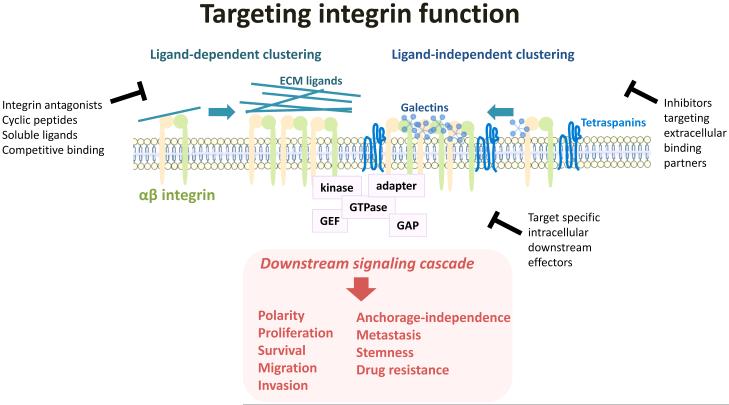
Figure 1. Integrin clustering is critical for generation of downstream signals
Integrin function can be blocked upstream by preventing ligand binding or ligand-independent clustering, or by targeting specific downstream integrin effectors.
Figure 2
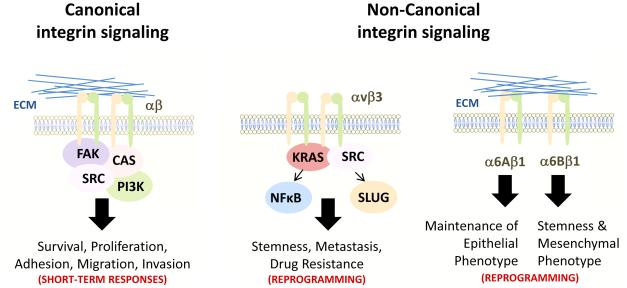
Figure 2. Canonical and non-canonical role of integrin αvβ3
Integrin signaling generated by binding to extracellular matrix ligands occurs via focal adhesion complexes leading to physical changes in cellular movement and activity. In the absence of ligand binding, αvβ3 integrin instead recruits KRAS and Src to drive cellular reprogramming events that lead to phenotypic changes that promote stemness, metastasis, and drug resistance. The 6A and 6B splice variants of α6β1 integrin serve as a phenotypic switch between epithelial vs. mesenchymal states.
Figure 3
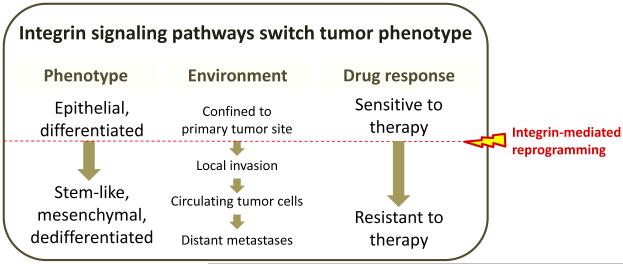
Figure 3. Reprogramming of cancer cells by integrin signaling pathways
Integrin signaling is capable of reprogramming tumor cells to promote invasion, hematogeneous dissemination, and seeding of distant metastatic sites. Similarly, stemness and drug resistance can be triggered by changes in integrin expression and function. Understanding these events offers new therapeutic opportunities for cancer.

References

    1. Desgrosellier JS, Cheresh DA. Integrins in cancer: biological implications and therapeutic opportunities. Nature reviews. Cancer. 2010;10:9–22. - PMC - PubMed
    1. Mouw JK, et al. Tissue mechanics modulate microRNA-dependent PTEN expression to regulate malignant progression. Nat Med. 2014;20:360–367. - PMC - PubMed
    1. Brooks PC, et al. Localization of matrix metalloproteinase MMP-2 to the surface of invasive cells by interaction with integrin alpha v beta 3. Cell. 1996;85:683–693. - PubMed
    1. Shattil SJ, et al. The final steps of integrin activation: the end game. Nature reviews. Molecular cell biology. 2010;11:288–300. - PMC - PubMed
    1. Barczyk M, et al. Integrins. Cell and tissue research. 2010;339:269–280. - PMC - PubMed