


Reductions in synaptic proteins and selective alteration of prepulse inhibition in male C57BL/6 mice after postnatal administration of a VIP receptor (VIPR2) agonist
- PMID: 25575489
- PMCID: PMC4433594
- DOI: 10.1007/s00213-014-3848-z
Reductions in synaptic proteins and selective alteration of prepulse inhibition in male C57BL/6 mice after postnatal administration of a VIP receptor (VIPR2) agonist
Abstract
Rationale: An abundance of genetic and epidemiologic evidence as well as longitudinal neuroimaging data point to developmental origins for schizophrenia and other mental health disorders. Recent clinical studies indicate that microduplications of VIPR2, encoding the vasoactive intestinal peptide (VIP) receptor VPAC2, confer significant risk for schizophrenia and autism spectrum disorder. Lymphocytes from patients with these mutations exhibited higher VIPR2 gene expression and VIP responsiveness (cAMP induction), but mechanisms by which overactive VPAC2 signaling may lead to these psychiatric disorders are unknown.
Objectives: We subcutaneously administered the highly selective VPAC2 receptor agonist Ro 25-1553 to C57BL/6 mice from postnatal day 1 (P1) to P14 to determine if overactivation of VPAC2 receptor signaling during postnatal brain maturation affects synaptogenesis and selected behaviors.
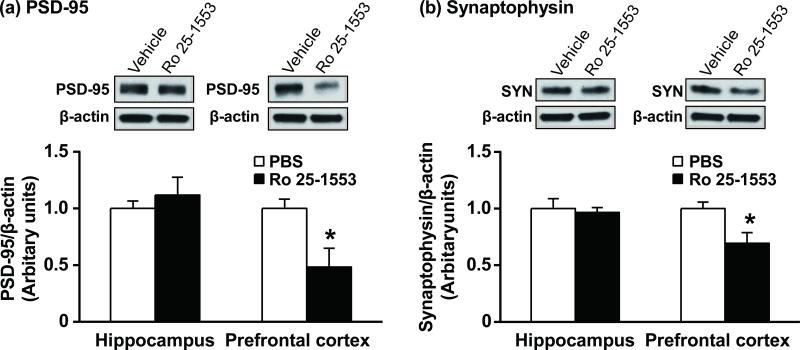
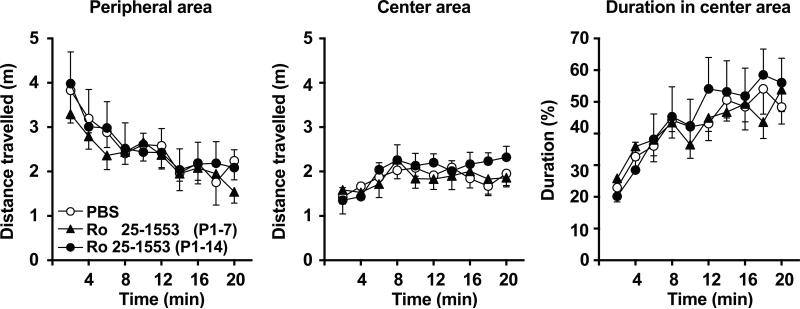
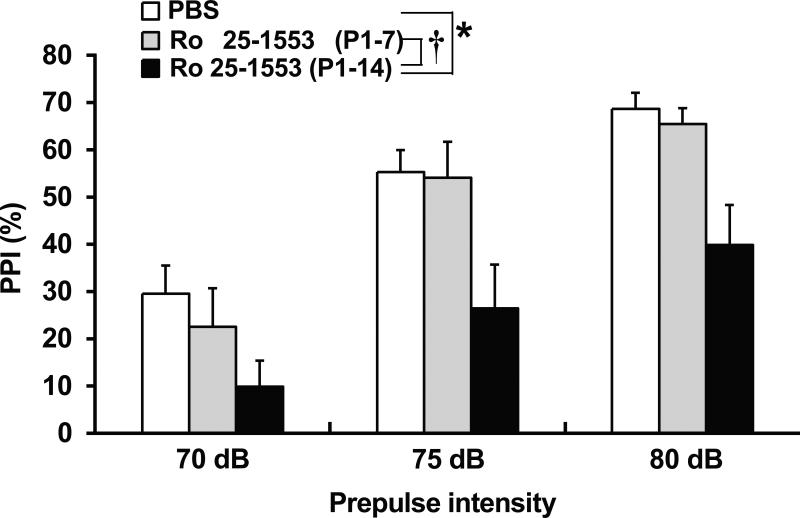
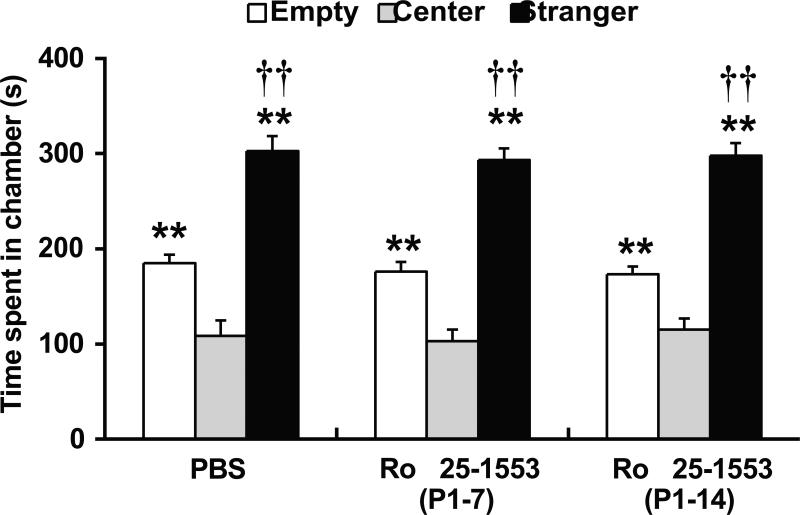
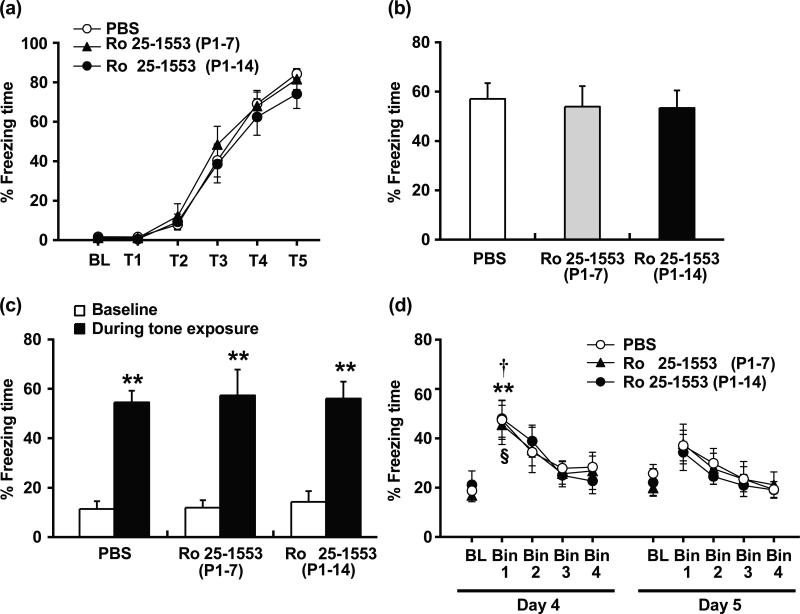
Results: Western blot analyses on P21 revealed significant reductions of synaptophysin and postsynaptic density protein 95 (PSD-95) in the prefrontal cortex, but not in the hippocampus in Ro 25-1553-treated mice. The same postnatally restricted treatment resulted in a disruption in prepulse inhibition of the acoustic startle measured in adult mice. No effects were observed in open-field locomotor activity, sociability in the three-chamber social interaction test, or fear conditioning or extinction.
Conclusion: Overactivation of the VPAC2 receptor in the postnatal mouse results in a reduction in synaptic proteins in the prefrontal cortex and selective alterations in prepulse inhibition. These findings suggest that the VIPR2-linkage to mental health disorders may be due in part to overactive VPAC2 receptor signaling during a critical time of synaptic maturation.
Figures
References
-
- Allais A, Burel D, Isaac ER, Gray SL, Basille M, Ravni A, Sherwood NM, Vaudry H, Gonzalez BJ. Altered cerebellar development in mice lacking pituitary adenylate cyclase-activating polypeptide. Eur J Neurosci. 2007;25:2604–2618. - PubMed
-
- Amann LC, Gandal MJ, Halene TB, Ehrlichman RS, White SL, McCarren HS, Siegel SJ. Mouse behavioral endophenotypes for schizophrenia. Brain Res Bull. 2010;83:147–161. - PubMed
-
- Braff DL, Swerdlow NR, Geyer MA. Symptom correlates of prepulse inhibition deficits in male schizophrenic patients. Am J Psychiatry. 1999;156:596–602. - PubMed
-
- Charitidi K, Meltser I, Canlon B. Estradiol treatment and hormonal fluctuations during the estrous cycle modulate the expression of estrogen receptors in the auditory system and the prepulse inhibition of acoustic startle response. Endocrinology. 2012;153:4412–4421. - PubMed
-
- Eastwood SL, Cairns NJ, Harrison PJ. Synaptophysin gene expression in schizophrenia. Investigation of synaptic pathology in the cerebral cortex. Br J Psychiatry. 2000;176:236–242. - PubMed
Publication types
MeSH terms
Substances
Grants and funding
LinkOut - more resources
Full Text Sources
Other Literature Sources
Research Materials
