Review
. 2015 Mar;10(3):293-313.
doi: 10.1517/17460441.2015.1000857. Epub 2015 Jan 9.

Discovery of novel inhibitors for the treatment of glaucoma

Affiliations
Review

Discovery of novel inhibitors for the treatment of glaucoma

Kishore Cholkar et al. Expert Opin Drug Discov. 2015 Mar.

Abstract

Introduction: Glaucoma is a neurodegenerative disease with heterogeneous causes that result in retinal ganglionic cell (RGC) death. The discovery of ocular antihypertensives has shifted glaucoma therapy, largely, from surgery to medical intervention. Indeed, several intraocular pressure (IOP)-lowering drugs, with different mechanisms of action and RGC protective property, have been developed.

Areas covered: In this review, the authors discuss the main new class of kinase inhibitors used as glaucoma treatments, which lower IOP by enhancing drainage and/or lowering production of aqueous humor. The authors include novel inhibitors under preclinical evaluation and investigation for their anti-glaucoma treatment. Additionally, the authors look at treatments that are in clinics now and which may be available in the near future.

Expert opinion: Treatment of glaucoma remains challenging because the exact cause is yet to be delineated. Neuroprotection to the optic nerve head is undisputable. The novel Rho-associated kinase inhibitors have the capacity to lower IOP and provide optic nerve and RGC protection. In particular, the S-isomer of roscovitine has the capacity to lower IOP and provide neuroprotection. Combinations of selected drugs, which can provide maximal and sustained IOP-lowering effects as well as neuroprotection, are paramount to the prevention of glaucoma progression. In the near future, microRNA intervention may be considered as a potential therapeutic target.

Keywords: LIM kinase; Rho kinase; Rho-associated kinase inhibitors; carbonic anhydrase; discovery; efficacy; glaucoma; in vivo; inhibitors; intraocular pressure.


Conflict of interest statement

Financial and Competing Interests Disclosure

The authors are supported by NIH grants R01EY09171-16 and R01EY010659-14. The authors have no other relevant affiliations or financial involvement with any organization or entity with a financial interest in or financial conflict with the subject matter or materials discussed in the manuscript apart from those disclosed.

Figures
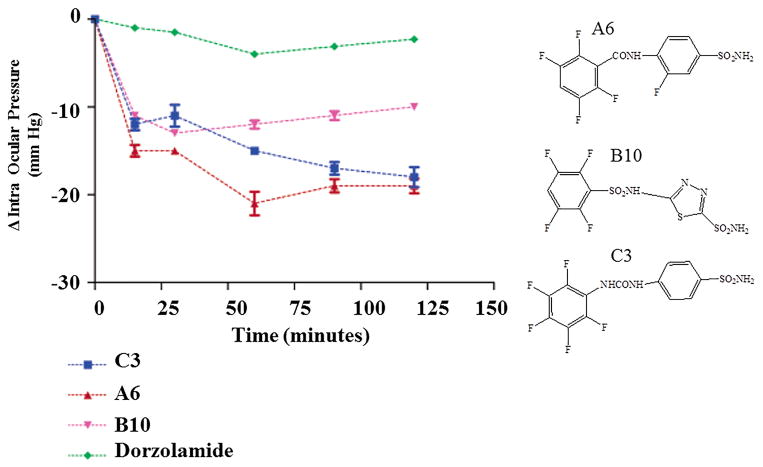
Fig 1
Fig 1
IOP lowering in hypertensive rabbits (initial pressure in the range of 34 ± 1mm Hg) after topical treatment with one drop (50 μL) of 2% solution of the CAIs dorzolamide, A6, B10 and C3 (mean ± standard error, from three different determinations). Structures for compounds A6, B10 and C3 are provided on the right side. Reproduced from [20] with permission of the American Chemical Society.
Fig 2
Fig 2
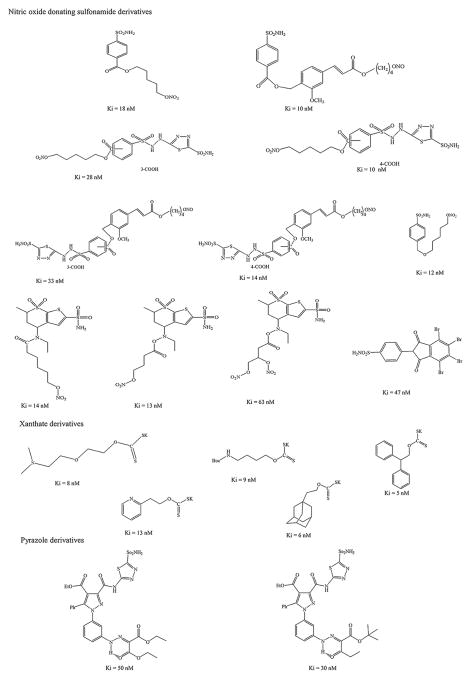
Chemical structures for nitric oxide donating sulfonamide, sulfonamide, xanthates and pyrazole derivatives with their carbonic anhydrase II inhibitory efficacy (Ki).
Fig 3
Fig 3
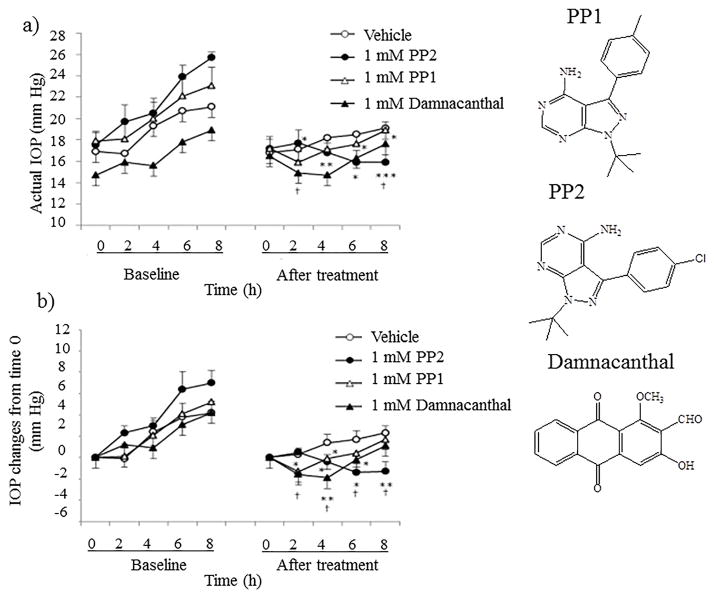
Changes in intraocular pressure (IOP) after administraton of SFK inhibitors. PP2, PP1 or damnacanthal at 1 mM, or vehicle, was intracamerally injected into one eye in ocular normotensive rabbits on the treatment day. IOP change after drug administration was compared to each scheduled time point of baseline. Baseline was measured 2 days before the treatment day without drug administration. Data represent mean ± SE for 5 animals. *p < 0.05, **p < 0.01, ***p < 0.001 relative to baseline (paired t-test). 'p < 0.05 relative to the vehicle-treated group (Student’s t-test). Reproduced from [38] with permission of Elsevier Limited.
Fig 4
Fig 4
Chemical structures for Rho-kinase inhibitors in clinical trials and under investigation
Fig 5
Fig 5
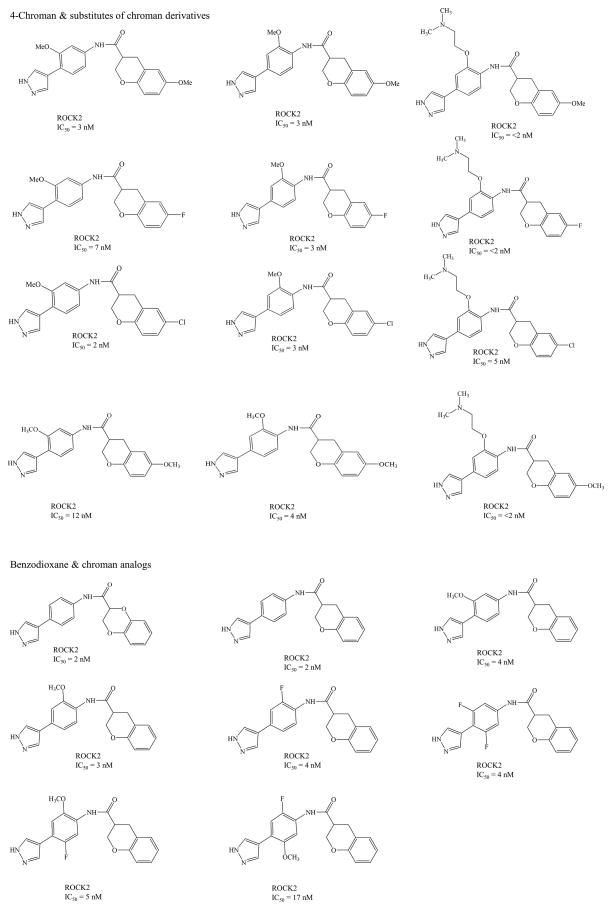
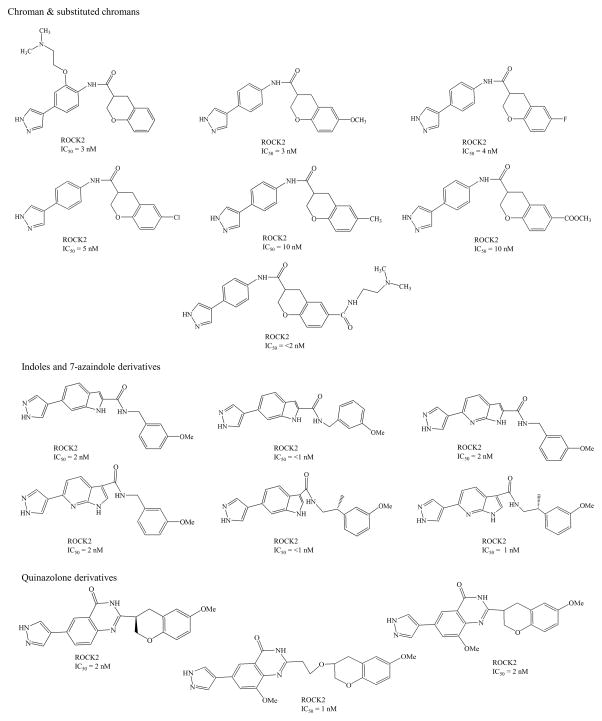
Chemical Structures for ROCK inhibitor derivatives and their IC50
Fig 6
Fig 6
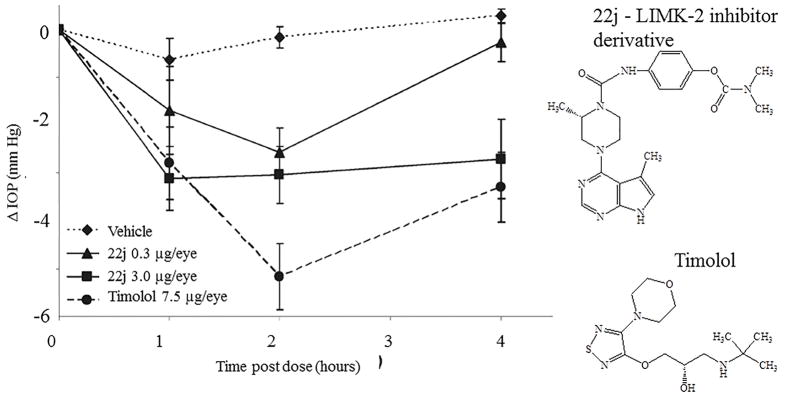
Change in intraocular pressure (IOP) in a dexamethasone induced ocular hypertensive mouse following topical instillation of 3 μL of a 1 mg/mL or 0.1 mg/mL HPMC based solutions of 22j, or of a 2.5 mg/mL solution of timolol (vehicle, n = 10; 0.3 μg of 22j, n = 10; 3 μg of 22j, n = 9; timolol n= 10). Xanthum gum was used as vehicle. Structures of compounds are presented on the right side. Reproduced from [86] with permission of the American Chemical Society.
Fig 7
Fig 7
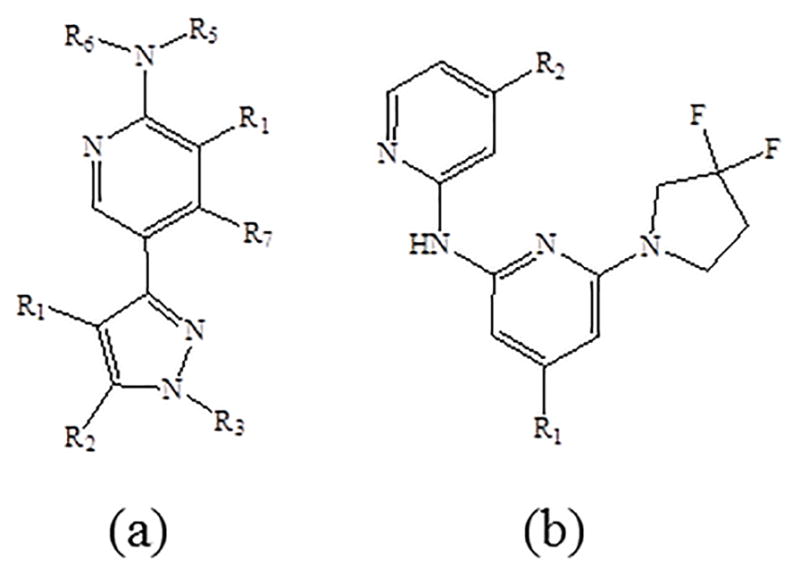
Chemical structures (a) master scaffold for Dual Leucine Zipper Kinase Inhibitor and (b) compound 26
Fig 8
Fig 8
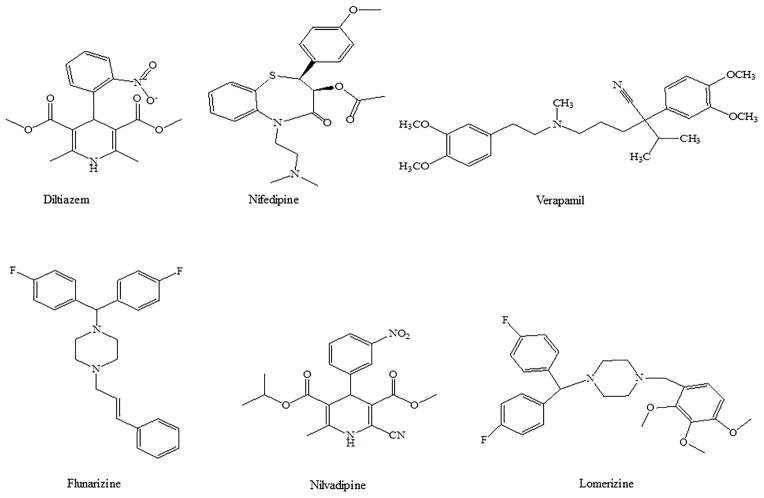
Chemical structures for calcium ion channel blockers/inhibitors used in the treatment of glaucoma

References

    1. Cheng JW, Cheng SW, Ma XY, et al. Myocilin polymorphisms and primary open-angle glaucoma: A systematic review and meta-analysis. PloS one. 2012;7(9):e46632. - PMC - PubMed
    1. Vadlapudi Dutt Aswani, Patel Ashaben, Cholkar K, et al. Recent patents on emerging therapeutics for the treatment of glaucoma, age related macular degeneration and uveitis. Recent Patents on Biomedical Engineering. 2012;5:83–101. - PMC - PubMed
    1. http://www.nei.nih.gov/eyedata/adultvision_usa.asp

    1. Quigley HA, Broman AT. The number of people with glaucoma worldwide in 2010 and 2020. The British journal of ophthalmology. 2006;90(3):262–267. - PMC - PubMed
    1. Coleman AL, Miglior S. Risk factors for glaucoma onset and progression. Survey of ophthalmology. 2008;53(Suppl1):S3–10. - PubMed

Publication types

MeSH terms

LinkOut - more resources