Gene expression analysis of head and neck squamous cell carcinoma survival and recurrence
- PMID: 25575813
- PMCID: PMC4381614
- DOI: 10.18632/oncotarget.2772
Gene expression analysis of head and neck squamous cell carcinoma survival and recurrence
Abstract
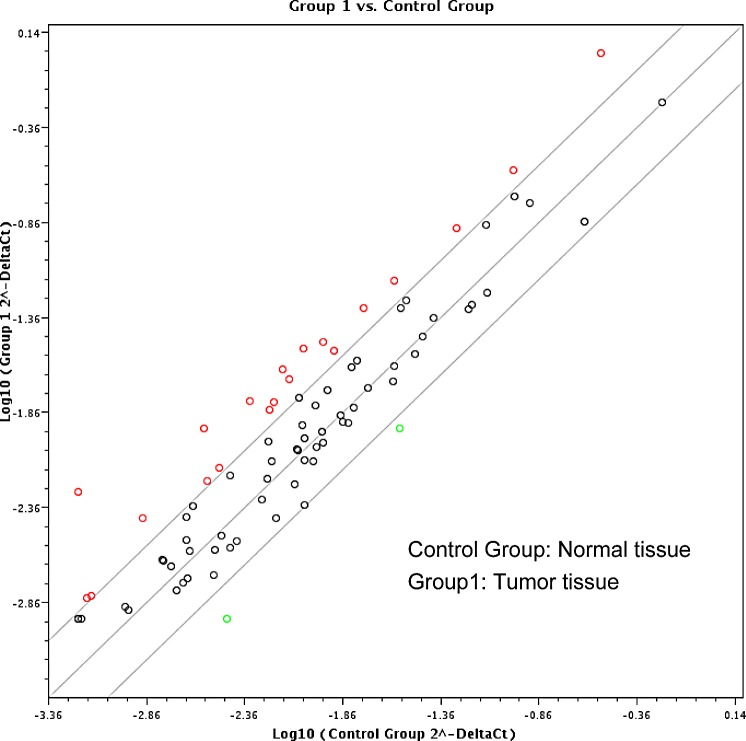
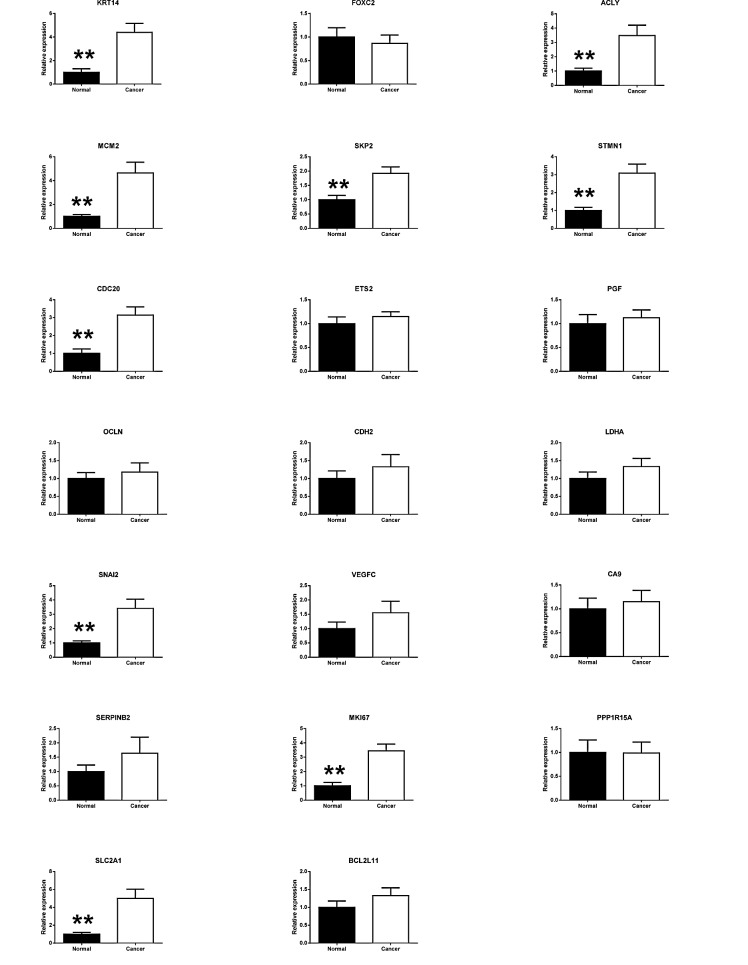
The squamous cell carcinomas represent about 90 % of all head and neck cancers, ranking the sixth most common human cancer. Approximately 450,000 of new cases of head and neck squamous cell carcinoma (HNSCC) are diagnosed every year. Unfortunately, because of diagnosis at the advanced stages and early metastasis to the lymph nodes, the HNSCC is associated with very high death rate. Identification of signature biomarkers and molecularly targeted therapies could provide more effective and specific cancer treatment, prevent recurrence, and increase survival rate. We used paired tumor and adjacent normal tissue samples to screen with RT² Profiler™ PCR Array Human Cancer PathwayFinderTM . Total of 20 up-regulated genes and two down-regulated genes were screened out. Out of 22 genes, 12 genes were subsequently validated to be significantly altered in the HNSCC; the samples were from all 41 patients. Five year survival and recurrence selected genes that could represent the biomarkers of survival and recurrence of the disease. We believe that comprehensive understanding of the unique genetic characteristics of HNSCC could provide novel diagnostic biomarkers and meet the requirement for molecular-targeted therapy for the HNSCC.
Figures
References
-
- Johnson N. Tobacco use and oral cancer: a global perspective. J Dent Educ. 2001;65(4):328–39. - PubMed
-
- Brocic M, Kozomara R, Cerovic S, Jovic N, Vukelic-Markovic S, Stosic S. Clinical significance of vascular endothelial growth factor expression in patients with carcinoma of the mouth floor and tongue. Vojnosanit Pregl. 2009;66(6):440–8. - PubMed
Publication types
MeSH terms
Substances
Grants and funding
LinkOut - more resources
Full Text Sources
Other Literature Sources
Medical