Thyroid hormone alleviates demyelination induced by cuprizone through its role in remyelination during the remission period
- PMID: 25577802
- PMCID: PMC4935357
- DOI: 10.1177/1535370214565975
Thyroid hormone alleviates demyelination induced by cuprizone through its role in remyelination during the remission period
Abstract
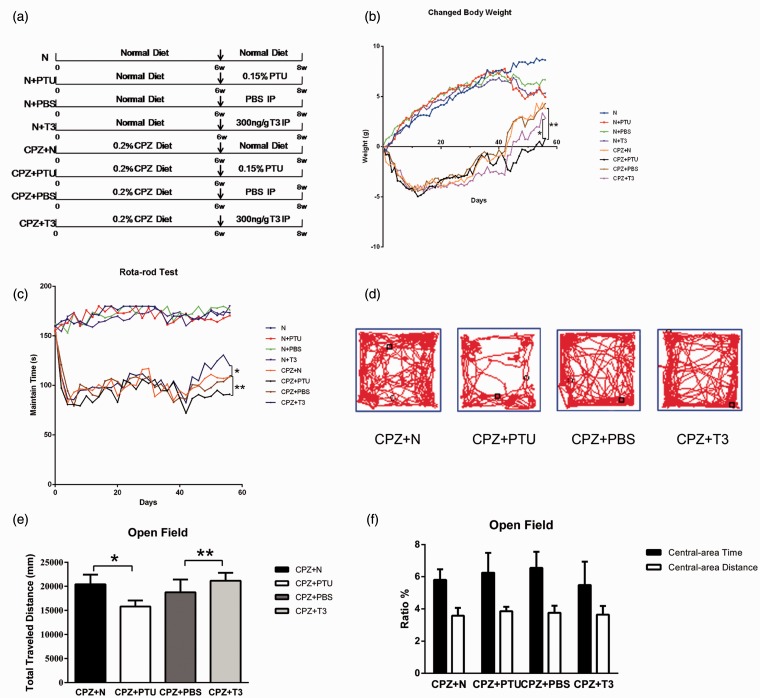
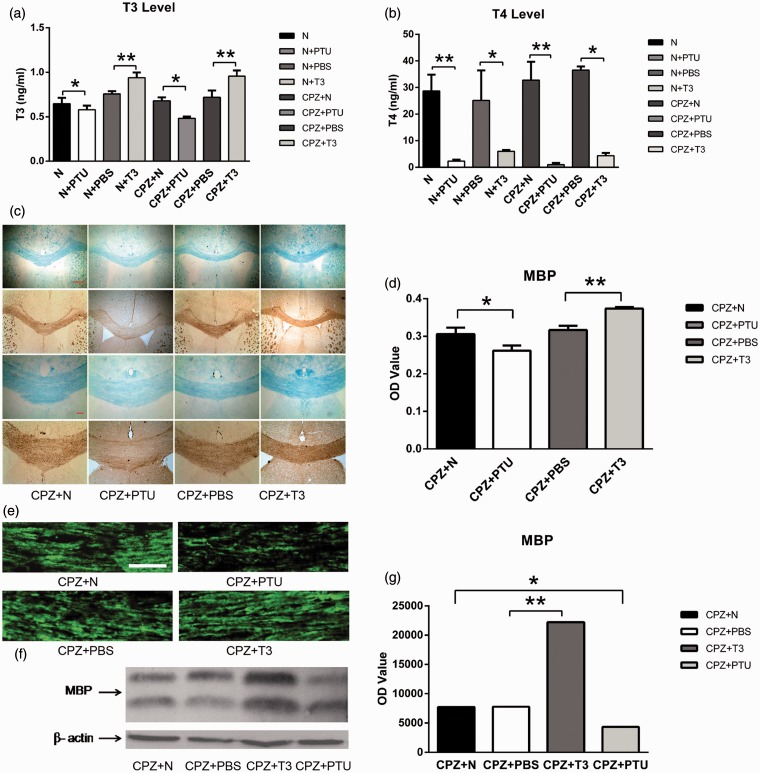
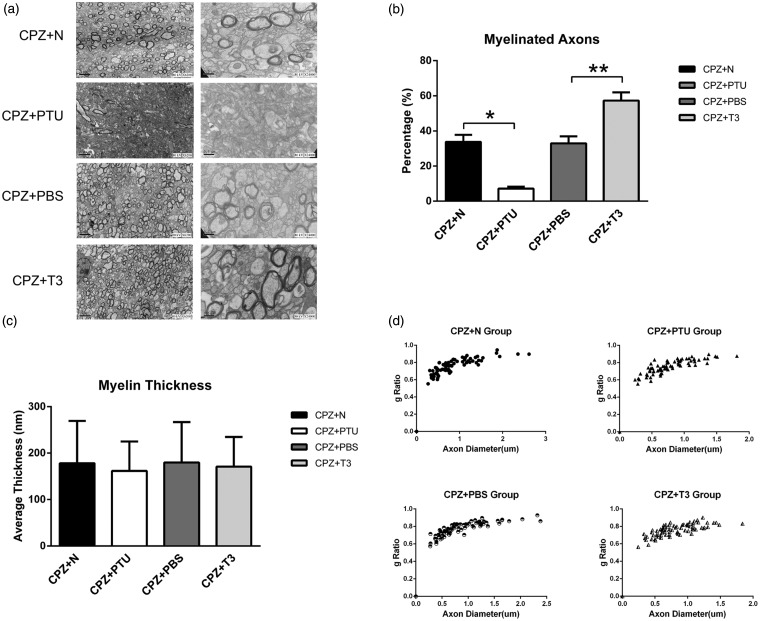
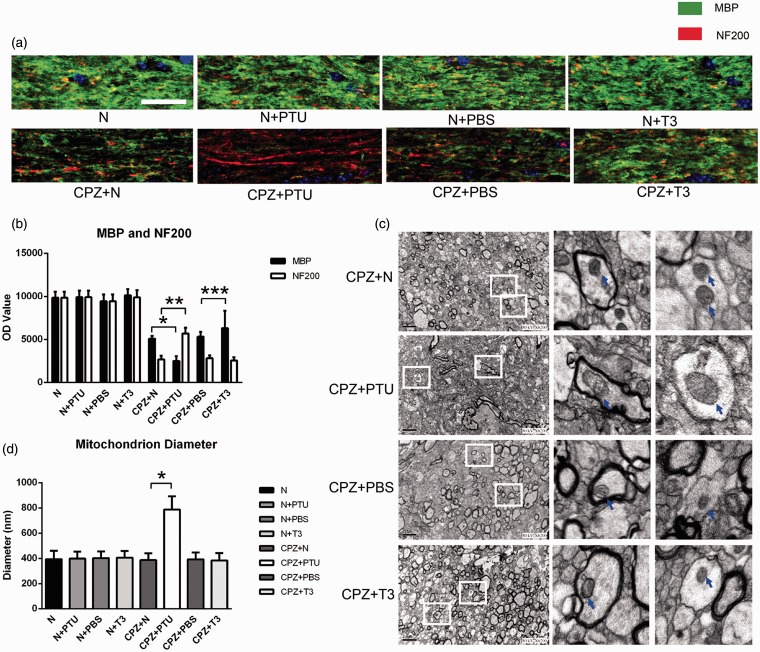
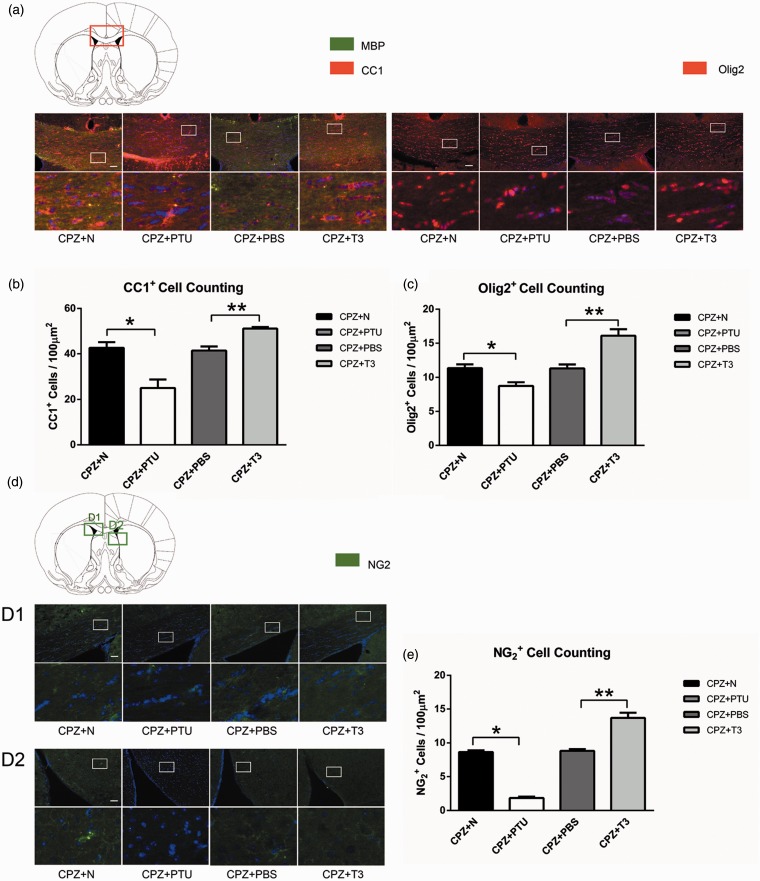
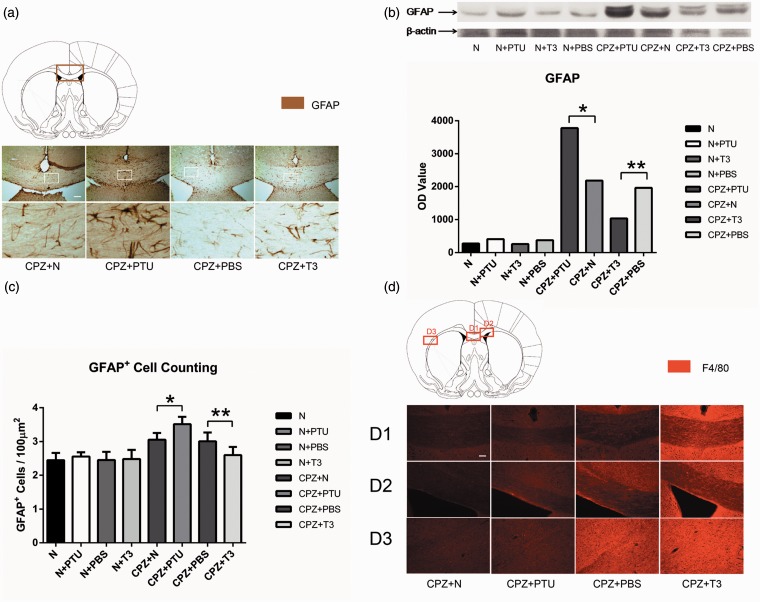
Multiple sclerosis (MS) is a disease induced by demyelination in the central nervous system, and the remission period of MS is crucial for remyelination. In addition, abnormal levels of thyroid hormone (TH) have been identified in MS. However, in the clinic, insufficient attention has been paid to the role of TH in the remission period. Indeed, TH not only functions in the development of the brain but also affects myelination. Therefore, it is necessary to observe the effect of TH on remyelination during this period. A model of demyelination induced by cuprizone (CPZ) was used to observe the function of TH in remyelination during the remission period of MS. Through weighing and behavioral tests, we found that TH improved the physical symptoms of mice impaired by CPZ. Supplementation of TH led to the repair of myelin as detected by immunohistochemistry and western blot. In addition, a sufficient TH supply resulted in an increase in myelinated axons without affecting myelin thickness and g ratio in the corpus callosum, as detected by electron microscopy. Double immunostaining with myelin basic protein and neurofilament 200 (NF200) showed that the CPZ-induced impairment of axons was alleviated by TH. Conversely, insufficient TH induced by 6-propyl-2-thiouracil resulted in the enlargement of mitochondria. Furthermore, we found that an adequate supply of TH promoted the proliferation and differentiation of oligodendrocyte lineage cells by immunofluorescence, which was beneficial to remyelination. Further, we found that TH reduced the number of astrocytes without affecting microglia. Conclusively, it was shown that TH alleviated demyelination induced by CPZ by promoting the development of oligodendrocyte lineage cells and remyelination. The critical time for remyelination is the remission period of MS. TH plays a significant role in alleviating demyelination during the remission period in the clinical treatment of MS.
Keywords: Thyroid hormone; corpus callosum; multiple sclerosis; myelin; oligodendrocyte.
© 2015 by the Society for Experimental Biology and Medicine.
Figures
References
-
- Trapp BD, Peterson J, Ransohoff RM, Rudick R, Mork S, Bo L. Axonal transection in the lesions of multiple sclerosis. N Engl J Med 1998; 338: 278–85. - PubMed
-
- Waxman SG. Demyelinating diseases—new pathological insights, new therapeutic targets. N Engl J Med 1998; 338: 323–5. - PubMed
-
- Scolding N, Franklin R. Axon loss in multiple sclerosis. Lancet 1998; 352: 340–1. - PubMed
-
- Wingerchuk DM, Weinshenker BG. Multiple sclerosis: epidemiology, genetics, classification, natural history, and clinical outcome measures. Neuroimaging Clin N Am 2000; 10: 611–24, vii. - PubMed
-
- Kister I, Chamot E, Salter A, Cutter G, Bacon T, Kalina J, Herbert J. Natural history of MS symptoms: perceived disease impact across disease span in nine neurologic domains among enrollees in North American Research Committee on Multiple Sclerosis (NARCOMS) Registry. Neurology 2012; 78: 19–27.
Publication types
MeSH terms
Substances
LinkOut - more resources
Full Text Sources
Other Literature Sources