. 2015 Jan 12:5:7649.
doi: 10.1038/srep07649.

Recombination is a key driver of genomic and phenotypic diversity in a Pseudomonas aeruginosa population during cystic fibrosis infection

Affiliations

Recombination is a key driver of genomic and phenotypic diversity in a Pseudomonas aeruginosa population during cystic fibrosis infection

Sophie E Darch et al. Sci Rep. .

Abstract

The Cystic Fibrosis (CF) lung harbors a complex, polymicrobial ecosystem, in which Pseudomonas aeruginosa is capable of sustaining chronic infections, which are highly resistant to multiple antibiotics. Here, we investigate the phenotypic and genotypic diversity of 44 morphologically identical P. aeruginosa isolates taken from a single CF patient sputum sample. Comprehensive phenotypic analysis of isolates revealed large variances and trade-offs in growth, virulence factors and quorum sensing (QS) signals. Whole genome analysis of 22 isolates revealed high levels of intra-isolate diversity ranging from 5 to 64 SNPs and that recombination and not spontaneous mutation was the dominant driver of diversity in this population. Furthermore, phenotypic differences between isolates were not linked to mutations in known genes but were statistically associated with distinct recombination events. We also assessed antibiotic susceptibility of all isolates. Resistance to antibiotics significantly increased when multiple isolates were mixed together. Our results highlight the significant role of recombination in generating phenotypic and genetic diversification during in vivo chronic CF infection. We also discuss (i) how these findings could influence how patient-to-patient transmission studies are performed using whole genome sequencing, and (ii) the need to refine antibiotic susceptibility testing in sputum samples taken from patients with CF.


Figures
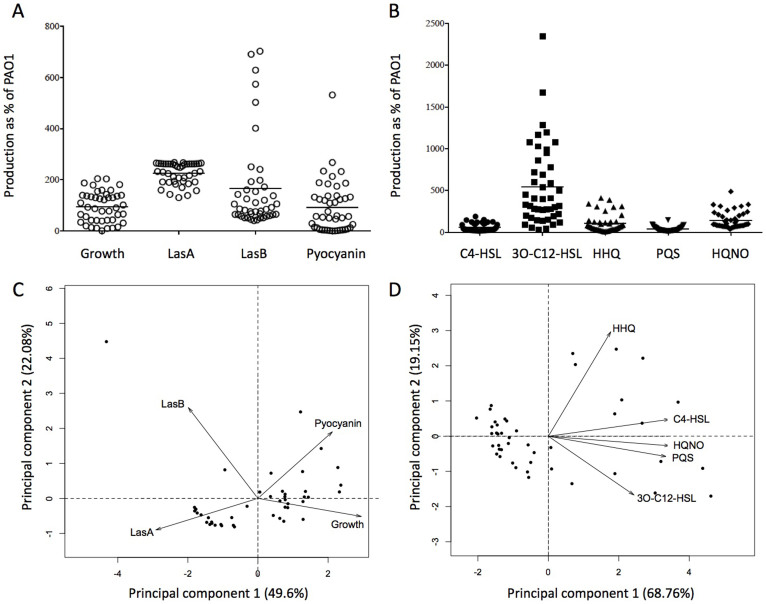
Figure 1
Figure 1. Phenotypic diversity of P. aeruginosa populations.
We measured growth, exoproducts and QS signal molecules of individual isolates and expressed these as a percentage of the values obtained for a PAO1 wildtype. Each data point represents the mean of triplicate assays for an individual isolate. (A) Phenotypic assays for growth and exoproduct production show that isolates display large variation between individuals when compared with the PAO1 reference strain. (B) QS Signal molecule measurements show that variation occurs between isolates when compared to the PAO1 reference strain. Panels (C) and (D) show the results of PCA on phenotypic and QS signal data respectively. PCA reduces multiple variables (four phenotypic traits or five QS molecules) to two dimensions, allowing us to plot multivariate data on simple x,y coordinates. The arrows are vectors that show how the original variables relate to the new x and y axes. The PCA plots show that QS signals are linked and that tradeoffs exist between other phenotypes measured.
Figure 2
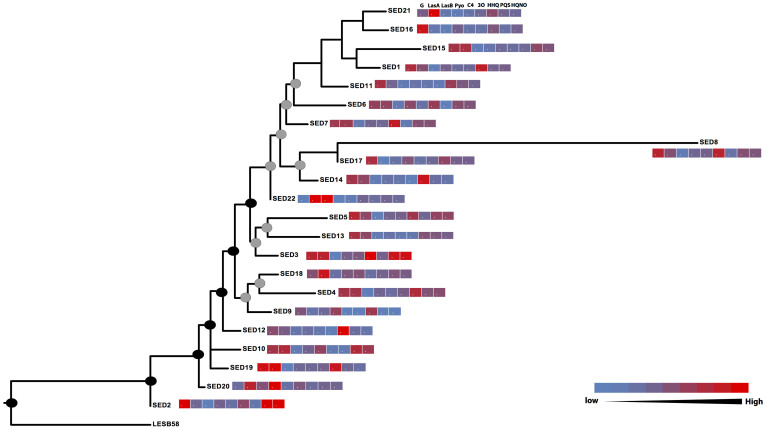
Figure 2. Maximum likelihood phylogeny based on SNP typing of the 22 sequenced isolates against LESB58.
Nodes obtaining >95% bootstrap support (black circles) and >75% bootstrap support (grey) are indicated on the tree. The heatmaps accompanying each taxa represent the levels of production of each phenotype relative to the reference PAO1 strain and are indicated above SED21. Abbreviations: G (growth), LasA (LasA protease), LasB (protease), Pyo (pyocyanin), C4 (C4-HSL), 3O (3O-C12-HSL).
Figure 3
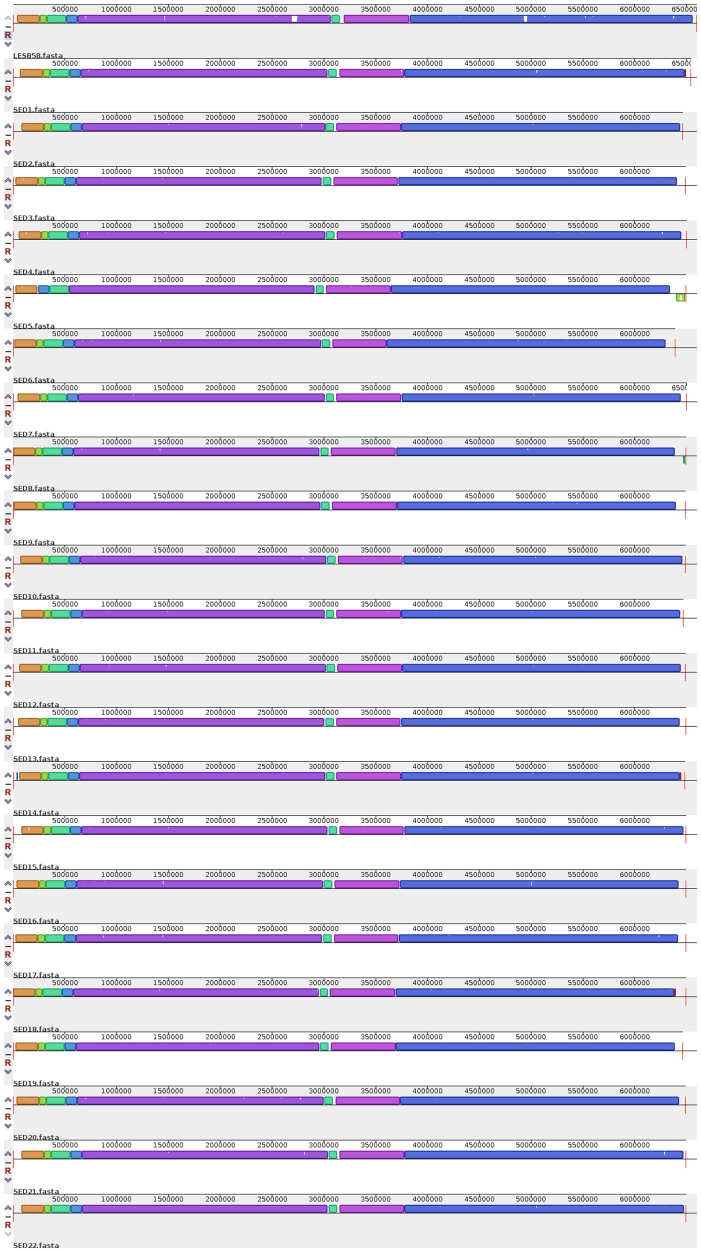
Figure 3. Whole genome alignments of the de novo assembled genomes of 22 isolates and the reference genome LESB58.
Alignment was constructed using Progressive Mauve, and local collinear blocks containing orthologous sequence are colour coded.
Figure 4
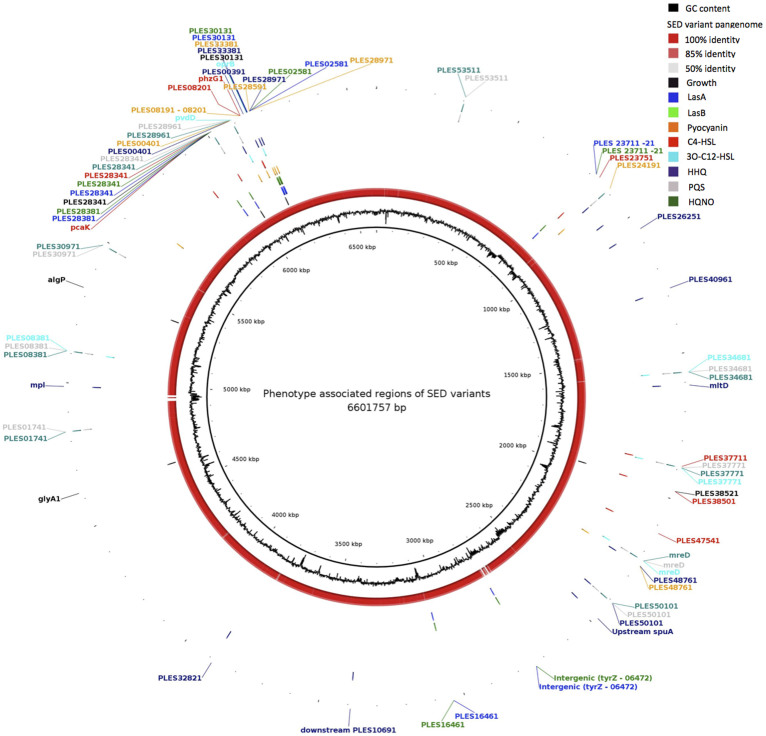
Figure 4. Circular representation of regions identified as undergoing recombination relative to the LESB58 reference genome.
Regions statistically associated with phenotypes are indicated in the concentric ring representing that phenotype (Growth innermost to HQNO outermost). The ORFs encoded in recombining regions are indicated by their gene name as annotated in LESB58. The Gene name-tags are colour coded to indicate clearly the phenotypes they are associated with.
Figure 5
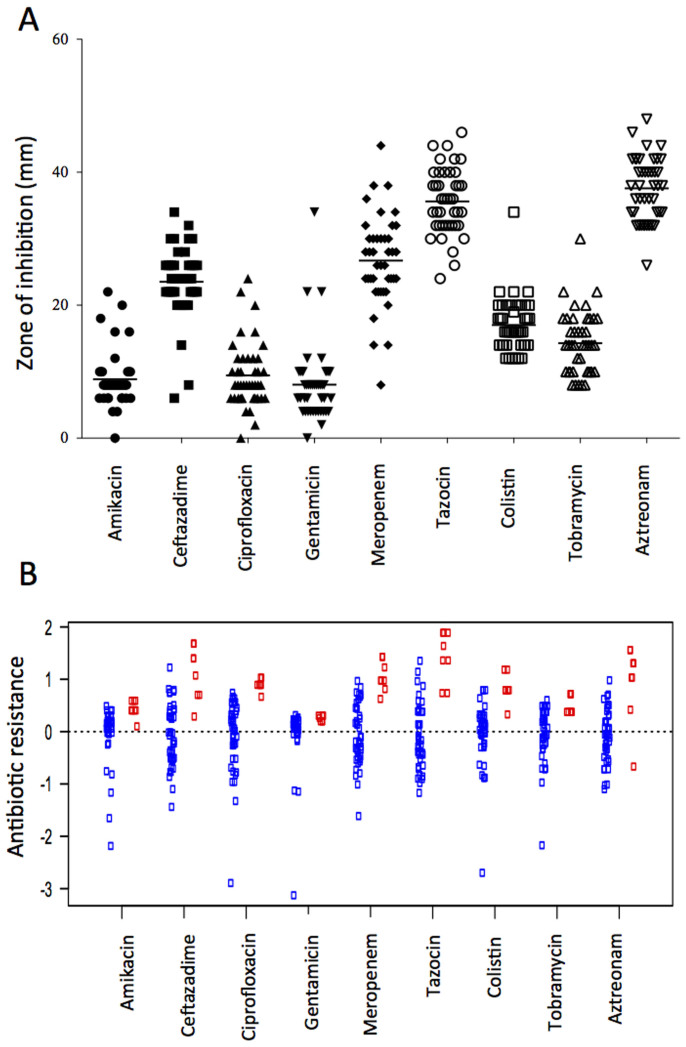
Figure 5. Antibiotic resistance profiles for 44 isolates measured using the BSAC method.
(A) The antibiotic susceptibility of single isolates to common CF therapeutics. The recorded zones of inhibition and mean value for each 44 individual isolates are shown. Each data point represents the mean of three independent biological replicates for each individual isolate. (B) Resistance profiles of each individual isolate to 9 antibiotics compared to a mixed community of all 44 isolates. Each blue point represents the sensitivity profile of a single isolate and red points represent 7 independent measurements of a mixed community containing all 44 isolates. In both (A) and (B), the values for individual clones represent the mean of three independent biological replicates. Individual clones consistently underestimate the resistance of the mixed community.

References

    1. Sadikot R. T., Blackwell T. S., Christman J. W. & Prince A. S. Pathogen-host interactions in Pseudomonas aeruginosa pneumonia. Am. J. Res. Care Med. 171, 1209–1223 (2005). - PMC - PubMed
    1. Govan J. R. & Deretic V. Microbial pathogenesis in cystic fibrosis: mucoid Pseudomonas aeruginosa and Burkholderia cepacia. Microbiol. Rev. 60, 539–574 (1996). - PMC - PubMed
    1. Hart C. A. & Winstanley C. Persistent and aggressive bacteria in the lungs of cystic fibrosis children. Brit. Med. Bull. 61, 81–96 (2002). - PubMed
    1. Goss C. H., Mayer-Hamblett N., Kronmal R. A., Williams J. & Ramsey B. W. Laboratory parameter profiles among patients with cystic fibrosis. J. Cyst. Fibro. 6, 117–123 (2007). - PubMed
    1. Fothergill J. L. et al. Widespread pyocyanin over-production among isolates of a cystic fibrosis epidemic strain. BMC Microbiol. 7, 45 (2007). - PMC - PubMed

Publication types

MeSH terms

Substances