The development and course of bipolar spectrum disorders: an integrated reward and circadian rhythm dysregulation model
- PMID: 25581235
- PMCID: PMC4380533
- DOI: 10.1146/annurev-clinpsy-032814-112902
The development and course of bipolar spectrum disorders: an integrated reward and circadian rhythm dysregulation model
Abstract
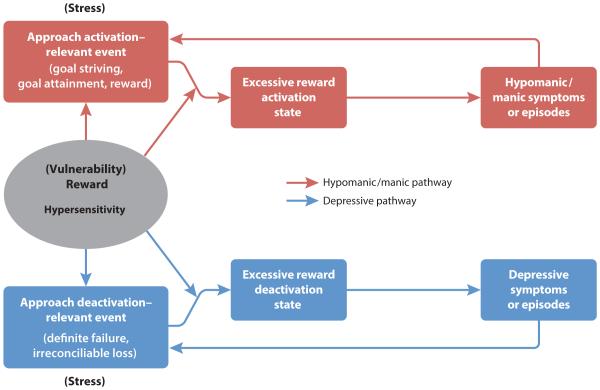
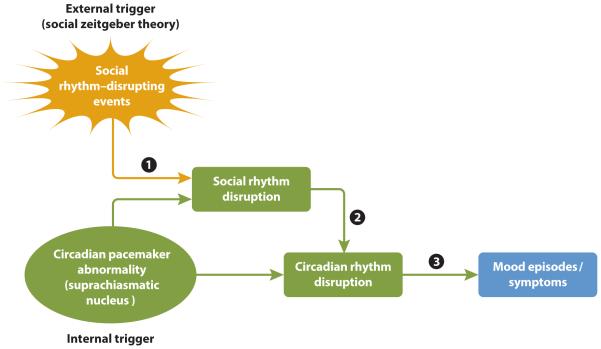
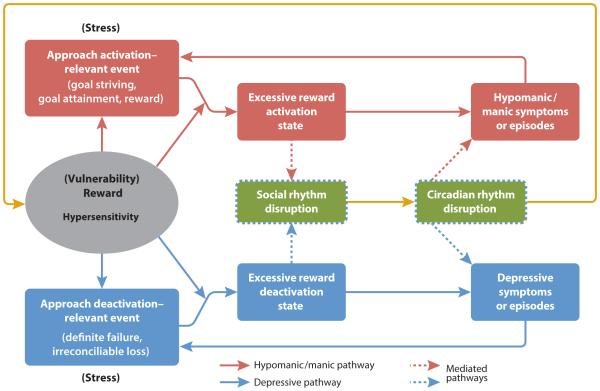
In this article, we present and review the evidence for two major biopsychosocial theories of the onset and course of bipolar spectrum disorders (BSDs) that integrate behavioral, environmental, and neurobiological mechanisms: the reward hypersensitivity and the social/circadian rhythm disruption models. We describe the clinical features, spectrum, age of onset, and course of BSDs. We then discuss research designs relevant to demonstrating whether a hypothesized mechanism represents a correlate, vulnerability, or predictor of the course of BSDs, as well as important methodological issues. We next present the reward hypersensitivity model of BSD, followed by the social/circadian rhythm disruption model of BSD. For each model, we review evidence regarding whether the proposed underlying mechanism is associated with BSDs, provides vulnerability to the onset of BSDs, and predicts the course of BSDs. We then present a new integrated reward/circadian rhythm (RCR) dysregulation model of BSD and discuss how the RCR model explains the symptoms, onset, and course of BSDs. We end with recommendations for future research directions.
Keywords: bipolar spectrum disorder; circadian rhythms; reward sensitivity; social rhythms.
References
-
- Abe M, Herzog ED, Block GD. Lithium lengthens the circadian period of individual suprachiasmatic nucleus neurons. Neuroreport. 2000;11:3261–3264. - PubMed
-
- Ahn YM, Chang J, Joo YH, Kim SC, Lee KY, Kim YS. Chronotype distribution in bipolar I disorder and schizophrenia in a Korean sample. Bipolar Disord. 2008;10:271–275. - PubMed
-
- Akiskal HS, Djenderedjian AH, Rosenthal RH, Khani MK. Cyclothymic disorder: Validating criteria for inclusion in the bipolar affective group. Am J Psychiatry. 1977;134:1227–1233. - PubMed
Publication types
MeSH terms
Grants and funding
LinkOut - more resources
Full Text Sources
Other Literature Sources
Medical