


Radiation therapy at the end of life: a population-based study examining palliative treatment intensity
- PMID: 25582217
- PMCID: PMC4314753
- DOI: 10.1186/s13014-014-0305-4
Radiation therapy at the end of life: a population-based study examining palliative treatment intensity
Abstract
Background: To examine factors associated with the use of radiation therapy (RT) at the end of life in patients with breast, prostate, or colorectal cancer.
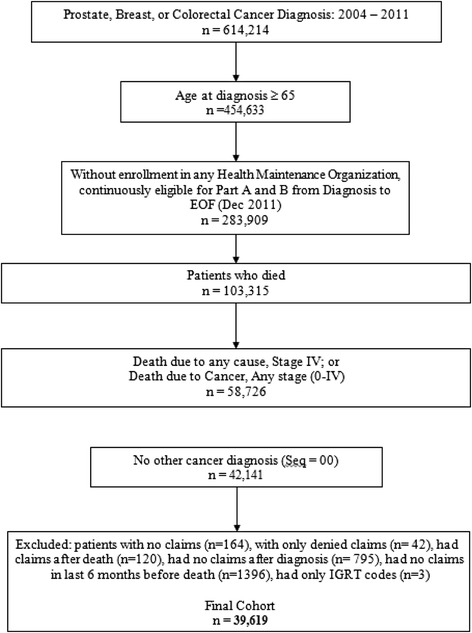
Methods: Using data from the Surveillance, Epidemiology, and End Results (SEER) - Medicare database, patients were over age 65 and diagnosed between January 1, 2004 and December 31, 2011 with any stage of cancer when the cause of death, as defined by SEER, was cancer; or with stage 4 cancer, who died of any cause. We employed multiple logistic regression models to identify patient and health systems factors associated with palliative radiation use.
Results: 50% of patients received RT in the last 6 months of life. RT was used less frequently in older patients and in non-Hispanic white patients. Similar patterns were observed in the last 14 days of life. Chemotherapy use in the last 6 months of life was strongly correlated with receiving RT in the last 6 months (OR 2.72, 95% CI: 2.59-2.88) and last 14 days of life (OR 1.55, 95% CI: 1.40-1.66). Patients receiving RT accrued more emergency department visits, radiographic exams and physician visits (all comparisons p < 0.0001).
Conclusions: Among patients with breast, colorectal, and prostate cancer, palliative RT use was common. End-of-life RT correlated with end-of-life chemotherapy use, including in the last 14 days of life, when treatment may cause increased treatment burden without improved quality of life. Research is needed optimize the role and timing of RT in palliative care.
Figures
References
-
- Greenberg PA, Hortobagyi GN, Smith TL, Ziegler LD, Frye DK, Buzdar AU. Long-term follow-up of patients with complete remission following combination chemotherapy for metastatic breast cancer. J Clin Oncol. 1996;14:2197–205. - PubMed
-
- Skeel RT. Quality of life dimensions that are most important to cancer patients. Oncology (Williston Park) 1993;7:55–61. - PubMed
Publication types
MeSH terms
Grants and funding
LinkOut - more resources
Full Text Sources
Other Literature Sources
Medical
