


The prognostic value of phosphorylated Akt in breast cancer: a systematic review
- PMID: 25582346
- PMCID: PMC4291578
- DOI: 10.1038/srep07758
The prognostic value of phosphorylated Akt in breast cancer: a systematic review
Abstract
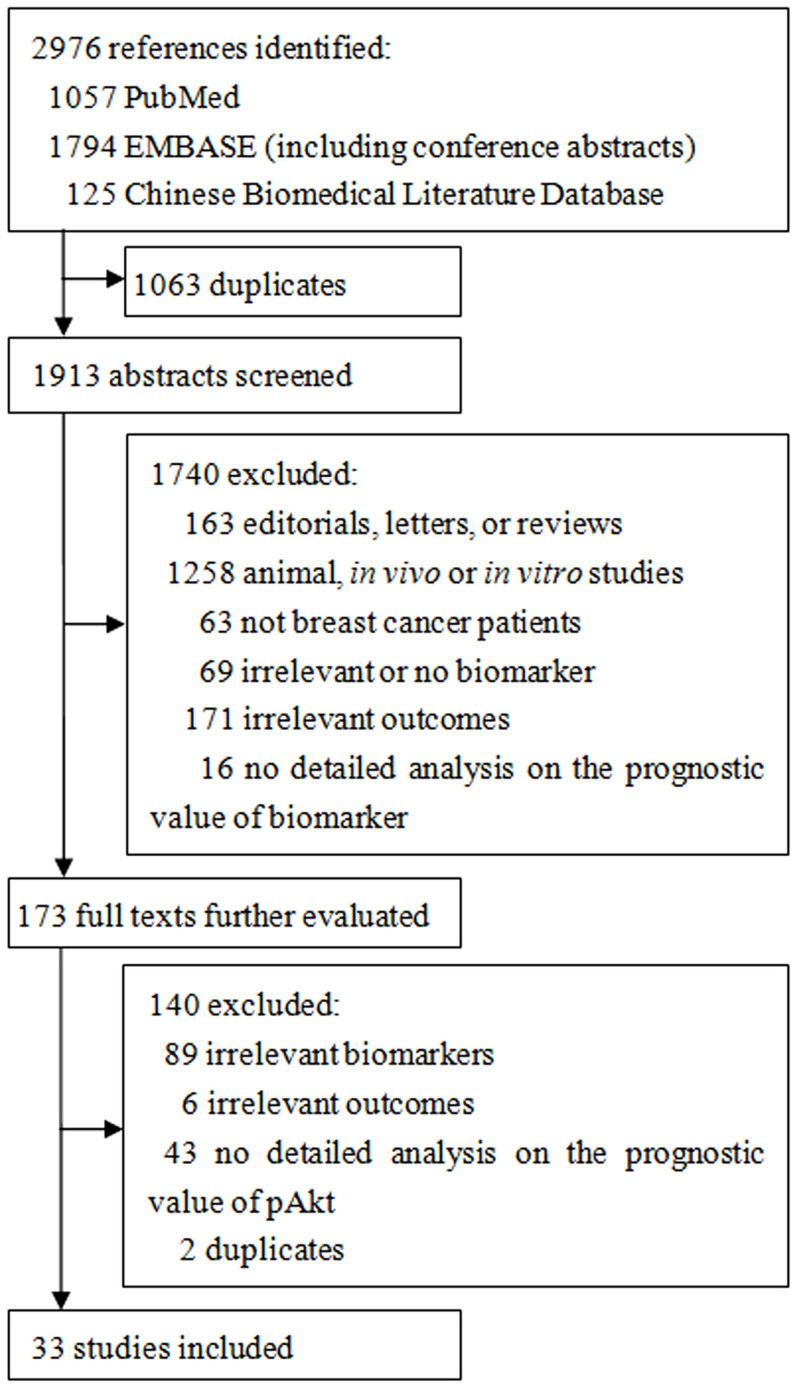
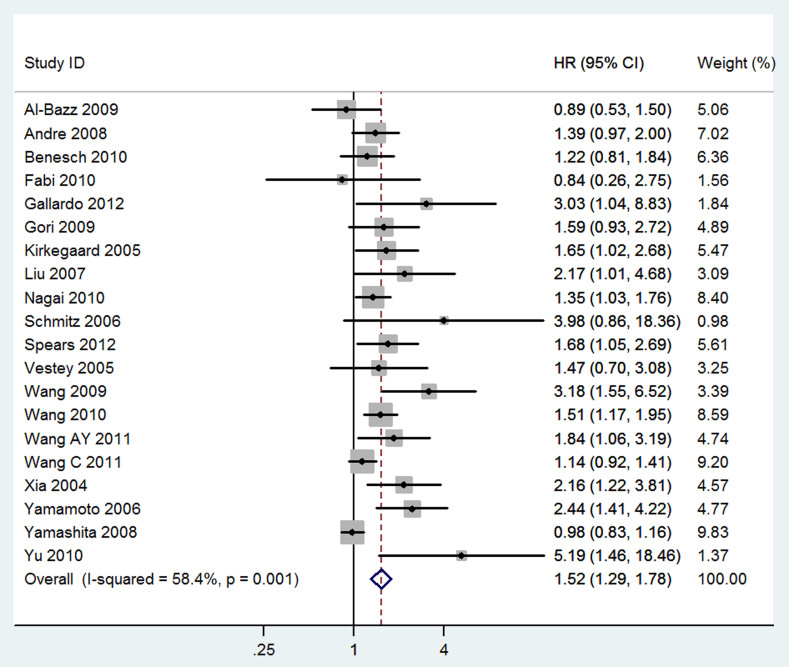
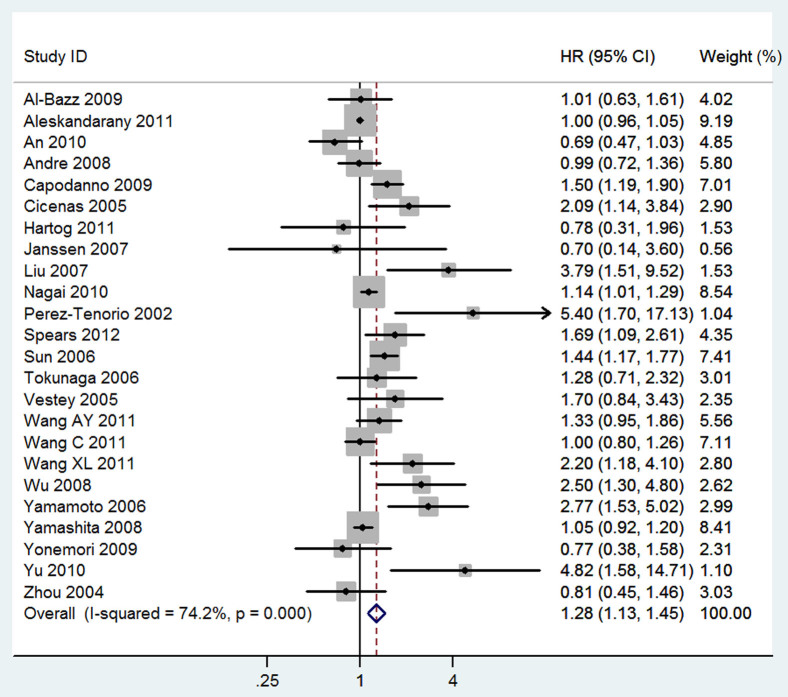
The prognostic value of phosphorylated Akt (pAkt) overexpression in breast cancer has been investigated by many studies with inconsistent results. This systematic review was conducted to evaluate the association of pAkt overexpression with breast cancer prognosis in terms of overall survival and disease-free survival. Three electronic databases (PubMed, EMBASE and Chinese Biomedical Literature Database) were comprehensively searched. Hazard ratios (HRs) with 95% confidence intervals (CIs) from different studies were combined using the random-effects model. In total, 33 studies with 9,836 patients were included for final analysis. The summary HR for overall survival and disease-free survival was 1.52 (95% CI: 1.29-1.78) and 1.28 (95% CI: 1.13-1.45), respectively, indicating higher risk of death and disease recurrence associated with pAkt overexpression. The results were robust in sensitivity analyses by omitting one study each time and by using the fixed-effects model instead. Subgroup and meta-regression analyses did not show that the prognostic effect of pAkt overexpression would change materially with such factors as population, status of hormone receptors, hormonal or trastuzumab treatment given, analyzing method (univariate versus multivariate) and methodological quality of the original studies. In conclusion, the available evidence suggests that pAkt overexpression is an adverse prognostic factor for breast cancer.
Figures
References
-
- International Agency for Research on Cancer. GLOBOCAN2012: estimated incidence, mortality and prevalence worldwide in 2012. http://globocan.iarc.fr/Pages/fact_sheets_cancer.aspx [Accessed July 25, 2014].
-
- Patani N., Martin L. A. & Dowsett M. Biomarkers for the clinical management of breast cancer: international perspective. Int J Cancer 133, 1–13 (2013). - PubMed
-
- Nicholson K. M. & Anderson N. G. The protein kinase B/Akt signalling pathway in human malignancy. Cell Signal 14, 381–395 (2002). - PubMed
-
- Altomare D. A. & Testa J. R. Perturbations of the AKT signaling pathway in human cancer. Oncogene 24, 7455–7464 (2005). - PubMed
-
- Xue G. & Hemmings B. A. PKB/Akt-dependent regulation of cell motility. J Natl Cancer Inst 105, 393–404 (2013). - PubMed
Publication types
MeSH terms
Substances
LinkOut - more resources
Full Text Sources
Other Literature Sources
Medical
