


Designing and evaluating an interactive multimedia Web-based simulation for developing nurses' competencies in acute nursing care: randomized controlled trial
- PMID: 25583029
- PMCID: PMC4319078
- DOI: 10.2196/jmir.3853
Designing and evaluating an interactive multimedia Web-based simulation for developing nurses' competencies in acute nursing care: randomized controlled trial
Erratum in
-
Correction: Designing and Evaluating an Interactive Multimedia Web-Based Simulation for Developing Nurses' Competencies in Acute Nursing Care: Randomized Controlled Trial.J Med Internet Res. 2015 Mar 23;17(3):e75. doi: 10.2196/jmir.4419. J Med Internet Res. 2015. PMID: 30578199 Free PMC article. No abstract available.
Abstract
Background: Web-based learning is becoming an increasingly important instructional tool in nursing education. Multimedia advancements offer the potential for creating authentic nursing activities for developing nursing competency in clinical practice.
Objective: This study aims to describe the design, development, and evaluation of an interactive multimedia Web-based simulation for developing nurses' competencies in acute nursing care.
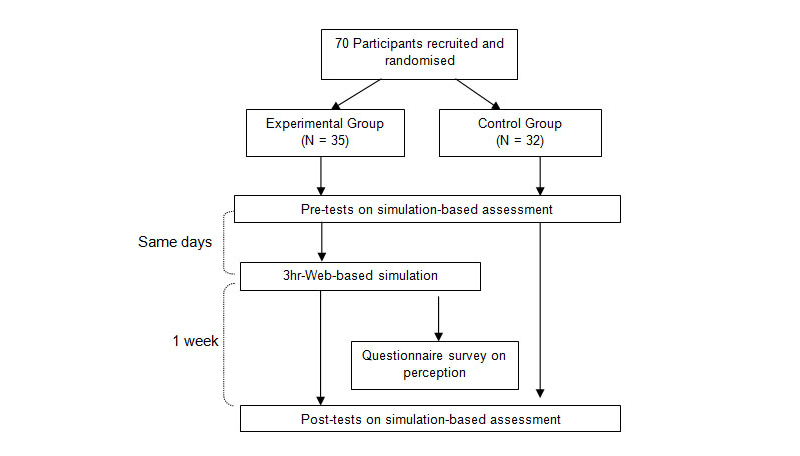
Methods: Authentic nursing activities were developed in a Web-based simulation using a variety of instructional strategies including animation video, multimedia instructional material, virtual patients, and online quizzes. A randomized controlled study was conducted on 67 registered nurses who were recruited from the general ward units of an acute care tertiary hospital. Following a baseline evaluation of all participants' clinical performance in a simulated clinical setting, the experimental group received 3 hours of Web-based simulation and completed a survey to evaluate their perceptions of the program. All participants were re-tested for their clinical performances using a validated tool.
Results: The clinical performance posttest scores of the experimental group improved significantly (P<.001) from the pretest scores after the Web-based simulation. In addition, compared to the control group, the experimental group had significantly higher clinical performance posttest scores (P<.001) after controlling the pretest scores. The participants from the experimental group were satisfied with their learning experience and gave positive ratings for the quality of the Web-based simulation. Themes emerging from the comments about the most valuable aspects of the Web-based simulation include relevance to practice, instructional strategies, and fostering problem solving.
Conclusions: Engaging in authentic nursing activities using interactive multimedia Web-based simulation can enhance nurses' competencies in acute care. Web-based simulations provide a promising educational tool in institutions where large groups of nurses need to be trained in acute nursing care and accessibility to repetitive training is essential for achieving long-term retention of clinical competency.
Keywords: Web-based simulation; acute nursing care; authentic learning; clinical competency; deterioration; instructional strategies; multimedia; simulation.
Conflict of interest statement
The first author is the owner and developer of the simulation software.
Figures


References
-
- Liaw SY, Rethans JJ, Scherpbier A, Piyanee KY. Rescuing A Patient In Deteriorating Situations (RAPIDS): A simulation-based educational program on recognizing, responding and reporting of physiological signs of deterioration. Resuscitation. 2011 Sep;82(9):1224–30. doi: 10.1016/j.resuscitation.2011.04.014. - DOI - PubMed
-
- Lebow D. Constructivist values for instructional systems design: five principles toward a new mindset. Educational Technology Research and Development. 1993;41(3):4–16.
Publication types
MeSH terms
LinkOut - more resources
Full Text Sources
Other Literature Sources
Medical
