. 2015 Jan 14;10(1):e0116032.
doi: 10.1371/journal.pone.0116032. eCollection 2015.

Transcription activator-like effector nuclease (TALEN)-mediated CLYBL targeting enables enhanced transgene expression and one-step generation of dual reporter human induced pluripotent stem cell (iPSC) and neural stem cell (NSC) lines

Affiliations

Transcription activator-like effector nuclease (TALEN)-mediated CLYBL targeting enables enhanced transgene expression and one-step generation of dual reporter human induced pluripotent stem cell (iPSC) and neural stem cell (NSC) lines

Trevor Cerbini et al. PLoS One. .

Abstract

Targeted genome engineering to robustly express transgenes is an essential methodology for stem cell-based research and therapy. Although designer nucleases have been used to drastically enhance gene editing efficiency, targeted addition and stable expression of transgenes to date is limited at single gene/locus and mostly PPP1R12C/AAVS1 in human stem cells. Here we constructed transcription activator-like effector nucleases (TALENs) targeting the safe-harbor like gene CLYBL to mediate reporter gene integration at 38%-58% efficiency, and used both AAVS1-TALENs and CLYBL-TALENs to simultaneously knock-in multiple reporter genes at dual safe-harbor loci in human induced pluripotent stem cells (iPSCs) and neural stem cells (NSCs). The CLYBL-TALEN engineered cell lines maintained robust reporter expression during self-renewal and differentiation, and revealed that CLYBL targeting resulted in stronger transgene expression and less perturbation on local gene expression than PPP1R12C/AAVS1. TALEN-mediated CLYBL engineering provides improved transgene expression and options for multiple genetic modification in human stem cells.


Conflict of interest statement

Competing Interests: The authors have declared that no competing interests exist.

Figures

Figure 1
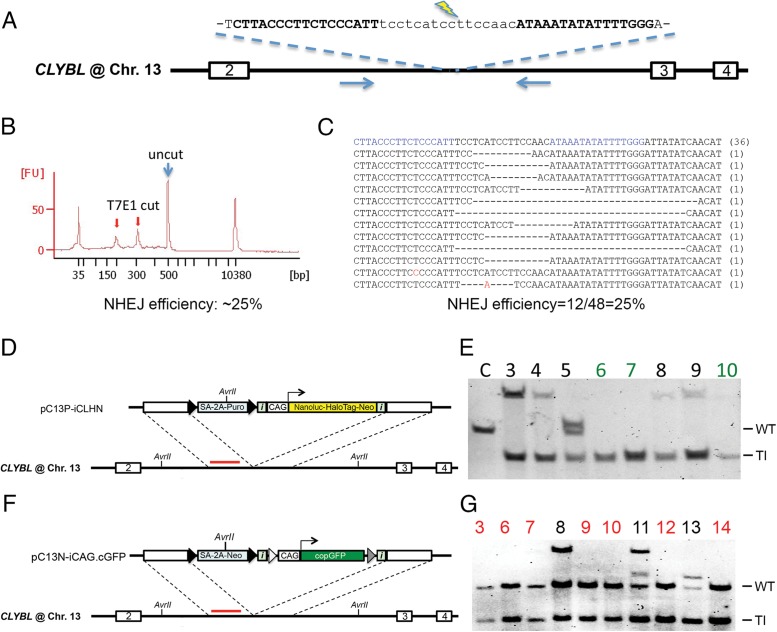
Figure 1. TALEN Targeting of a novel safe-harbor in the CLYBL gene.
(A) Sequence of CLYBL-TALEN target site at intron 2 of CLYBL. Exon numbers are indicated in the boxes of genomic locus. Bold fonts indicate TALEN binding sequences: left CLYBL-TALEN binds 5’-CTTACCCTTCTCCCATT; right CLYBL-TALEN binds 5’-CCCAAAATATATTTAT. Blue arrows indicate the primers for NHEJ assay. (B) Capillary electrophoresis plot from T7E1 assay indicates that our CLYBL TALENs have ~25% NHEJ efficiency based on the calculation: % gene modification = 100 × (1 − (1 − fraction cleaved)1/2), where fraction cleaved = T7E1 cut/(T7E1cut+uncut). Red arrows indicate T7E1 cleaved bands, blue arrow indicates uncut PCR band. (C) CLYBL TALEN activity estimated by targeted amplicon sequencing confirmed 25% (12 alleles out of 48) gene editing efficiency. Blue fonts are TALEN binding sequence. (D and F) Schematics of gene targeting at CLYBL safe-harbor on Chr. 13. The donors shown have the same reporter cassettes as in Fig. 1C and 1E, including insulator-flanked CAG-copGFP or CAG-iCLHN, except that CLYBL homology arms were used and pC13N-iCAG.cGFP has neomycin resistant gene (Neo) instead of Puro. Red lines indicate CLYBL probe used with AvrII digestion in Southern blot analysis. (E and G) Southern blots of pC13P-iCLHN targeted (E) and pC13N-iCAG.cGFP targeted (G) NCRM5 iPSC clones. Because the same position of AvrII sites in both donors and the ability of CLYBL probe to recognize WT, TI and RI, WT band is 5.4kb due to two AvrII sites in intron 2, TI band is 3.2kb due to donor-introduced AvrII site, and any other additional bands are RI. Clones with 1TI-only are indicated in red numbers; clones with 2TI-only are indicated in green numbers. Clone “C” indicate the control untargeted cells.
Figure 2
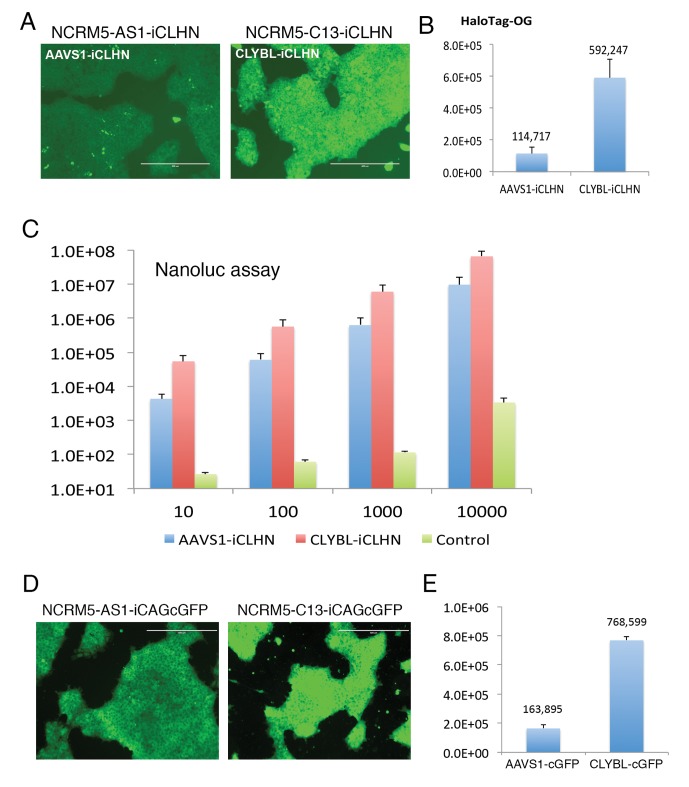
Figure 2. CLYBL safe-harbor enables heightened expression of transgenes.
(A) Oregon green stained human iPSC clones with Nanoluc-HaloTag integrated in the AAVS1 (AAVS1-iCLHN) or the CLYBL (CLYBL-iCLHN) safe-harbor bi-allelically without RI. Scale bar = 400 μm. (B) Comparison of HaloTag expression between AAVS1 (AAVS1-iCLHN) and CLYBL (CLYBL-iCLHN) targeted NCRM5 iPSC clones using Oregon green (OG) ligand staining and flow cytometry. Y-axis = mean fluorescence intensity (MFI). Error bar = S.E.M. N = 3 (C) Nanoluc activity comparison of bi-allelically targeted AAVS1-iCLHN or CLYBL-iCLHN clones with untargeted NCRM5 control iPSCs. Y-axis is relative luciferase unit (RLU). X-axis is cell number. Data shown are the averages of 3 repeated measurements of three AAVS1-iCLHN clones, three CLYBL-iCLHN clones and one parental NCRM5 clone. Error bar = S.E.M. (E) Representative fluorescent images of CAG-driven copGFP expression in AAVS1 (NCRM5-AS1-iCAGcGFP) or CLYBL (NCRM5-C13-iCAGcopGFP) targeted iPSC clones. Scale bar = 400 μm. (F) Quantitative comparison of copGFP expression between mono-allelically AAVS1 targeted (AAVS1-cGFP) and CLYBL targeted (CLYBL-cGFP) clones. Y-axis = MFI. Error bar = S.E.M. N = 2.
Figure 3
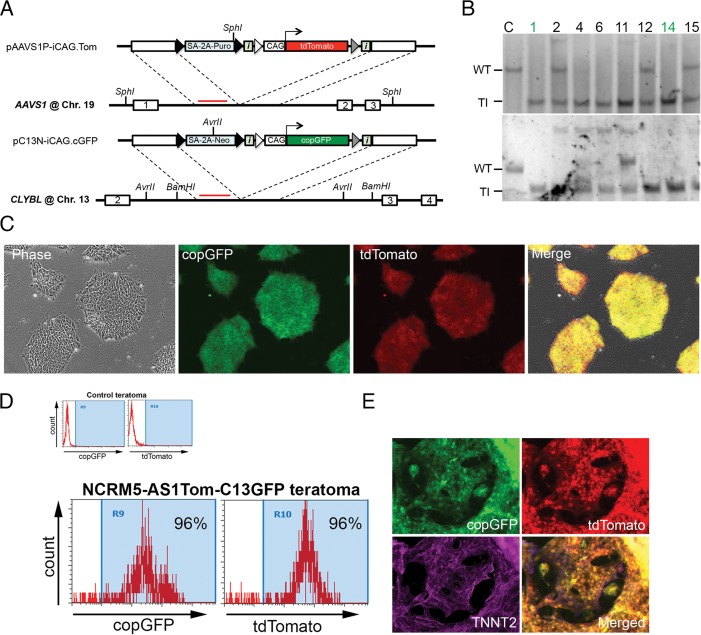
Figure 3. Double safe-harbor targeting in human iPSCs.
(A) Schematic of dual safe-harbor gene addition of CAG-tdTomato in AAVS1 and CAG-copGFP in CLYBL. The elements shown are similar to those in Figs. 1 and 2. Red bars indicate AAVS1 or CLYBL probes, used with SphI, AvrII or BamHI digestion in Southern blot analysis. (B) Southern blot of dual safe-harbor targeted iPSC clones. Top and bottom panels are results from AAVS1 probe/SphI digestion and CLYBL probe/AvrII digestion, respectively. The sizes of WT and TI bands were the same as shown in Fig. 1 and 2. Green numbers indicate clones with all four alleles targeted. (C) Phase contrast, copGFP and tdTomato fluorescent images of dual safe-harbor targeted iPSC NCRM5-AS1Tom-C13GFP clone 1. Merged image is from both fluorescent channels plus phase-contrast image. (D) After an 8-week in vivo differentiation, teratoma cells were isolated and still showed robust dual transgene expression by flow cytometry. (E) High-efficiency directed differentiation into beating cardiomyocytes expressing TNNT2 and both fluorescent proteins (also shown by online supplementary videos).
Figure 4
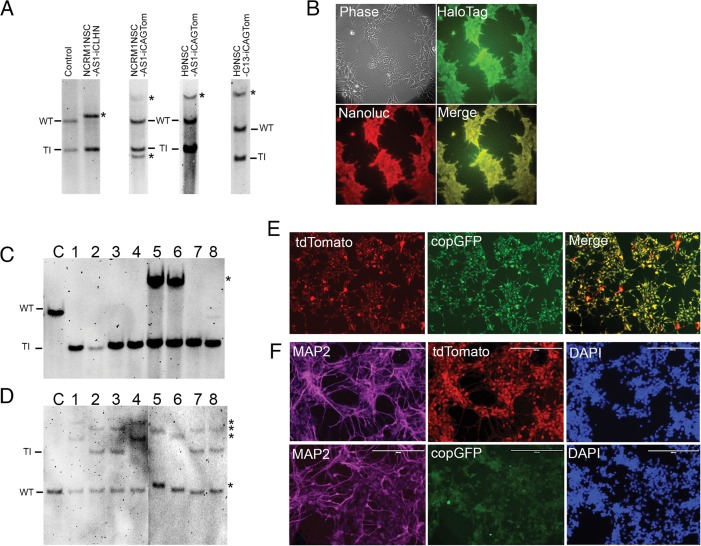
Figure 4. Safe-harbor targeting in human NSCs.
(A) Southern analysis of Nanoluc-HaloTag (iCLHN) or tdTomato (iCAGTom) targeted NCRM1NSC or H9NSC at AAVS1 or CLYBL locus using SphI or AvrII digestion, respectively. iPSCs with single TI of iCLHN at AAVS1 allele were used as control. AAVS1 or CLYBL probes used to detect integrations at each safe-harbor are the same as shown in Fig. 4. Compared to the control, NCRM1NSC-AS1-iCLHN shows total loss of wild-type band (WT), indicating that all the cells in the polyclonal NSCs have bi-allelic TI at AAVS1 locus. NCRM1NSCs or H9NSCs targeted by iCAGTom at AAVS1 (AS1), and H9NSCs targeted by iCAGTom at CLYBL (C13) are estimated to have 44%-90% cells correctly targeted without random integrations (S6 Fig.). Asterisk indicates additional RI. (B) Phase, HaloTag fluorescence (stained by Oregon green) and Nanoluc luminescence (pseudo-colored red) images of NCRM1NSC-AS1-iCLHN showed ~100% targeted NSCs express Nanoluc-HaloTag. (C and D) Limiting dilution-derived clones of dual safe-harbor targeted NSCs, NCRM1NSC-AS1Tom-C13GFP, were confirmed by Southern using AAVS1 probe/SphI digestion and CLYBL probe/BamHI digestion as indicated in Fig. 4A. BamHI digestion generates a 11.2kb band due to TI at CLYBL, compared to 4.4kb for WT allele. Note that clone 2, 3, 7 and 8 have bi-allelic AAVS1 TI and mono-allelic CLYBL TI plus an additional RI. Asterisk indicates additional RI. Lane C is control NCRM1NSC. (E and F) Fluorescent images of undifferentiated (E) and differentiated (F) NCRM1NSC-AS1Tom-C13GFP clone 3. MAP2+ committed neurons showed persistent tdTomato and copGFP expression. Nuclei were stained by DAPI. Scale bar = 400 μm.
Figure 5
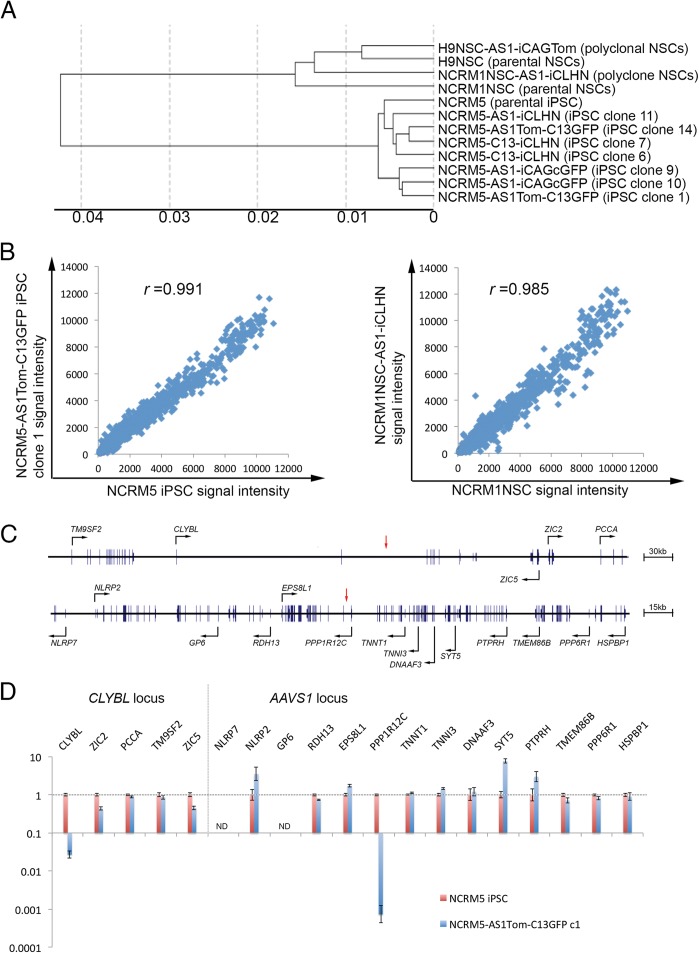
Figure 5. Effect of targeted integrations on global and local gene expression.
(A) Dendrogram of non-targeted and safe-harbor targeted iPSCs and NSCs based on microarray analysis. The X-axis represents 1-r(correlation co-efficient). (GEO access# GSE55975) (B) Representatives of global gene expression profile comparison between untargeted and safe-harbor targeted cells. For NCRM5 iPSCs vs dual safe-harbor targeted NCRM5-AS1Tom-C13GFP clone 1, r=0.991. For NCRM1NSC vs AAVS1 targeted polyclonal NCRM1NSC-AS1-iCLHN. r=0.98. (C) Schematic of genomic region surrounding CLYBL and AAVS1 safe-harbors. TALEN target sites are indicated by red arrows. A ~600kb region near the CLYBL-TALEN target site and a ~300kb region near the AAVS1-TALEN target site are depicted. (D) qRT-PCR analysis of the expression of genes near AAVS1 and CLYBL safe-harbors, as shown in (C), in untargeted NCRM5 iPSCs and dual safe-harbor targeted clone 1. Values are normalized to the expression level of the β-actin (ACTB). ND = not detectable, due to Ct>35. Native CLYBL and PPP1R12C splicing transcripts were detected by specific primers recognizing exons downstream of TI (S2 Table). Fold-expression changes were calculated using the equation 2-ΔΔCT. Y-axis represents relative quantitation (RQ) in logarithmic scale. The error bars were calculated from 3 technical replicates and display the maximum (RQMax) and minimum (RQMin) expression levels that represent standard error of the mean expression level (RQ value). Collectively, the upper and lower limits defined the region of expression within which the true expression level value was likely to occur. The error bars were based on an RQMin/Max of the 95% confidence level.

References

    1. Gaj T, Gersbach CA, Barbas CF 3rd (2013) ZFN, TALEN, and CRISPR/Cas-based methods for genome engineering. Trends in biotechnology 31: 397–405. 10.1016/j.tibtech.2013.04.004 - DOI - PMC - PubMed
    1. Zou J, Maeder ML, Mali P, Pruett-Miller SM, Thibodeau-Beganny S, et al. (2009) Gene targeting of a disease-related gene in human induced pluripotent stem and embryonic stem cells. Cell stem cell 5: 97–110. 10.1016/j.stem.2009.05.023 - DOI - PMC - PubMed
    1. Hockemeyer D, Wang H, Kiani S, Lai CS, Gao Q, et al. (2011) Genetic engineering of human pluripotent cells using TALE nucleases. Nature biotechnology 29: 731–734. 10.1038/nbt.1927 - DOI - PMC - PubMed
    1. Mali P, Yang L, Esvelt KM, Aach J, Guell M, et al. (2013) RNA-guided human genome engineering via Cas9. Science 339: 823–826. 10.1126/science.1232033 - DOI - PMC - PubMed
    1. Ding Q, Regan SN, Xia Y, Oostrom LA, Cowan CA, et al. (2013) Enhanced efficiency of human pluripotent stem cell genome editing through replacing TALENs with CRISPRs. Cell stem cell 12: 393–394. 10.1016/j.stem.2013.03.006 - DOI - PMC - PubMed

Publication types

MeSH terms