. 2015 Mar;167(3):972-90.
doi: 10.1104/pp.114.255562.

Characterization of chloroplast protein import without Tic56, a component of the 1-megadalton translocon at the inner envelope membrane of chloroplasts

Characterization of chloroplast protein import without Tic56, a component of the 1-megadalton translocon at the inner envelope membrane of chloroplasts

Daniel Köhler et al. Plant Physiol. 2015 Mar.

Abstract

We report on the characterization of Tic56, a unique component of the recently identified 1-MD translocon at the inner envelope membrane of chloroplasts (TIC) in Arabidopsis (Arabidopsis thaliana) comprising Tic20, Tic100, and Tic214. We isolated Tic56 by copurification with Tandem Affinity Purification-tagged Toc159 in the absence of precursor protein, indicating spontaneous and translocation-independent formation of the translocon at the outer envelope membrane of chloroplasts (TOC) and TIC supercomplexes. Tic56 mutant plants have an albino phenotype and are unable to grow without an external carbon source. Using specific enrichment of protein amino termini, we analyzed the tic56-1 and plastid protein import2 (toc159) mutants to assess the in vivo import capacity of plastids in mutants of an outer and inner envelope component of the anticipated TOC-TIC supercomplex. Inboth mutants, we observed processing of several import substrates belonging to various pathways. Our results suggest that despite the severe developmental defects, protein import into Tic56-deficient plastids is functional to a considerable degree, indicating the existence of alternative translocases at the inner envelope membrane.


Figures
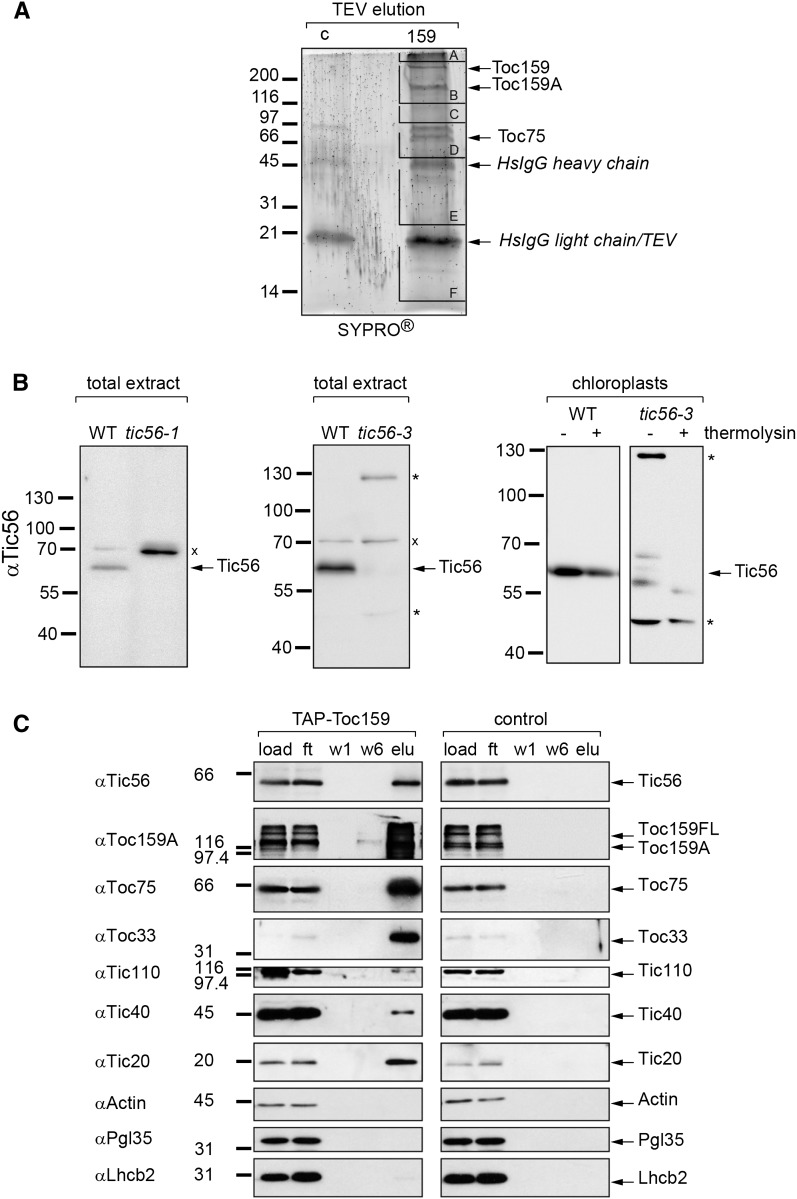
Figure 1.
Figure 1.
Association of Toc159 with Tic56, a component of the 1-MD TIC complex. A, SyproRuby stain of an eluate obtained after the purification of TAP-Toc159 from Triton X-100-solubilized membrane proteins of TAP-Toc159:ppi2 plants (159). As a control, the same purification procedure was performed with wild-type plants (c). Subsequent mass spectrometric analysis of gel slices A to F revealed the presence of Tic56 peptides in gel slice D (data not shown). B, Specificity of the anti-Tic56 serum. Fifty micrograms of protein of total protein extracts of the wild type (WT) and of two tic56 T-DNA insertion mutants (tic56-1 on the left and tic56-3 in the center) was analyzed by SDS-PAGE and immunoblotting with anti-Tic56 antiserum. Each x indicates a 70-kD cross reaction of the serum with a protein present in wild-type and mutant samples. To further analyze the additional bands (asterisks) appearing in tic56-3, chloroplasts of 16-d-old wild-type and tic56-3 seedlings were isolated, treated or not with thermolysin (50 µg mL−1), and subjected to the same immunoblotting procedure. C, Confirmation of the copurification of Tic56 with Toc159 by immunoblotting of fractions from a TAP-Toc159 purification. Fifty micrograms of protein of Triton X-100-solubilized membrane proteins loaded to Homo sapiens (Hs)IgG beads (load), 50 µg of the column flow through (ft), and 25% of two different wash fractions (w1 and w6) and the tobacco etch virus protease eluates (elu) were probed with antisera as indicated.
Figure 2.
Figure 2.
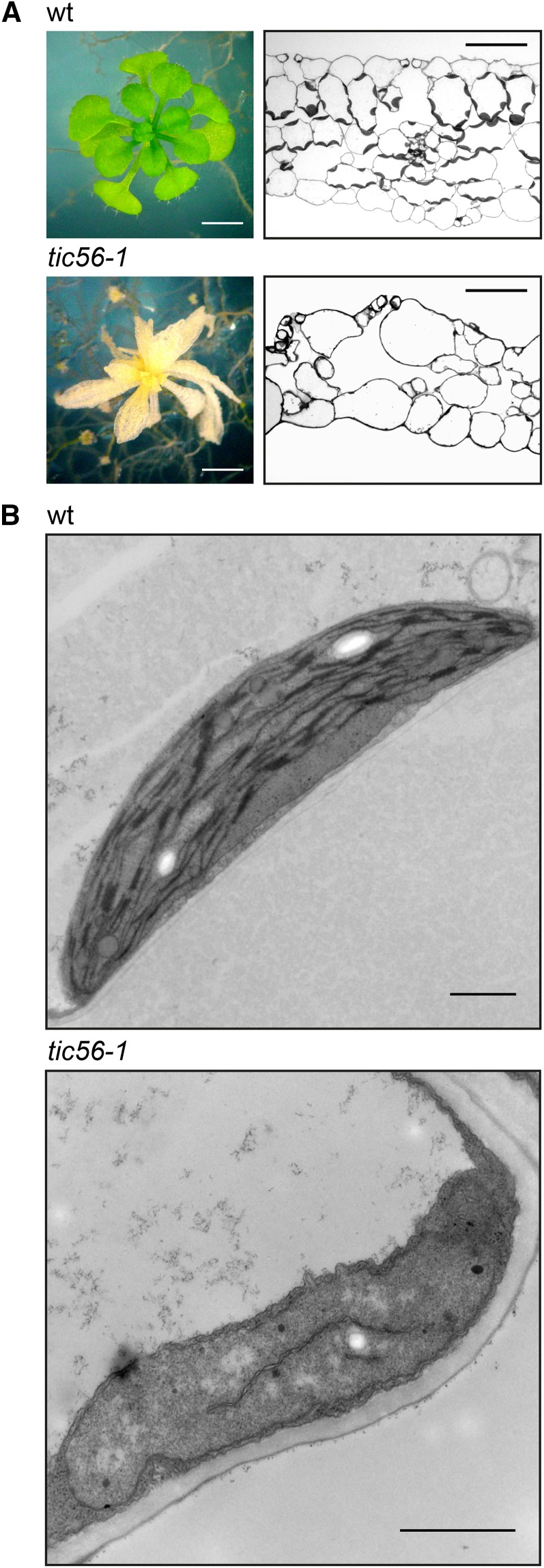
Disturbed leaf morphology and plastid development in tic56-1 plants. A, Leaf cross sections of 8-week-old wild-type (wt) and tic56-1 plants show disordered tissue and lack of chloroplasts of tic56-1 leaves. Bars = 2 mm (plant images) and 50 µm (cross sections). B, Transmission electron micrographs of wild-type and tic56-1 plastids uncover differences in the overall structure, in the shape and size of the organelles as well as in their stroma-localized membrane system. Bars = 1 µm.
Figure 3.
Figure 3.
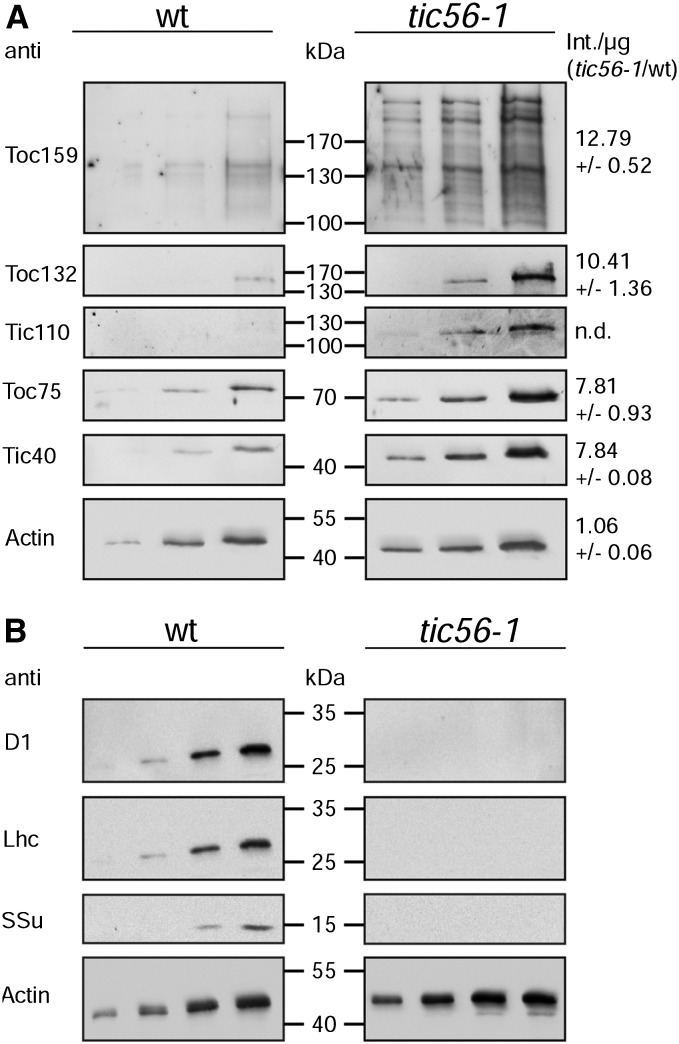
Western-blot analysis of TOC components, Tic110/Tic40 (A) and different plastid proteins involved in photosynthesis (B), in tic56-1 compared with the wild type. Rising protein amounts (top, 10, 20, and 50 µg; bottom, 2, 4, 8, and 12 µg) of 8-week-old wild-type (wt) and tic56-1 leaves were loaded and analyzed with antibodies as indicated. Detection of actin served as a loading control. In A, the ratio between the signal intensities (Int.) per µg of protein of tic56-1 and the wild type is given alongside the blots.
Figure 4.
Figure 4.
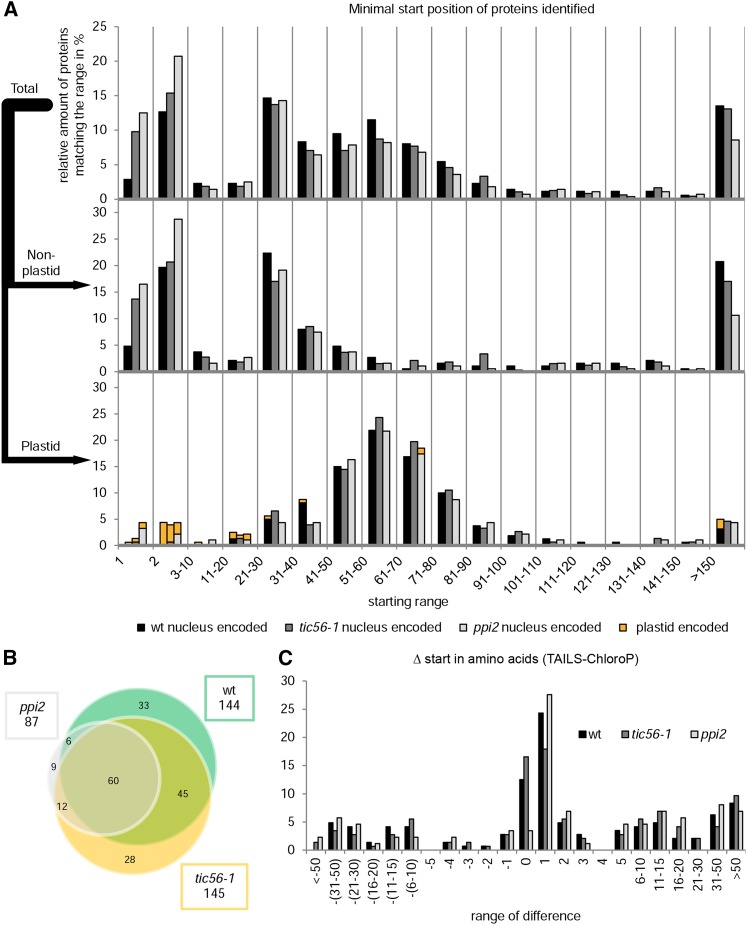
TAILS analyses of tic56-1, ppi2, and the wild type. A, Distribution of the minimal starting positions in the annotated full-length sequences of proteins identified by TAILS. For each identified protein, the most N-terminal peptide identified by the TAILS experiment was determined and grouped into starting ranges as indicated. The amount of proteins falling into a distinct range was set into relation with the total number of proteins of each plant line. In the graph at top, the minimal starting positions of all proteins identified are shown. The middle and bottom graphs show the distribution of starting positions of nonplastid or plastid proteins, respectively. The key at the bottom includes additional information about where the proteins are encoded (nucleus, black, dark gray, and light gray; plastid, orange). The first bar in each group always represents the wild type (wt), the second bar always represents tic56-1, and the third bar always represents ppi2. Chloroplast proteins were classified according to a chloroplast reference proteome (van Wijk and Baginsky, 2011). B, Venn diagram of nucleus-encoded plastid proteins identified for tic56-1, ppi2, and the wild type. C, The difference between the experimental (TAILS) and predicted (ChloroP) starting positions of the proteins was calculated. Positive values signify processing downstream, and negative values signify processing upstream of the theoretical processing site.
Figure 5.
Figure 5.
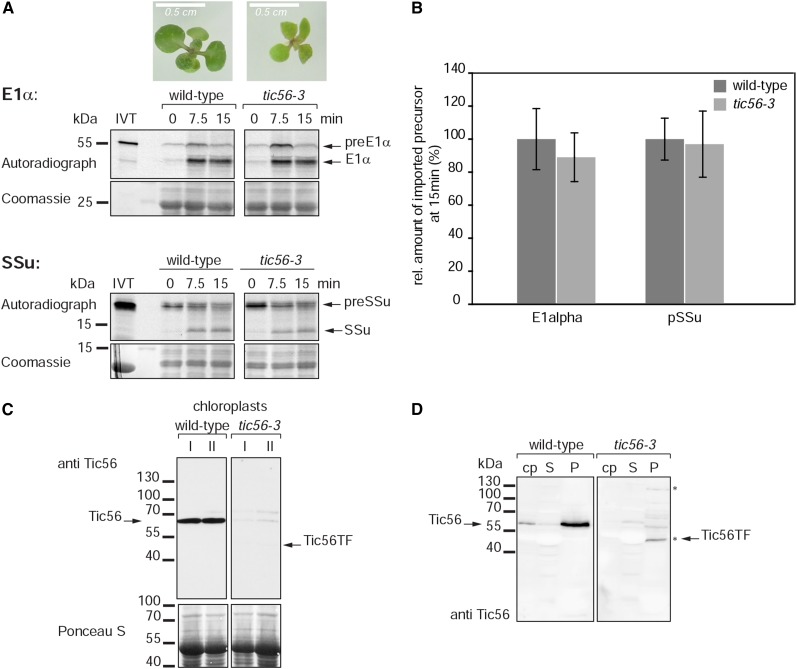
Import ability of chloroplasts isolated from the pale-green tic56-3 mutant. A, In vitro chloroplast protein import assay with chloroplasts isolated from 27-d-old wild-type and tic56-3 seedlings. For the import reactions, the chloroplast suspensions of the two plant types were adjusted to equal protein levels. The chloroplasts were incubated with two different radiolabeled import substrates, preE1α (top) and preSSu (bottom), and import was allowed to proceed for 0, 7.5, or 15 min. The samples were analyzed by SDS-PAGE and autoradiography. As a loading control, part of the Coomassie Blue-stained SDS-PAGE gel is shown underneath the corresponding autoradiograph. IVT, Product of in vitro translation. The photographs above the gels show the phenotypes of the tic56-3 Arabidopsis mutant in comparison with the wild type (ecotype Wassilewskija) grown on Murashige and Skoog (MS) agar supplemented with 0.8% (w/v) Suc for 14 d under an 8-h photoperiod. B, Quantification of the imported, processed form of the substrates at 15 min of import. The amount of imported substrate in the wild-type sample was set to 100%. Data were derived from three independent experiments. C, Chloroplasts isolated from 27-d-old tic56-3 seedlings have strongly reduced levels of Tic56 or the truncated form of Tic56 as monitored by western blotting. Fifty micrograms of chloroplast protein of tic56-3 and wild-type chloroplasts from two independent preparations was analyzed by western blotting with anti-Tic56 antiserum. D, Chloroplast were lysed hypotonically and separated into soluble (S) and membrane protein (P) fractions by centrifugation. Chloroplasts (cp) and subfractions were subjected to western-blot analysis with anti-Tic56 antiserum. The 130-kD protein and the truncated form of Tic56 (Tic56-TF) became apparent in the membrane protein fraction of tic56-3 chloroplasts (asterisks; compare with Fig. 1B, 16-d-old plants).
Figure 6.
Figure 6.
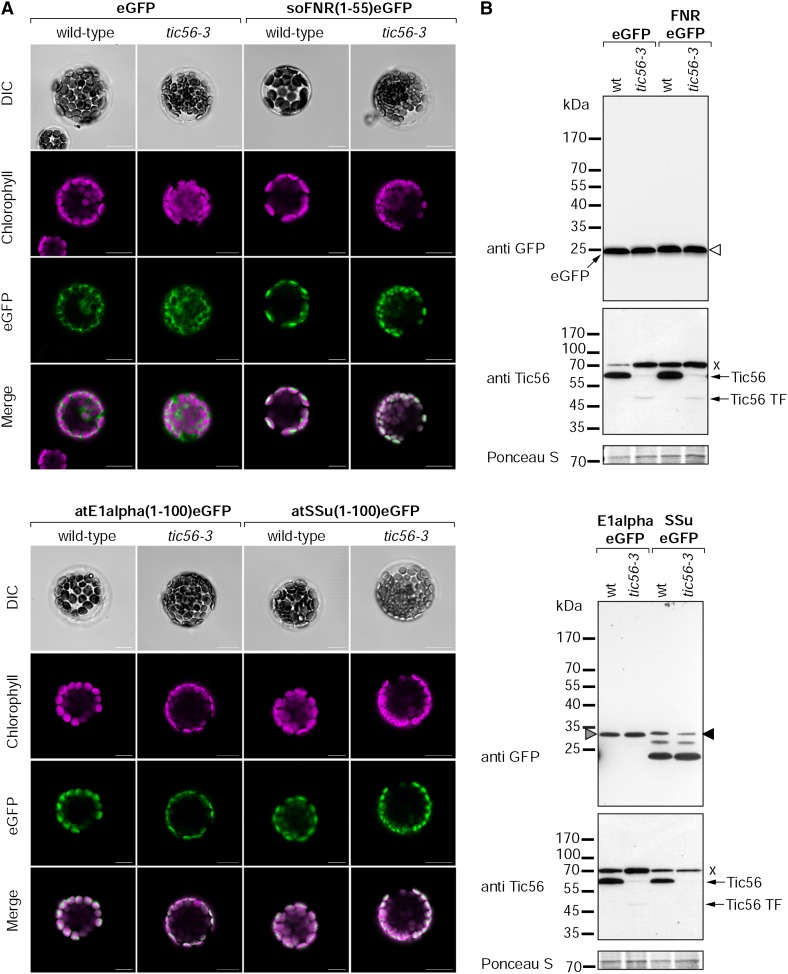
In vivo chloroplast targeting of three different import substrates in wild-type (wt) and tic56-3 protoplasts. A, Arabidopsis protoplasts were transformed with constructs encoding eGFP or N-terminal fragments of spinach FNR (amino acids 1–55), E1α (amino acids 1–100), and SSu (amino acids 1–100) fused to eGFP. The localization of the reporter proteins was examined by confocal laser scanning microscopy 20 h after transformation. Chlorophyll, Chlorophyll autofluorescence; DIC, differential interference contrast; eGFP, eGFP fluorescence; Merge, superposition of chlorophyll and eGFP signals. Bars = 10 µm. B, Western-blot analysis of transformed protoplasts with an anti-GFP antibody and anti-Tic56 antiserum. A section of the Ponceau S-stained membrane is shown as a loading control. The triangles mark bands running at the expected sizes of the processed forms of the three substrates [white, eGFP; gray, E1α(62-100)eGFP; black, SSu(55-100)eGFP]. Each x indicates a nonspecific cross reaction of the anti-Tic56 antiserum with a 70-kD protein (Fig. 1B).

References

    1. Agne B, Andrès C, Montandon C, Christ B, Ertan A, Jung F, Infanger S, Bischof S, Baginsky S, Kessler F (2010) The acidic A-domain of Arabidopsis TOC159 occurs as a hyperphosphorylated protein. Plant Physiol 153: 1016–1030 - PMC - PubMed
    1. Agne B, Infanger S, Wang F, Hofstetter V, Rahim G, Martin M, Lee DW, Hwang I, Schnell D, Kessler F (2009) A toc159 import receptor mutant, defective in hydrolysis of GTP, supports preprotein import into chloroplasts. J Biol Chem 284: 8670–8679 - PMC - PubMed
    1. Apel W, Schulze WX, Bock R (2010) Identification of protein stability determinants in chloroplasts. Plant J 63: 636–650 - PMC - PubMed
    1. Balsera M, Goetze TA, Kovács-Bogdán E, Schürmann P, Wagner R, Buchanan BB, Soll J, Bölter B (2009) Characterization of Tic110, a channel-forming protein at the inner envelope membrane of chloroplasts, unveils a response to Ca2+ and a stromal regulatory disulfide bridge. J Biol Chem 284: 2603–2616 - PubMed
    1. Bauer J, Chen K, Hiltbunner A, Wehrli E, Eugster M, Schnell D, Kessler F (2000) The major protein import receptor of plastids is essential for chloroplast biogenesis. Nature 403: 203–207 - PubMed

Publication types

MeSH terms