


High reported treatment satisfaction in people with type 1 diabetes switching to latest generation insulin pump regardless of previous therapy
- PMID: 25591855
- PMCID: PMC4604575
- DOI: 10.1177/1932296814567893
High reported treatment satisfaction in people with type 1 diabetes switching to latest generation insulin pump regardless of previous therapy
Abstract
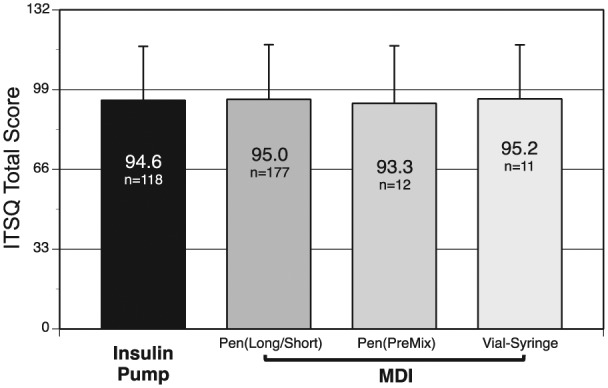
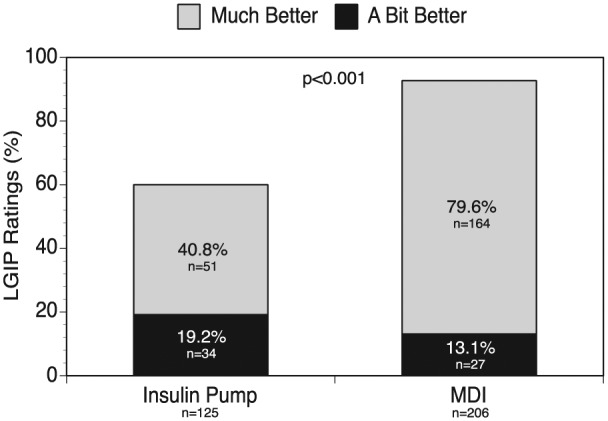
The effects of transition by individuals with type 1 diabetes (T1D) to more recently available continuous glucose monitoring (CGM)-enabled insulin pumps from either multiple daily insulin injections (MDI) or older insulin pumps on treatment satisfaction have not been well studied. We conducted a survey to assess treatment satisfaction among users of the Animas(®) Vibe™ insulin pump, a latest generation insulin pump (LGIP) system (CGM-enabled), after switching from MDI or earlier generation insulin pumps. Individuals with T1D from 141 centers in 5 countries and 4 language areas participated in the survey. Treatment satisfaction was assessed by the Insulin Treatment Satisfaction Questionnaire (ITSQ), which was included in a 50-item online questionnaire that also assessed preference for using the LGIP compared with previous treatment and satisfaction with key LGIP features. A total of 356 individuals, ages 12-79 years, responded to the survey: mean (SD) age 38.4 (16.1) years; diabetes duration 19.1 (13.3) years; female 59%; previously treated with MDI 58%. Overall mean (SD) ITSQ scores were high among all respondents regardless of prior treatment: 95.1 (23.2) (scale: 0-132). No differences between previous-treatment groups were seen. Most (83%) of respondents rated the LGIP to be better than their previous insulin delivery system: "much better" (65%), "a bit better" (18%) regardless of age, and 95% would recommend using the LGIP to others. Use of the Animas Vibe was associated with high treatment satisfaction and perceived as a better method of insulin delivery regardless of previous insulin therapy or age.
Keywords: CGM; CSII; ITSQ; continuous glucose monitoring; insulin pump; treatment satisfaction.
© 2015 Diabetes Technology Society.
Conflict of interest statement
Figures
References
-
- Diabetes C, Complications Trial Research Group. The effect of intensive treatment of diabetes on the development and progression of long-term complications in insulin-dependent diabetes mellitus. N Engl J Med. 1993;329:977-986. - PubMed
-
- Pickup JC, Sutton AJ. Severe hypoglycaemia and glycaemic control in Type 1 diabetes: meta-analysis of multiple daily insulin injections compared with continuous subcutaneous insulin infusion. Diabet Med. 2008;25:765-774. - PubMed
-
- Jeitler K, Horvath K, Berghold A, et al. Continuous subcutaneous insulin infusion versus multiple daily insulin injections in patients with diabetes mellitus: systematic review and meta-analysis. Diabetologia. 2008;51:941-951. - PubMed
-
- American Diabetes Association. Standards of medical care in diabetes—2014. Diabetes Care. 2014;37(suppl 1):S14-S80. - PubMed
-
- O’Connell MA, Donath S, O’Neal DN, et al. Glycaemic impact of patient-led use of sensor-guided pump therapy in type 1 diabetes: a randomised controlled trial. Diabetologia. 2009;52:1250-1257. - PubMed
Publication types
MeSH terms
LinkOut - more resources
Full Text Sources
Other Literature Sources
Medical
