


Manipulating cell fate in the cochlea: a feasible therapy for hearing loss
- PMID: 25593106
- PMCID: PMC4352405
- DOI: 10.1016/j.tins.2014.12.004
Manipulating cell fate in the cochlea: a feasible therapy for hearing loss
Abstract
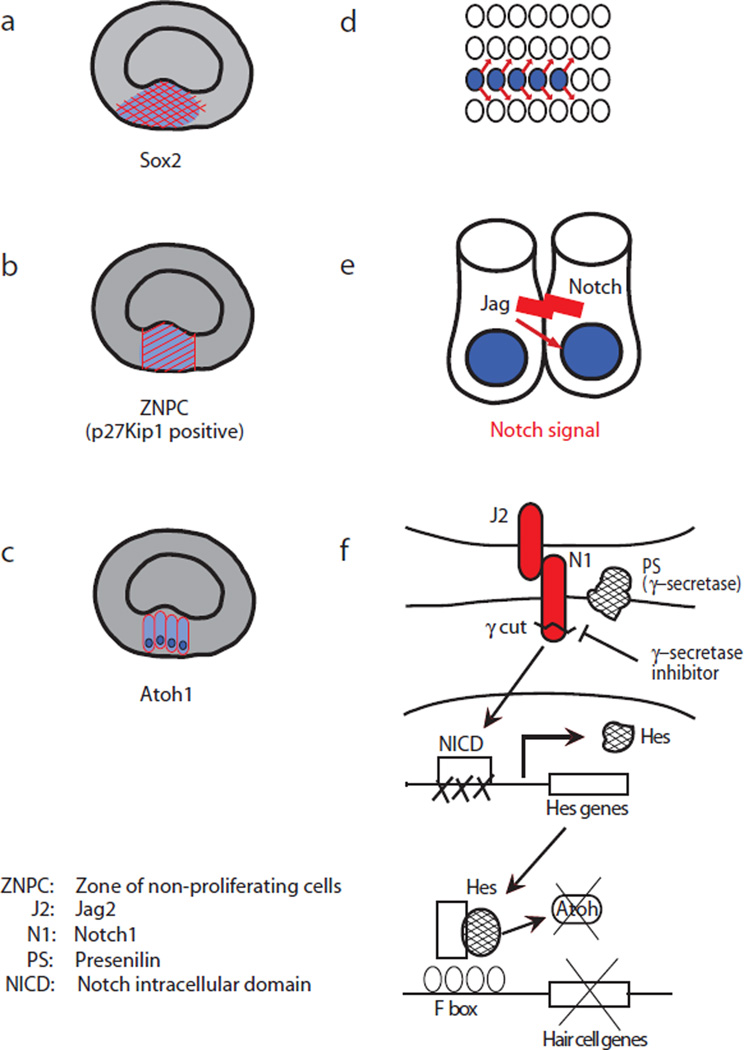
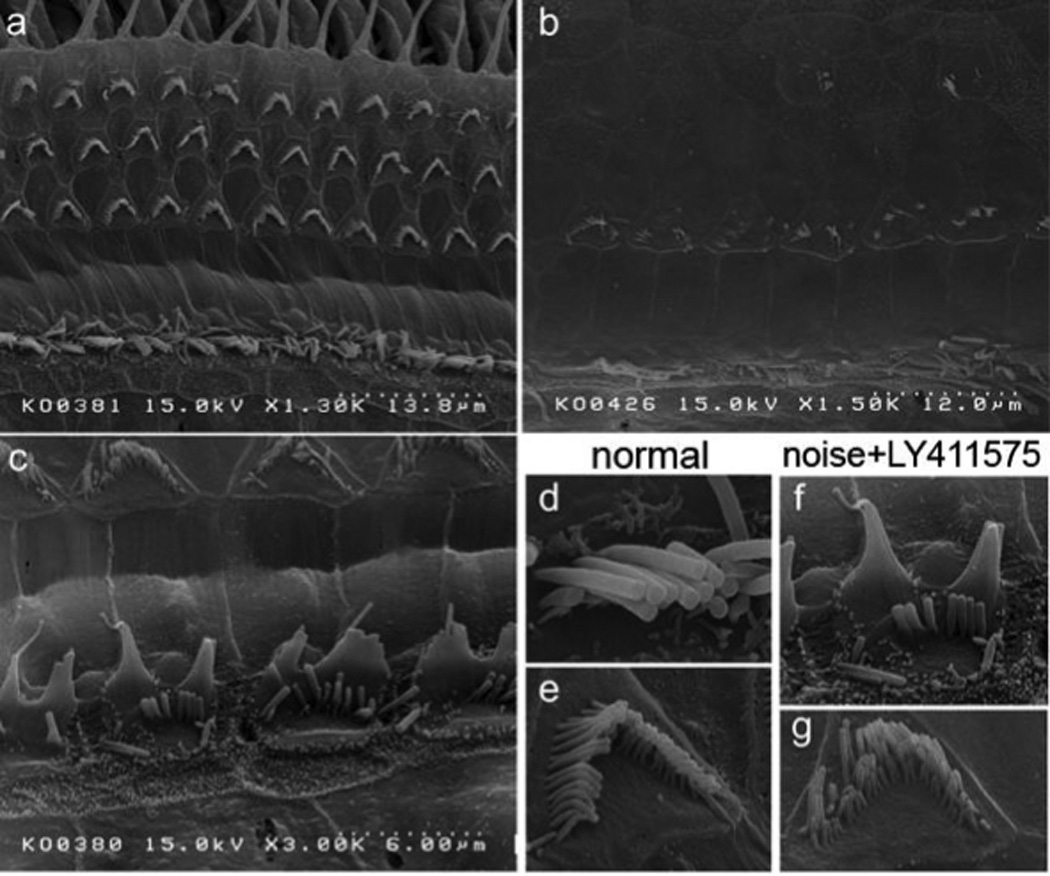
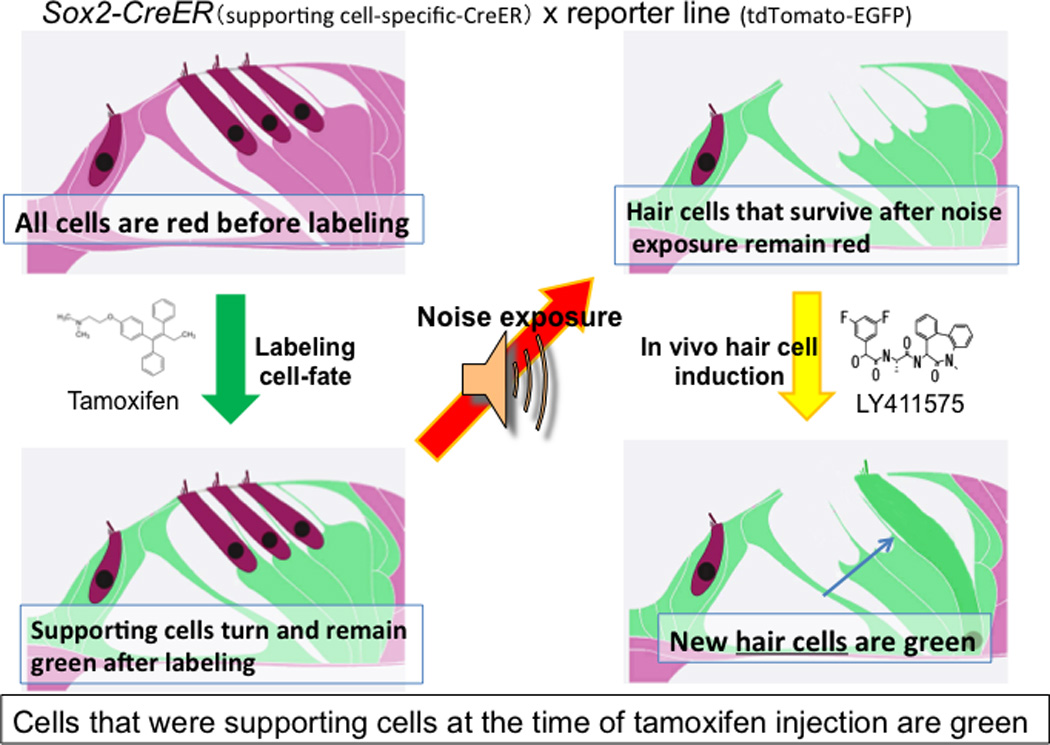
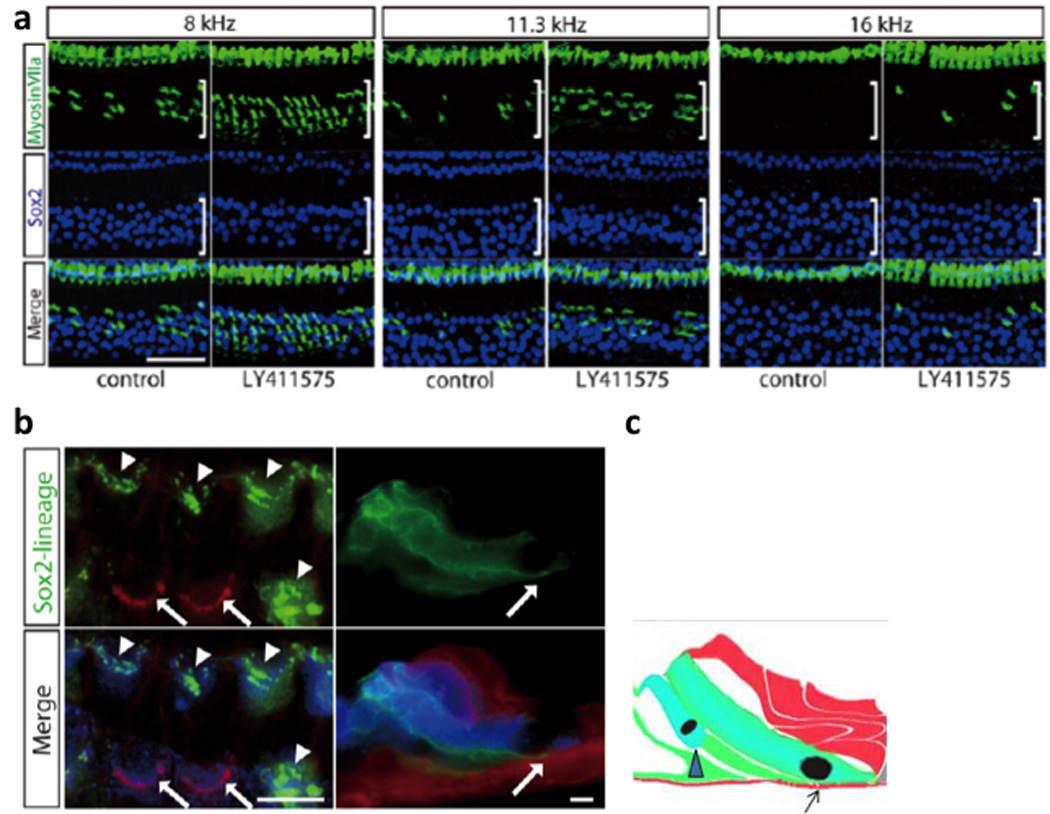
Mammalian auditory hair cells do not spontaneously regenerate, unlike hair cells in lower vertebrates, including fish and birds. In mammals, hearing loss due to the loss of hair cells is permanent and intractable. Recent studies in the mouse have demonstrated spontaneous hair cell regeneration during a short postnatal period, but this regenerative capacity is lost in the adult cochlea. Reduced regeneration coincides with a transition that results in a decreased pool of progenitor cells in the cochlear sensory epithelium. Here, we review the signaling cascades involved in hair cell formation and morphogenesis of the organ of Corti in developing mammals, the changing status of progenitor cells in the cochlea, and the regeneration of auditory hair cells in adult mammals.
Keywords: cell replacement; hair cells; hearing loss; sensory systems.
Copyright © 2014 Elsevier Ltd. All rights reserved.
Figures
References
-
- Bermingham NA, et al. Math1: an essential gene for the generation of inner ear hair cells. Science. 1999;284(5421):1837–1841. - PubMed
-
- Lanford PJ, et al. Notch signalling pathway mediates hair cell development in mammalian cochlea. Nat Genet. 1999;21(3):289–292. - PubMed
-
- Woods C, Montcouquiol M, Kelley MW. Math1 regulates development of the sensory epithelium in the mammalian cochlea. Nat Neurosci. 2004;7(12):1310–1318. - PubMed
-
- Hayashi T, Cunningham D, Bermingham-McDonogh O. Loss of Fgfr3 leads to excess hair cell development in the mouse organ of Corti. Dev Dyn. 2007;236(2):525–533. - PubMed
Publication types
MeSH terms
Grants and funding
LinkOut - more resources
Full Text Sources
Other Literature Sources
