


Human milk: mother nature's prototypical probiotic food?
- PMID: 25593150
- PMCID: PMC4288270
- DOI: 10.3945/an.114.007435
Human milk: mother nature's prototypical probiotic food?
Abstract
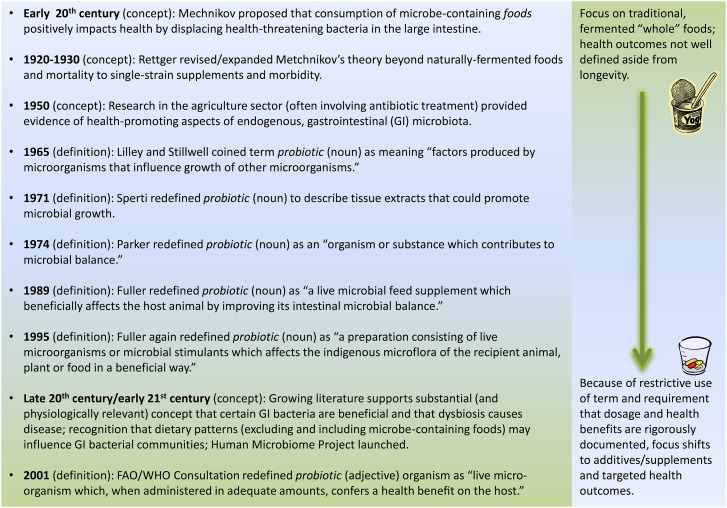
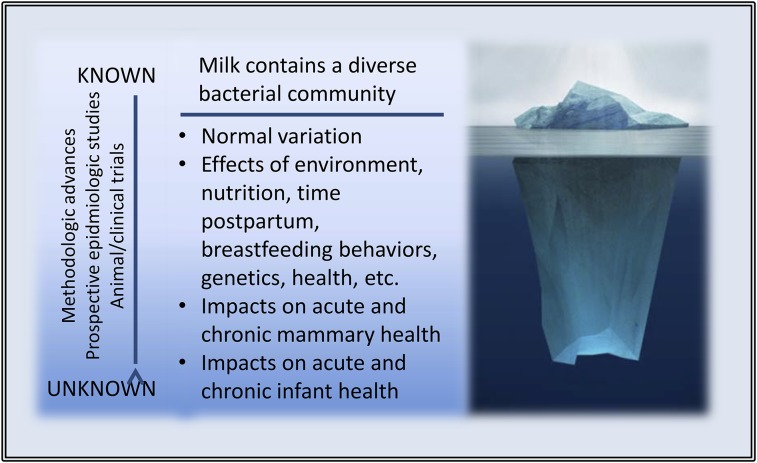
The concept of "probiotic" is generally attributed to Dr. Ilya Mechnikov, who hypothesized that longevity could be enhanced by manipulating gastrointestinal microbes using naturally fermented foods. In 2001, a report of the FAO and WHO (2001 Oct, http://www.who.int/foodsafety/publications/fs_-management/en/probiotics.pdf) proposed a more restrictive definition of probiotic, as follows: "a live micro-organism which, when administered in adequate amounts, confers a health benefit on the host." As such, answering the fundamental question posed here-"Is human milk a probiotic?"-requires first grappling with the concept and meaning of the term probiotic. Nonetheless, one must also be convinced that human milk contains bacteria. Indeed, there are scores of publications providing evidence of a paradigm shift in this regard. Variation in the human-milk microbiome may be associated with maternal weight, mode of delivery, lactation state, gestation age, antibiotic use, and maternal health. Milk constituents (e.g., fatty acids and complex carbohydrates) might also be related to the abundance of specific bacterial taxa in milk. Whether these bacteria affect infant health is likely, but more studies are needed to test this hypothesis. In summary, a growing literature suggests that human milk, like all other fluids produced by the body, indeed contains viable bacteria. As such, and recognizing the extensive literature relating breastfeeding to optimal infant health, we propose that human milk should be considered a probiotic food. Determining factors that influence which bacteria are present in milk and if and how they influence the mother's and/or the recipient infant's health remain basic science and public health realms in which almost nothing is known.
Keywords: bacteria; human milk; microbiome; microbiota; probiotics.
© 2015 American Society for Nutrition.
Conflict of interest statement
Author disclosures: MK McGuire and MA McGuire, no conflicts of interest.
Figures
References
-
- Nobelprize.org. The Nobel Prize in Physiology or Medicine 1908 [cited 2014 Aug 18]. Available from: http://www.nobelprize.org/nobel_prizes/medicine/laureates/1908/.
-
- Gordon S. Elie Metchnikoff: father of natural immunity. Eur J Immunol 2008;38:3257–64. - PubMed
-
- Hamilton-Miller JM, Gibson GR, Bruck W. Some insights into the derivation and early uses of the word 'probiotic’. Br J Nutr 2003;90:845. - PubMed
-
- Fuller R. History and development of probiotics. In: Fuller R, editor. Probiotics. London: Chapman and Hall; 1992. p. 1–8.
Publication types
MeSH terms
LinkOut - more resources
Full Text Sources
Other Literature Sources
Medical
Research Materials
