


Inflammation, negative nitrogen balance, and outcome after aneurysmal subarachnoid hemorrhage
- PMID: 25596503
- PMCID: PMC4336106
- DOI: 10.1212/WNL.0000000000001259
Inflammation, negative nitrogen balance, and outcome after aneurysmal subarachnoid hemorrhage
Abstract
Objective: To analyze the impact of inflammation and negative nitrogen balance (NBAL) on nutritional status and outcomes after subarachnoid hemorrhage (SAH).
Methods: This was a prospective observational study of SAH patients admitted between May 2008 and June 2012. Measurements of C-reactive protein (CRP), transthyretin (TTR), resting energy expenditure (REE), and NBAL (g/day) were performed over 4 preset time periods during the first 14 postbleed days (PBD) in addition to daily caloric intake. Factors associated with REE and NBAL were analyzed with multivariable linear regression. Hospital-acquired infections (HAI) were tracked daily for time-to-event analyses. Poor outcome at 3 months was defined as a modified Rankin Scale score ≥ 4 and assessed by multivariable logistic regression.
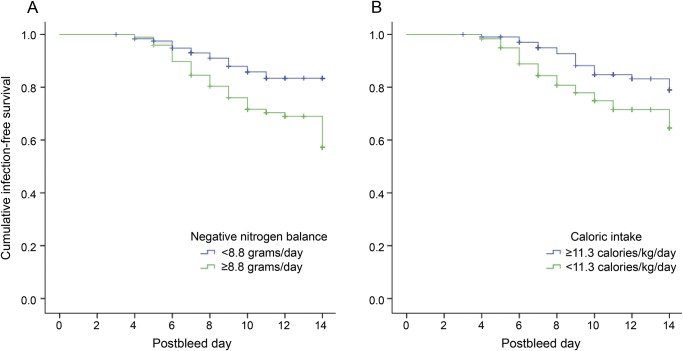
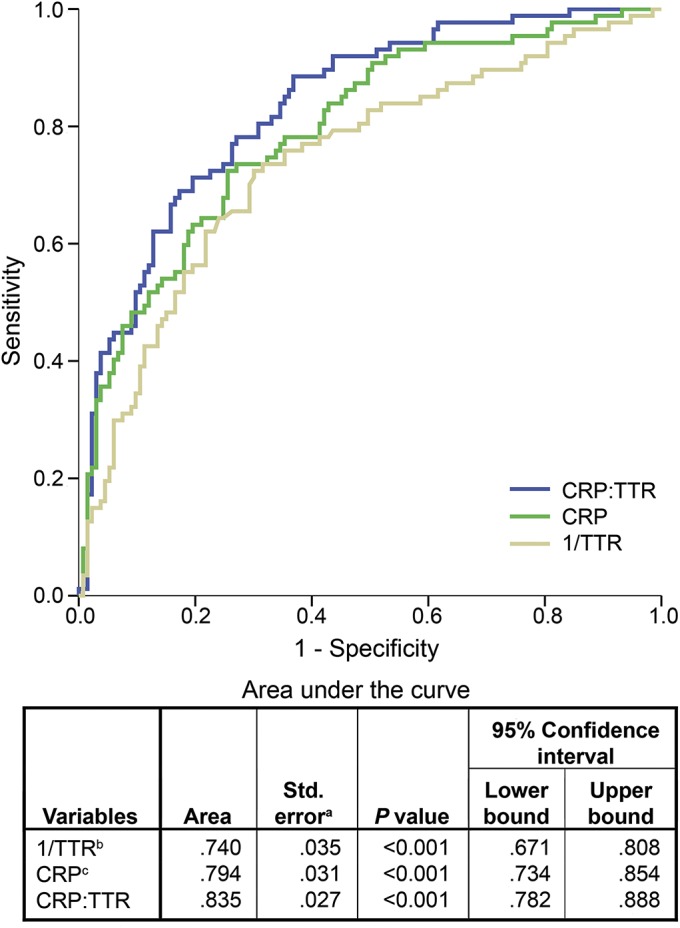
Results: There were 229 patients with an average age of 55 ± 15 years. Higher REE was associated with younger age (p = 0.02), male sex (p < 0.001), higher Hunt Hess grade (p = 0.001), and higher modified Fisher score (p = 0.01). Negative NBAL was associated with lower caloric intake (p < 0.001), higher body mass index (p < 0.001), aneurysm clipping (p = 0.03), and higher CRP:TTR ratio (p = 0.03). HAIs developed in 53 (23%) patients on mean PBD 8 ± 3. Older age (p = 0.002), higher Hunt Hess (p < 0.001), lower caloric intake (p = 0.001), and negative NBAL (p = 0.04) predicted time to first HAI. Poor outcome at 3 months was associated with higher Hunt Hess grade (p < 0.001), older age (p < 0.001), negative NBAL (p = 0.01), HAI (p = 0.03), higher CRP:TTR ratio (p = 0.04), higher body mass index (p = 0.03), and delayed cerebral ischemia (p = 0.04).
Conclusions: Negative NBAL after SAH is influenced by inflammation and associated with an increased risk of HAI and poor outcome. Underfeeding and systemic inflammation are potential modifiable risk factors for negative NBAL and poor outcome after SAH.
© 2015 American Academy of Neurology.
Figures
Comment in
-
The conundrum of underfeeding vs overfeeding neurocritically ill patients: is less better?Neurology. 2015 Feb 17;84(7):639-40. doi: 10.1212/WNL.0000000000001272. Epub 2015 Jan 16. Neurology. 2015. PMID: 25596502 No abstract available.
References
-
- Bederson JB, Connolly ES, Jr, Batjer HH, et al. Guidelines for the management of aneurysmal subarachnoid hemorrhage: a statement for healthcare professionals from a special writing group of the Stroke Council, American Heart Association. Stroke 2009;40:994–1025. - PubMed
-
- Frontera JA, Fernandez A, Schmidt JM, et al. Defining vasospasm after subarachnoid hemorrhage: what is the most clinically relevant definition? Stroke 2009;40:1963–1968. - PubMed
-
- Frontera JA, Fernandez A, Schmidt JM, et al. Impact of nosocomial infectious complications after subarachnoid hemorrhage. Neurosurgery 2008;62:80–87; discussion 87. - PubMed
-
- Naidech AM, Bendok BR, Tamul P, et al. Medical complications drive length of stay after brain hemorrhage: a cohort study. Neurocrit Care 2009;10:11–19. - PubMed
-
- Wartenberg KE, Schmidt JM, Claassen J, et al. Impact of medical complications on outcome after subarachnoid hemorrhage [see comment]. Crit Care Med 2006;34:617–623; quiz 624. - PubMed
Publication types
MeSH terms
Substances
Grants and funding
LinkOut - more resources
Full Text Sources
Medical
Research Materials
Miscellaneous
