


Bone and the regulation of global energy balance
- PMID: 25597336
- PMCID: PMC4446154
- DOI: 10.1111/joim.12348
Bone and the regulation of global energy balance
Abstract
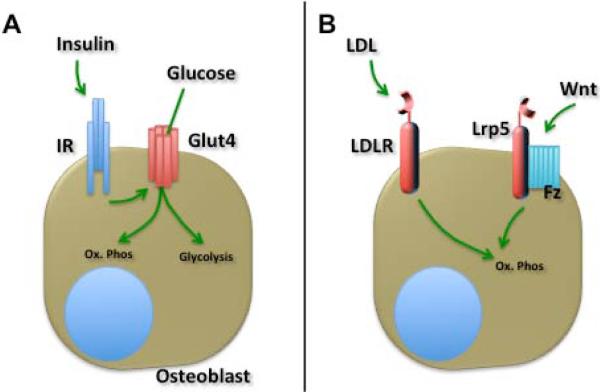
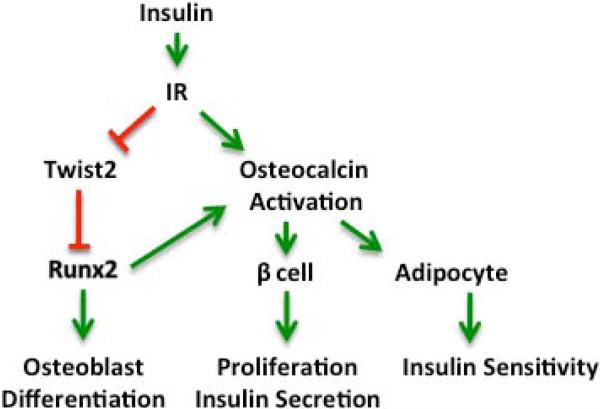
The skeleton, populated by large numbers of osteoblasts and long-lived osteocytes, requires a constant supply of energy-rich molecules to fuel the synthesis, deposition and mineralization of bone matrix during bone modelling and remodelling. When these energetic demands are not met, bone acquisition is suppressed. Recent findings suggest that key developmental signals emanating from Wnt low-density lipoprotein-related receptor 5 and hypoxia-inducible factor pathways impact osteoblast bioenergetics to accommodate the energy requirements for bone cells to fulfil their function. In vivo studies in several mutant mouse strains have confirmed a link between bone cells and global metabolism, ultimately leading to the identification of hormonal interactions between the skeleton and other tissues. The hormones insulin and leptin affect postnatal bone acquisition, whilst osteocalcin produced by the osteoblast in turn stimulates insulin secretion by the pancreas. These observations have prompted additional questions regarding the nature of the mechanisms of fuel sensing and processing in the osteoblast and their contribution to overall energy utilization and homeostasis. Answers to such questions should advance our understanding of metabolic diseases and may ultimately improve management of affected patients. In this review, we highlight recent studies in this field and offer a perspective on the evolutionary implications of bone as a metabolic endocrine organ.
Keywords: genetic mouse models; insulin; leptin; osteoblasts.
© 2015 The Association for the Publication of the Journal of Internal Medicine.
Figures
References
-
- Bolton JG, Patel S, Lacey JH, White S. A prospective study of changes in bone turnover and bone density associated with regaining weight in women with anorexia nervosa. Osteoporosis international : a journal established as result of cooperation between the European Foundation for Osteoporosis and the National Osteoporosis Foundation of the USA. 2005;16:1955–62. - PubMed
-
- Nussbaum M, Baird D, Sonnenblick M, Cowan K, Shenker IR. Short stature in anorexia nervosa patients. Journal of adolescent health care : official publication of the Society for Adolescent Medicine. 1985;6:453–5. - PubMed
-
- Provot S, Schipani E. Molecular mechanisms of endochondral bone development. Biochem Biophys Res Commun. 2005;328:658–65. - PubMed
-
- Kronenberg HM. Developmental regulation of the growth plate. Nature. 2003;423:332–6. - PubMed
Publication types
MeSH terms
Substances
Grants and funding
LinkOut - more resources
Full Text Sources
Other Literature Sources
Miscellaneous
