


Impaired olfaction and risk of delirium or cognitive decline after cardiac surgery
- PMID: 25597555
- PMCID: PMC4299936
- DOI: 10.1111/jgs.13198
Impaired olfaction and risk of delirium or cognitive decline after cardiac surgery
Abstract
Objectives: To determine the prevalence of impaired olfaction in individuals presenting for cardiac surgery and the independent association between impaired olfaction and postoperative delirium and cognitive decline.
Design: Nested prospective cohort study.
Setting: Academic hospital.
Participants: Individuals undergoing coronary artery bypass, valve surgery, or both (n = 165).
Measurements: Olfaction was measured using the Brief Smell Identification Test, with impaired olfaction defined as an olfactory score below the fifth percentile of normative data. Delirium was assessed using a validated chart review method. Cognitive performance was assessed using a neuropsychological testing battery at baseline and 4 to 6 weeks after surgery.
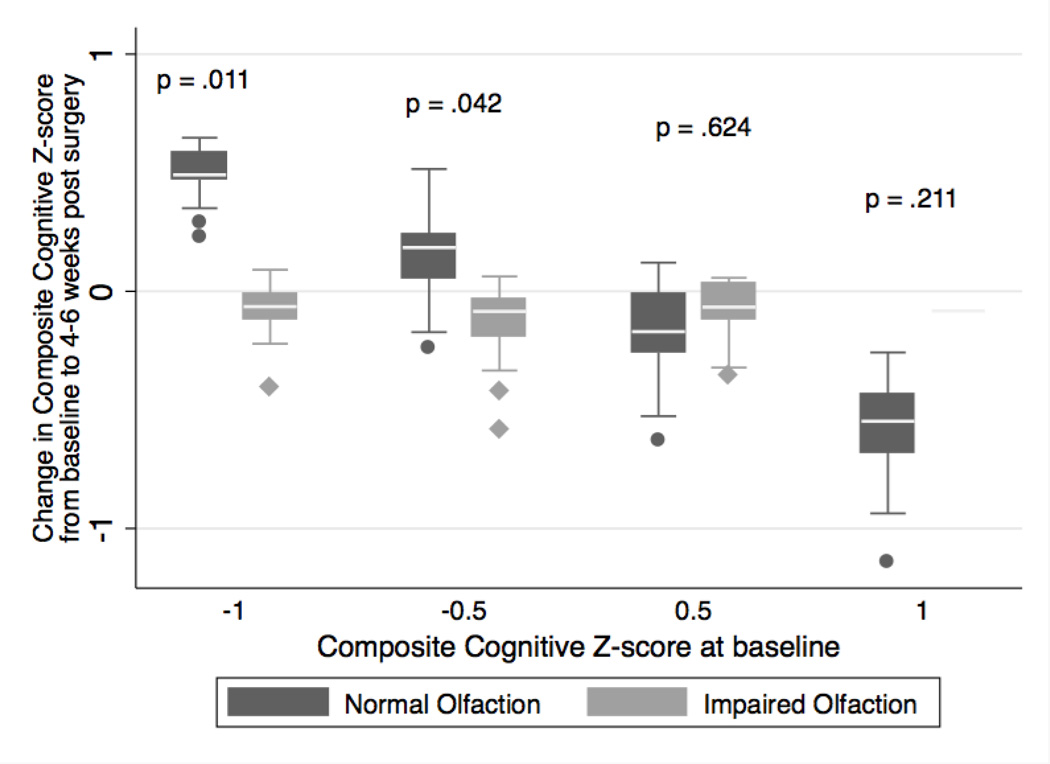
Results: Impaired olfaction was identified in 54 of 165 participants (33%) before surgery. Impaired olfaction was associated with greater adjusted risk of postoperative delirium (relative risk = 1.90, 95% confidence interval = 1.17-3.09, P = .009). There was no association between impaired olfaction and change in composite cognitive score in the overall study population.
Conclusion: Impaired olfaction is prevalent in individuals undergoing cardiac surgery and is associated with greater adjusted risk of postoperative delirium but not cognitive decline. Impaired olfaction may identify unrecognized vulnerability to postoperative delirium in individuals undergoing cardiac surgery.
Keywords: cognition disorders; delirium; olfaction disorders.
© 2015, Copyright the Authors Journal compilation © 2015, The American Geriatrics Society.
Figures
References
-
- Murphy C, Schubert CR, Cruickshanks KJ, et al. Prevalence of olfactory impairment in older adults. JAMA. 2002;288:2307–2312. - PubMed
-
- Murphy C, Doty RL, Duncan HJ. Clinical disorders of olfaction. In: Doty RL, editor. Handbook of Olfaction and Gustation. 2nd ed. New York, NY: Wiley; 2002. pp. 461–478.
-
- Albers M, Tabert M, Devanand D. Olfactory dysfunction as a predictor of neurodegenerative disease. Curr Neurol Neurosci Rep. 2006;6:379–386. - PubMed
Publication types
MeSH terms
Grants and funding
LinkOut - more resources
Full Text Sources
Other Literature Sources
Medical
