Molecular mechanisms involved in tumor repopulation after radiotherapy
- PMID: 25599021
- PMCID: PMC4293635
- DOI: 10.3978/j.issn.2218-676X.2013.10.03
Molecular mechanisms involved in tumor repopulation after radiotherapy
Abstract
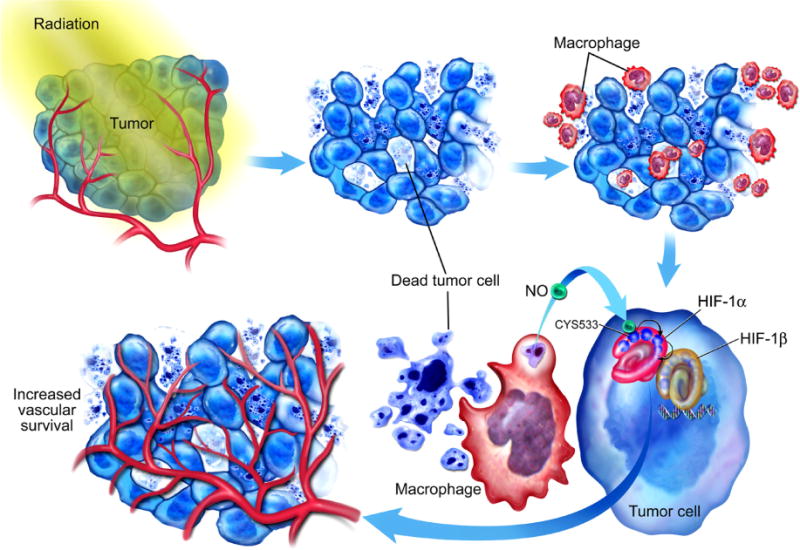
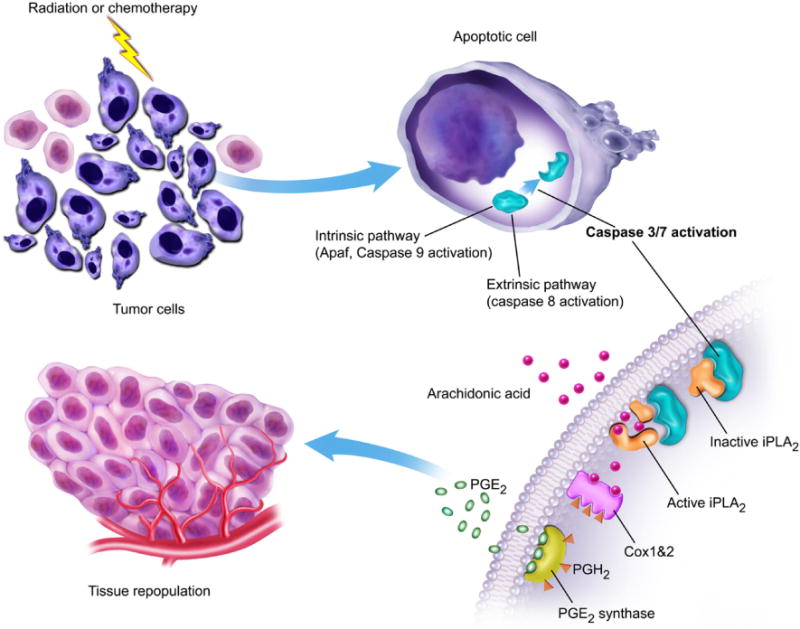
Radiotherapy remains one of most important treatment modalities for solid tumors. Current radiotherapy is mostly based on a set of concepts called the 4"R"s, which were established when there was lack of understanding of the underlying molecular mechanisms. However, progress made in the past two decades are beginning to allow us to see some of the molecular details involved in tumor response to radiation therapy. In this review, we will attempt to summarize some of the key discoveries in molecular radiation biology that have direct relevance to radiotherapy. We will focus our discussion on areas such as radiation induced tumor vasculogenesis, stem cell mobilization, and cellular repopulation. We hope our discussion will stimulate further studies in this important area of cancer research.
Keywords: 4“R”s; Radiation therapy; phoenix rising pathway; tumor repopulation; vasculogenesis.
Conflict of interest statement
Figures
References
-
- Regaud C, Ferroux R. Disordance des effets de rayons X, d’une part dans le testicule, par le fractionnenment de la dose. Comptes Rendus Societe Biologique. 1927;97:431.
-
- Withers HR. The 4 R’s of radiotherapy. In: Lett JT, Alder H, editors. Advances in radiation biology. Vol. 5. Vol. 5. New York: Academic Press; 1975. pp. 241–71.
-
- Sinclair WK. Cyclic x-ray responses in mammalian cells in vitro. Radiat Res. 1968;33:620–43. - PubMed
-
- Hall EJ. Radiobiology for the radiologist. 4. Philadelphia: Lippincott; 1994.
-
- Withers RH. Treatment-induced accelerated human tumor growth. Semin Radiat Oncol. 1993;3:135–43. - PubMed
Grants and funding
LinkOut - more resources
Full Text Sources
Miscellaneous