


Virtual reality cerebral aneurysm clipping simulation with real-time haptic feedback
- PMID: 25599200
- PMCID: PMC4340784
- DOI: 10.1227/NEU.0000000000000583
Virtual reality cerebral aneurysm clipping simulation with real-time haptic feedback
Abstract
Background: With the decrease in the number of cerebral aneurysms treated surgically and the increase of complexity of those treated surgically, there is a need for simulation-based tools to teach future neurosurgeons the operative techniques of aneurysm clipping.
Objective: To develop and evaluate the usefulness of a new haptic-based virtual reality simulator in the training of neurosurgical residents.
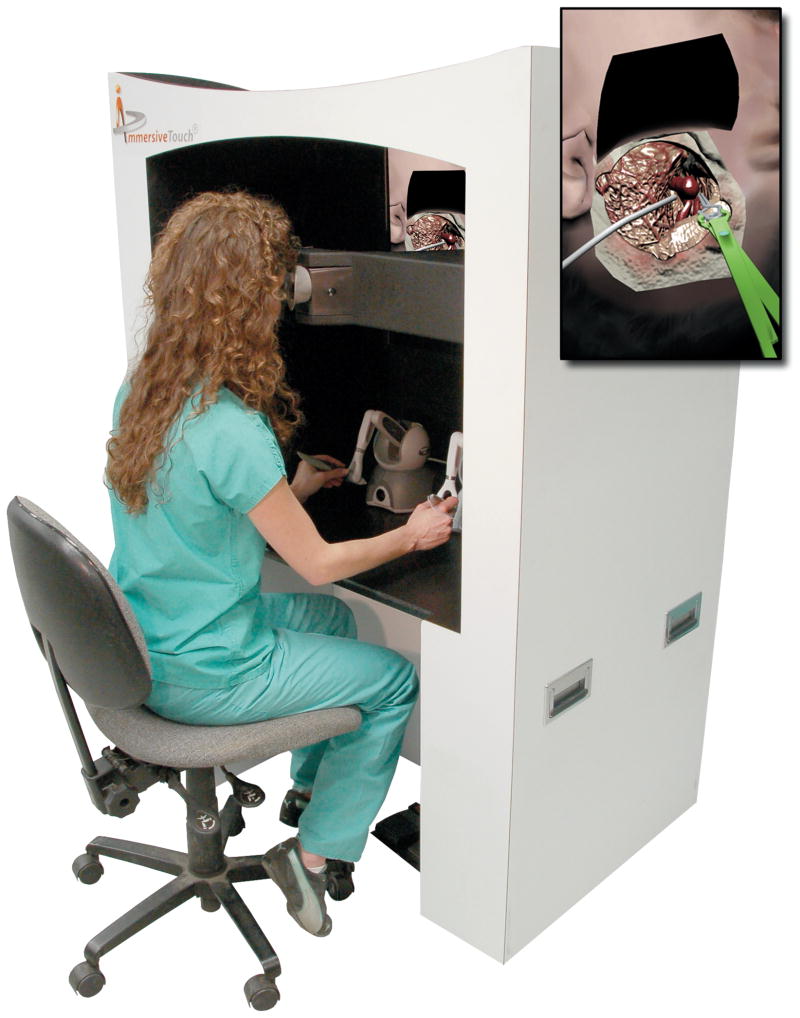
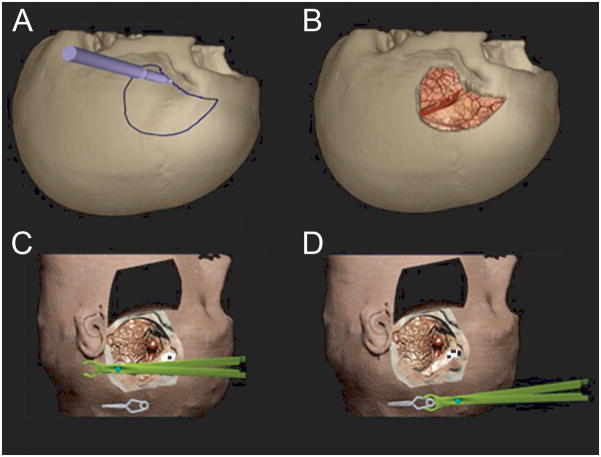
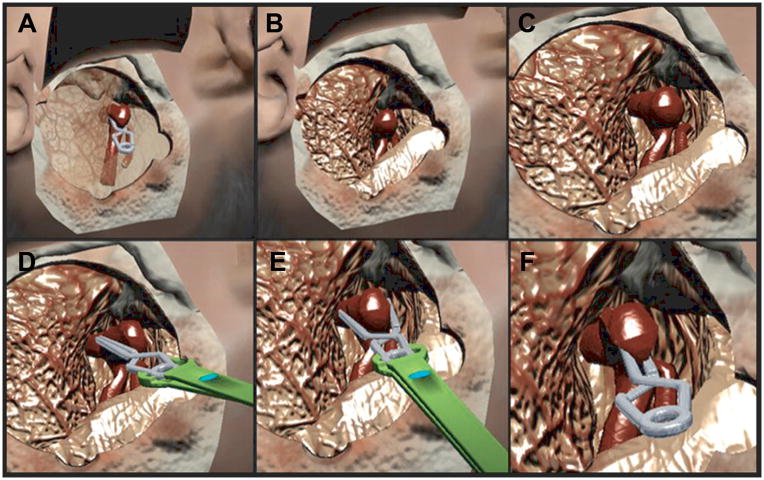
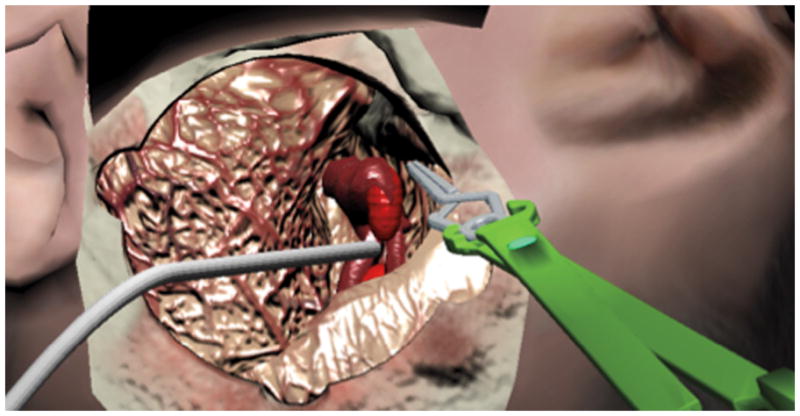
Methods: A real-time sensory haptic feedback virtual reality aneurysm clipping simulator was developed using the ImmersiveTouch platform. A prototype middle cerebral artery aneurysm simulation was created from a computed tomographic angiogram. Aneurysm and vessel volume deformation and haptic feedback are provided in a 3-dimensional immersive virtual reality environment. Intraoperative aneurysm rupture was also simulated. Seventeen neurosurgery residents from 3 residency programs tested the simulator and provided feedback on its usefulness and resemblance to real aneurysm clipping surgery.
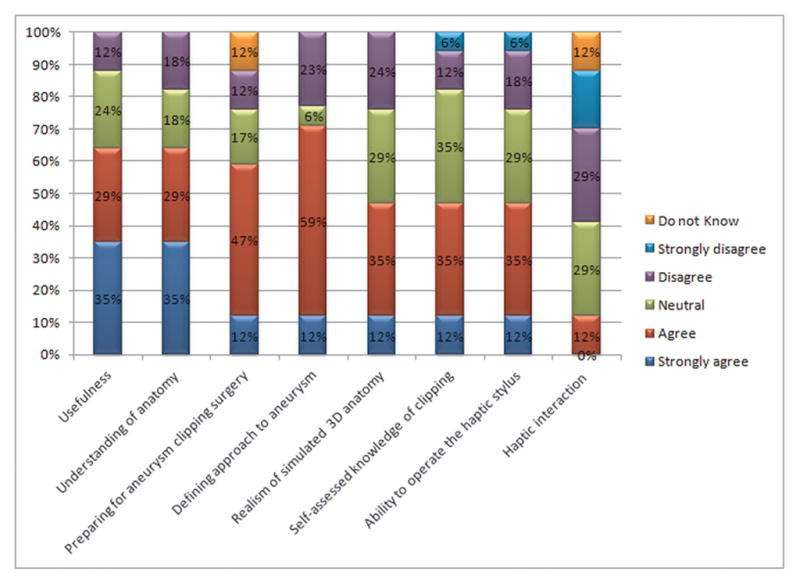
Results: Residents thought that the simulation would be useful in preparing for real-life surgery. About two-thirds of the residents thought that the 3-dimensional immersive anatomic details provided a close resemblance to real operative anatomy and accurate guidance for deciding surgical approaches. They thought the simulation was useful for preoperative surgical rehearsal and neurosurgical training. A third of the residents thought that the technology in its current form provided realistic haptic feedback for aneurysm surgery.
Conclusion: Neurosurgical residents thought that the novel immersive VR simulator is helpful in their training, especially because they do not get a chance to perform aneurysm clippings until late in their residency programs.
Figures
References
-
- ACGME. Batjer HHDP, Selden NR. Neurosurgery Program Director Workshop, Congress of Neurological Surgeons. 2012 Oct 6; http://www.acgme.org/acgmeweb/Portals/0/PFAssets/Presentations/160_PD_Mi....
-
- Schirmer CM, Elder JB, Roitberg B, Lobel DA. Virtual reality-based simulation training for ventriculostomy: an evidence-based approach. Neurosurgery. 2013 Oct;73(Suppl 1):66–73. - PubMed
-
- Lobel DA, Elder JB, Schirmer CM, Bowyer MW, Rezai AR. A novel craniotomy simulator provides a validated method to enhance education in the management of traumatic brain injury. Neurosurgery. 2013 Oct;73(Suppl 1):57–65. - PubMed
-
- Limbrick DD, Jr, Dacey RG., Jr Simulation in neurosurgery: possibilities and practicalities: foreword. Neurosurgery. 2013 Oct;73(Suppl 1):1–3. - PubMed
-
- Schirmer CM, Mocco J, Elder JB. Evolving virtual reality simulation in neurosurgery. Neurosurgery. 2013 Oct;73(Suppl 1):127–137. - PubMed
Publication types
MeSH terms
Grants and funding
LinkOut - more resources
Full Text Sources
Other Literature Sources
Medical
