


Broad targeting of angiogenesis for cancer prevention and therapy
- PMID: 25600295
- PMCID: PMC4737670
- DOI: 10.1016/j.semcancer.2015.01.001
Broad targeting of angiogenesis for cancer prevention and therapy
Abstract
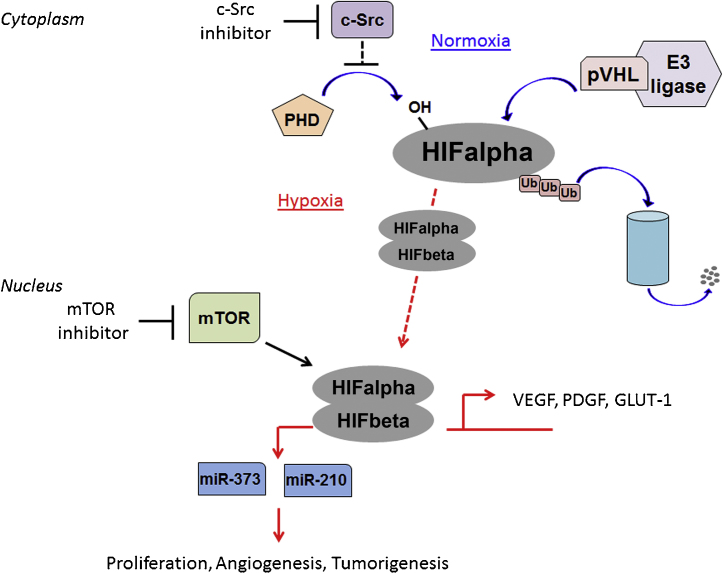
Deregulation of angiogenesis--the growth of new blood vessels from an existing vasculature--is a main driving force in many severe human diseases including cancer. As such, tumor angiogenesis is important for delivering oxygen and nutrients to growing tumors, and therefore considered an essential pathologic feature of cancer, while also playing a key role in enabling other aspects of tumor pathology such as metabolic deregulation and tumor dissemination/metastasis. Recently, inhibition of tumor angiogenesis has become a clinical anti-cancer strategy in line with chemotherapy, radiotherapy and surgery, which underscore the critical importance of the angiogenic switch during early tumor development. Unfortunately the clinically approved anti-angiogenic drugs in use today are only effective in a subset of the patients, and many who initially respond develop resistance over time. Also, some of the anti-angiogenic drugs are toxic and it would be of great importance to identify alternative compounds, which could overcome these drawbacks and limitations of the currently available therapy. Finding "the most important target" may, however, prove a very challenging approach as the tumor environment is highly diverse, consisting of many different cell types, all of which may contribute to tumor angiogenesis. Furthermore, the tumor cells themselves are genetically unstable, leading to a progressive increase in the number of different angiogenic factors produced as the cancer progresses to advanced stages. As an alternative approach to targeted therapy, options to broadly interfere with angiogenic signals by a mixture of non-toxic natural compound with pleiotropic actions were viewed by this team as an opportunity to develop a complementary anti-angiogenesis treatment option. As a part of the "Halifax Project" within the "Getting to know cancer" framework, we have here, based on a thorough review of the literature, identified 10 important aspects of tumor angiogenesis and the pathological tumor vasculature which would be well suited as targets for anti-angiogenic therapy: (1) endothelial cell migration/tip cell formation, (2) structural abnormalities of tumor vessels, (3) hypoxia, (4) lymphangiogenesis, (5) elevated interstitial fluid pressure, (6) poor perfusion, (7) disrupted circadian rhythms, (8) tumor promoting inflammation, (9) tumor promoting fibroblasts and (10) tumor cell metabolism/acidosis. Following this analysis, we scrutinized the available literature on broadly acting anti-angiogenic natural products, with a focus on finding qualitative information on phytochemicals which could inhibit these targets and came up with 10 prototypical phytochemical compounds: (1) oleanolic acid, (2) tripterine, (3) silibinin, (4) curcumin, (5) epigallocatechin-gallate, (6) kaempferol, (7) melatonin, (8) enterolactone, (9) withaferin A and (10) resveratrol. We suggest that these plant-derived compounds could be combined to constitute a broader acting and more effective inhibitory cocktail at doses that would not be likely to cause excessive toxicity. All the targets and phytochemical approaches were further cross-validated against their effects on other essential tumorigenic pathways (based on the "hallmarks" of cancer) in order to discover possible synergies or potentially harmful interactions, and were found to generally also have positive involvement in/effects on these other aspects of tumor biology. The aim is that this discussion could lead to the selection of combinations of such anti-angiogenic compounds which could be used in potent anti-tumor cocktails, for enhanced therapeutic efficacy, reduced toxicity and circumvention of single-agent anti-angiogenic resistance, as well as for possible use in primary or secondary cancer prevention strategies.
Keywords: Angiogenesis; Anti-angiogenic; Cancer; Phytochemicals; Treatment.
Copyright © 2015 The Authors. Published by Elsevier Ltd.. All rights reserved.
Figures
References
-
- Ribatti D., Djonov V. Intussusceptive microvascular growth in tumors. Cancer Lett. 2012;316:126–131. - PubMed
-
- Folkman J. Tumor angiogenesis: therapeutic implications. N Engl J Med. 1971;285:1182–1186. - PubMed
-
- Ribatti D. Endogenous inhibitors of angiogenesis: a historical review. Leuk Res. 2009;33:638–644. - PubMed
Publication types
MeSH terms
Substances
Grants and funding
- T32HL098062/HL/NHLBI NIH HHS/United States
- F31 CA154080/CA/NCI NIH HHS/United States
- T32 HL098062/HL/NHLBI NIH HHS/United States
- T32 HL134632/HL/NHLBI NIH HHS/United States
- C301/A14762/CRUK_/Cancer Research UK/United Kingdom
- R01HL107652/HL/NHLBI NIH HHS/United States
- 8P20GM104434/GM/NIGMS NIH HHS/United States
- HHSN261200900032C/CA/NCI NIH HHS/United States
- P20 RR016477/RR/NCRR NIH HHS/United States
- 5P20RR016477/RR/NCRR NIH HHS/United States
- R01 HL107652/HL/NHLBI NIH HHS/United States
- P20 GM103434/GM/NIGMS NIH HHS/United States
- F31CA154080/CA/NCI NIH HHS/United States
- R21 CA188818/CA/NCI NIH HHS/United States
LinkOut - more resources
Full Text Sources
Other Literature Sources
Medical
