


Fish oil supplements in New Zealand are highly oxidised and do not meet label content of n-3 PUFA
- PMID: 25604397
- PMCID: PMC4300506
- DOI: 10.1038/srep07928
Fish oil supplements in New Zealand are highly oxidised and do not meet label content of n-3 PUFA
Erratum in
-
Corrigendum: Fish oil supplements in New Zealand are highly oxidised and do not meet label content of n-3 PUFA.Sci Rep. 2016 Nov 7;6:35092. doi: 10.1038/srep35092. Sci Rep. 2016. PMID: 27818497 Free PMC article. No abstract available.
Abstract
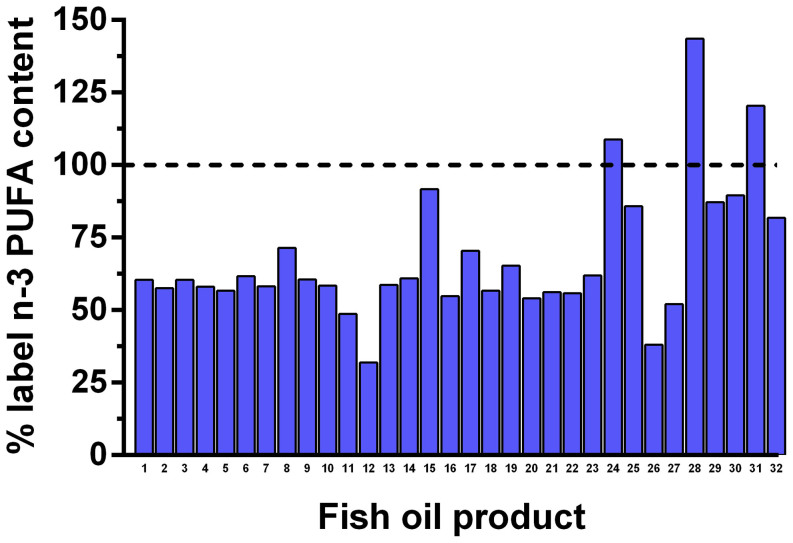
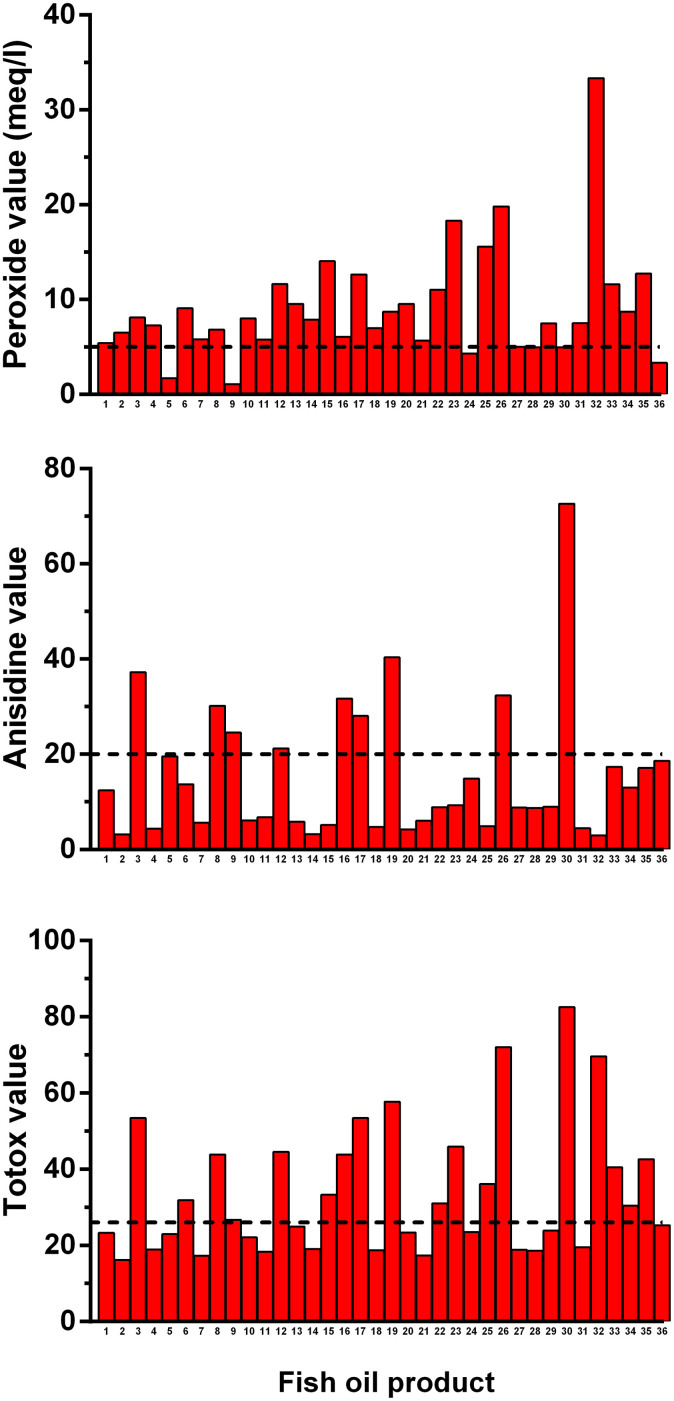
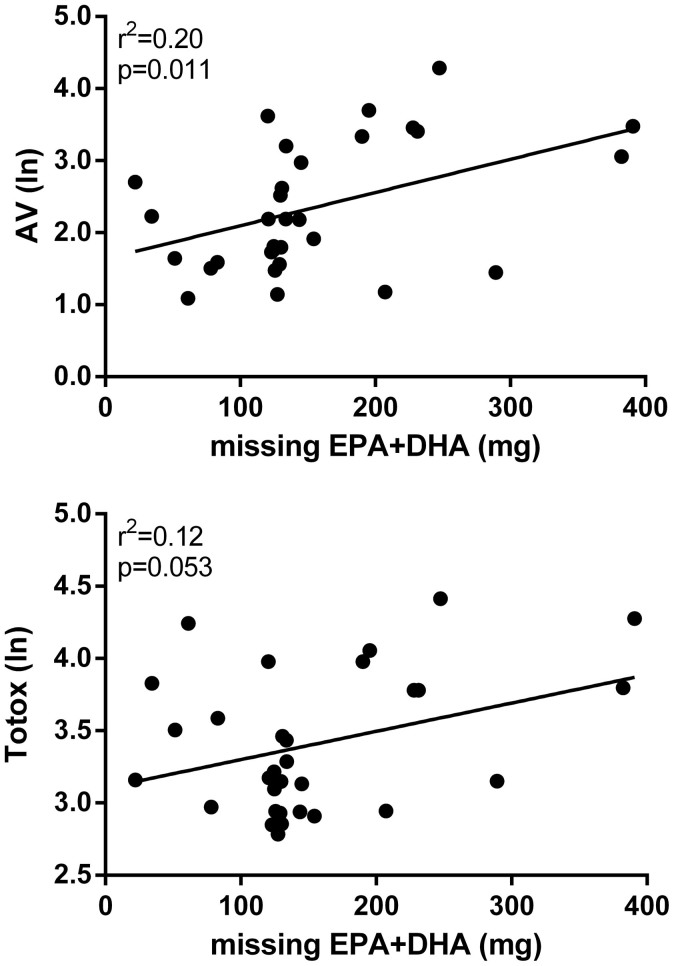
We evaluated the quality and content of fish oil supplements in New Zealand. All encapsulated fish oil supplements marketed in New Zealand were eligible for inclusion. Fatty acid content was measured by gas chromatography. Peroxide values (PV) and anisidine values (AV) were measured, and total oxidation values (Totox) calculated. Only 3 of 32 fish oil supplements contained quantities of eicosapentaenoic acid (EPA) and docosahexaenoic acid (DHA) that were equal or higher than labelled content, with most products tested (69%) containing <67%. The vast majority of supplements exceeded recommended levels of oxidation markers. 83% products exceeded the recommended PV levels, 25% exceeded AV thresholds, and 50% exceeded recommended Totox levels. Only 8% met the international recommendations, not exceeding any of these indices. Almost all fish oil supplements available in the New Zealand market contain concentrations of EPA and DHA considerably lower than claimed by labels. Importantly, the majority of supplements tested exceeded the recommended indices of oxidative markers. Surprisingly, best-before date, cost, country of origin, and exclusivity were all poor markers of supplement quality.
Figures
References
Publication types
MeSH terms
Substances
LinkOut - more resources
Full Text Sources
Other Literature Sources
Medical
Research Materials
Miscellaneous
