


Hierarchical cultural values predict success and mortality in high-stakes teams
- PMID: 25605883
- PMCID: PMC4321300
- DOI: 10.1073/pnas.1408800112
Hierarchical cultural values predict success and mortality in high-stakes teams
Abstract
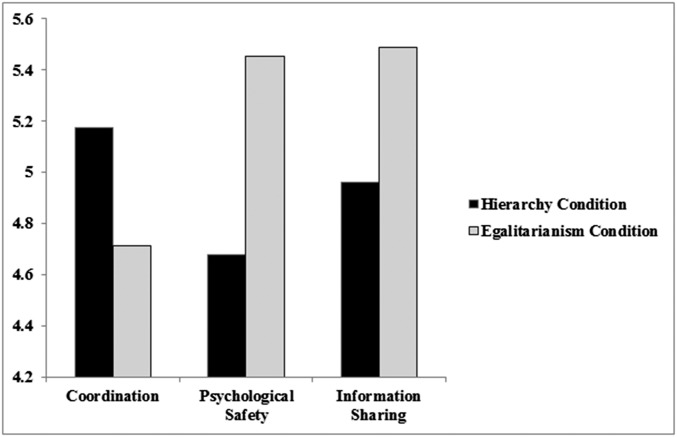
Functional accounts of hierarchy propose that hierarchy increases group coordination and reduces conflict. In contrast, dysfunctional accounts claim that hierarchy impairs performance by preventing low-ranking team members from voicing their potentially valuable perspectives and insights. The current research presents evidence for both the functional and dysfunctional accounts of hierarchy within the same dataset. Specifically, we offer empirical evidence that hierarchical cultural values affect the outcomes of teams in high-stakes environments through group processes. Experimental data from a sample of expert mountain climbers from 27 countries confirmed that climbers expect that a hierarchical culture leads to improved team coordination among climbing teams, but impaired psychological safety and information sharing compared with an egalitarian culture. An archival analysis of 30,625 Himalayan mountain climbers from 56 countries on 5,104 expeditions found that hierarchy both elevated and killed in the Himalayas: Expeditions from more hierarchical countries had more climbers reach the summit, but also more climbers die along the way. Importantly, we established the role of group processes by showing that these effects occurred only for group, but not solo, expeditions. These findings were robust to controlling for environmental factors, risk preferences, expedition-level characteristics, country-level characteristics, and other cultural values. Overall, this research demonstrates that endorsing cultural values related to hierarchy can simultaneously improve and undermine group performance.
Keywords: coordination; culture; groups; hierarchy; psychological safety.
Conflict of interest statement
The authors declare no conflict of interest.
Figures
References
-
- Swaab RI, Schaerer M, Anicich EM, Ronay R, Galinsky AD. The too-much- talent effect: Team interdependence determines when more talent is too much versus not enough. Psychol Sci. 2014;25(8):1581–1591. - PubMed
-
- Van Vugt M, Hogan R, Kaiser RB. Leadership, followership, and evolution: Some lessons from the past. Am Psychol. 2008;63(3):182–196. - PubMed
-
- Anderson C, Brown CE. The functions and dysfunctions of hierarchy. Res Organ Behav. 2010;30:55–89.
-
- Kwaadsteniet EWD, Dijk EV. Social status as a cue for tacit coordination. J Exp Soc Psychol. 2010;46(3):515–524.
-
- Ronay R, Greenaway K, Anicich EM, Galinsky AD. The path to glory is paved with hierarchy: When hierarchical differentiation increases group effectiveness. Psychol Sci. 2012;23(6):669–677. - PubMed
MeSH terms
LinkOut - more resources
Full Text Sources
Other Literature Sources
