


Understanding Patient Barriers to Kidney Transplant Evaluation
- PMID: 25606794
- PMCID: PMC4495014
- DOI: 10.1097/TP.0000000000000543
Understanding Patient Barriers to Kidney Transplant Evaluation
Abstract
Background: Some patients referred for kidney transplant evaluation fail to attend the visit. Our goal was to compare demographic, socioeconomic, and psychologic factors between evaluation visit attendees and absentees.
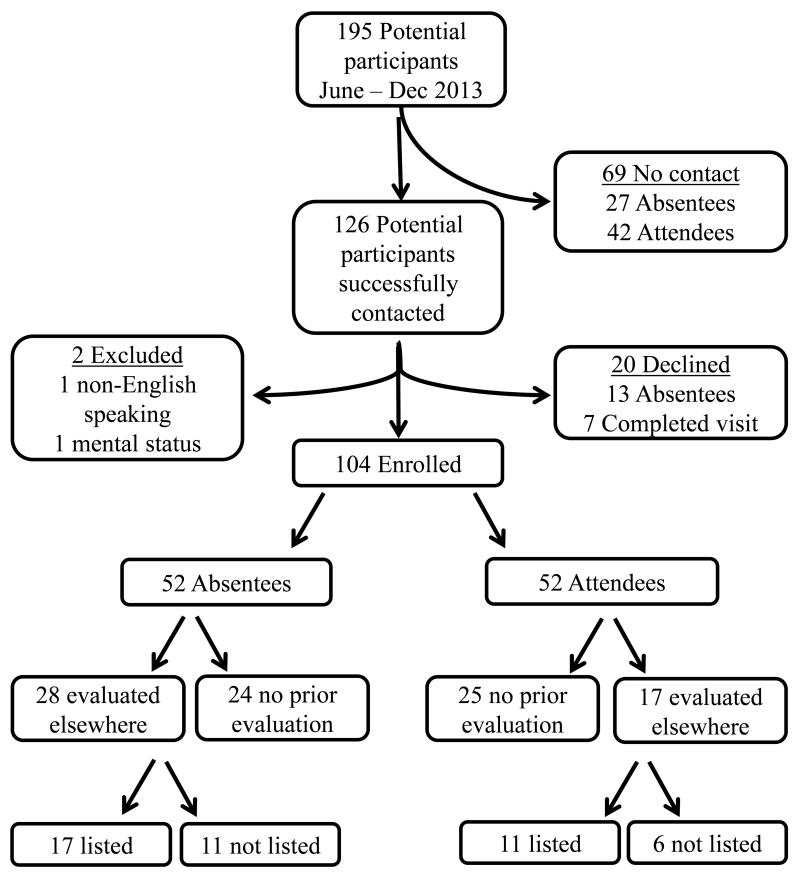
Methods: A convenience sample of patients referred and scheduled for kidney transplant evaluation at a single center from November 2012 to December 2013 participated in a phone survey reporting socioeconomic, demographic, and clinical characteristics; health literacy; and perceived knowledge and concerns about transplantation. Absentees were matched by race with attendees. Analyses of differences between groups were performed with chi-square test, Fisher exact test, and t tests. Multivariable logistic regression was adjusted for relevant demographic characteristics.
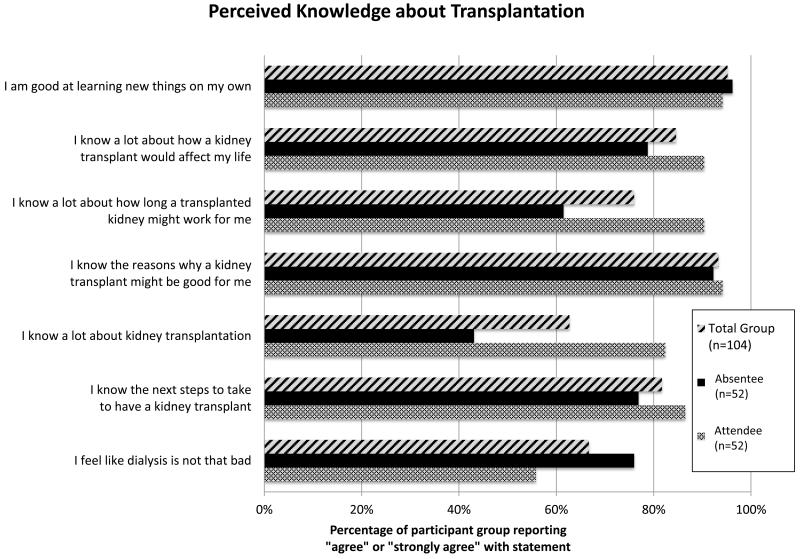
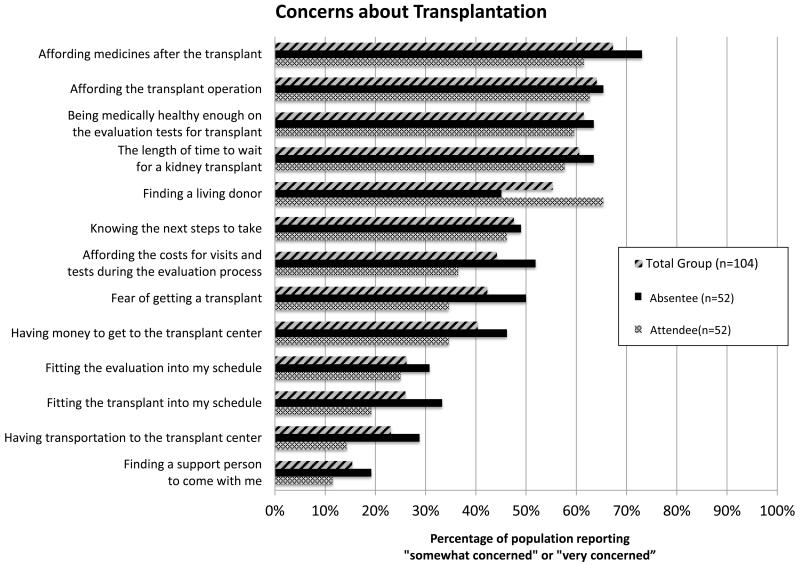
Results: One hundred four adults participated (61% men, 46% white, 52 ± 12 years). Financial concerns were the most prevalent (67.3% affording medication, 64.1% affording operation). Previous evaluation at a different transplant center (P = 0.029) and being on dialysis (P = 0.008) were significantly associated with absence. Attendance was associated with concerns about finding a living donor (P = 0.038) and higher perceived general knowledge about transplantation (P ≤ 0.001). No differences were appreciated in demographic, socioeconomic, or health literacy factors between groups.
Conclusion: Both attendee and absentee patients were most concerned with the financial burden of kidney transplantation. Although concerns and perceived knowledge are important correlates of behavior, other considerations such as psychologic factors and prior medical experiences may influence patients' ability to complete the kidney transplant evaluation process. Although this pilot study was conducted in a small sample and has limited generalizability, our findings can guide future research.
Figures
References
-
- Alexander GC, Sehgal AR. Barriers to cadaveric renal transplantation among blacks, women, and the poor. JAMA. 1998;280(13):1148. - PubMed
-
- Alexander GC, Sehgal AR. Why hemodialysis patients fail to complete the transplantation process. Am J Kidney Dis. 2001;37(2):321. - PubMed
-
- Kucirka LM, Grams ME, Balhara KS, Jaar BG, Segev DL. Disparities in provision of transplant information affect access to kidney transplantation. Am J Transplant. 2012;12(2):351. - PubMed
-
- Lockwood MB, Saunders MR, Lee CS, Becker YT, Josephson MA, Chon WJ. Kidney transplant and the digital divide: is information and communication technology a barrier or a bridge to transplant for African Americans? Prog Transplant. 2013;23(4):302. - PubMed
-
- Schold JD, Gregg JA, Harman JS, Hall AG, Patton PR, Meier-Kriesche HU. Barriers to evaluation and wait listing for kidney transplantation. Clin J Am Soc Nephrol. 2011;6(7):1760. - PubMed
Publication types
MeSH terms
Grants and funding
LinkOut - more resources
Full Text Sources
Medical
