Meta-Analysis
. 2015 Jan 22:6:5966.
doi: 10.1038/ncomms6966.

Genome-wide meta-analysis in alopecia areata resolves HLA associations and reveals two new susceptibility loci

Affiliations
Meta-Analysis

Genome-wide meta-analysis in alopecia areata resolves HLA associations and reveals two new susceptibility loci

Regina C Betz et al. Nat Commun. .

Abstract

Alopecia areata (AA) is a prevalent autoimmune disease with 10 known susceptibility loci. Here we perform the first meta-analysis of research on AA by combining data from two genome-wide association studies (GWAS), and replication with supplemented ImmunoChip data for a total of 3,253 cases and 7,543 controls. The strongest region of association is the major histocompatibility complex, where we fine-map four independent effects, all implicating human leukocyte antigen-DR as a key aetiologic driver. Outside the major histocompatibility complex, we identify two novel loci that exceed the threshold of statistical significance, containing ACOXL/BCL2L11(BIM) (2q13); GARP (LRRC32) (11q13.5), as well as a third nominally significant region SH2B3(LNK)/ATXN2 (12q24.12). Candidate susceptibility gene expression analysis in these regions demonstrates expression in relevant immune cells and the hair follicle. We integrate our results with data from seven other autoimmune diseases and provide insight into the alignment of AA within these disorders. Our findings uncover new molecular pathways disrupted in AA, including autophagy/apoptosis, transforming growth factor beta/Tregs and JAK kinase signalling, and support the causal role of aberrant immune processes in AA.


Figures
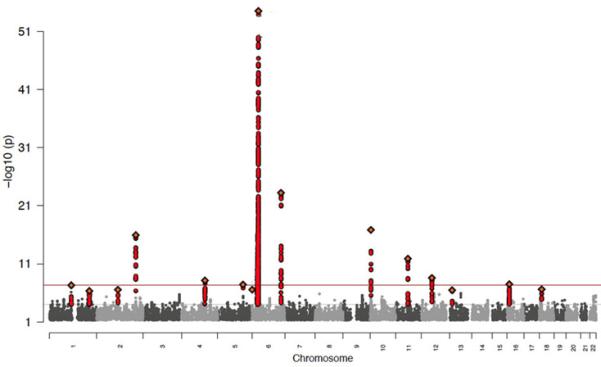
Figure 1
Figure 1. Manhattan plot for genome-wide tests of association in meta-analysis
In order to conduct a meta-analysis across two GWAS, genotypes were imputed for each data set yielding 1.2 million SNPs. Standard association analysis with logistic regression including PC covariates was performed within each cohort and results were combined with standard-error weighted meta-analysis.
Figure 2
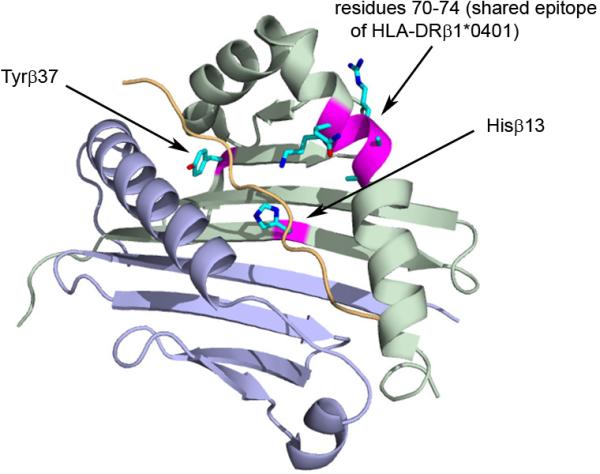
Figure 2. Positions of amino acid residues demonstrating independent association with alopecia areata
Structure of disease associated HLA-DRB1*04*01 allele and polymorphic residues involved in susceptibility to AA. The peptide binding cleft of an HLA-DR molecule is shown in cartoon representation with the α-chain colored in blue and β-chain in green. The MHC-bound peptide is shown in cartoon representation and colored yellow. Residues His13β and Tyr37β corresponding to amino acid positions with independent disease association are shown in stick model along with the shared epitope (residues 70-74). Crystal structure of HLA DR4 bound to melanocytes lineage-specific antigen gp120 was used (PDB 4IS6).
Figure 3
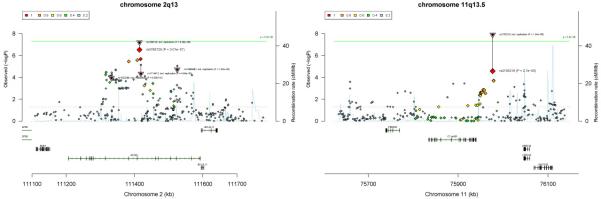
Figure 3. Detailed map of associated SNPs and gene locations for newly identified loci
Two regions in the genome exceeded statistical significance when the replication data was combined with the meta analysis results (N=10,796) and analyzed with logistic regression. (a). Chromosome 2q13 includes ACOXL and BCL2L11. (b). Chromosome 12q24.12 included C11orf30 and LRCC32 (GARP).
Figure 4
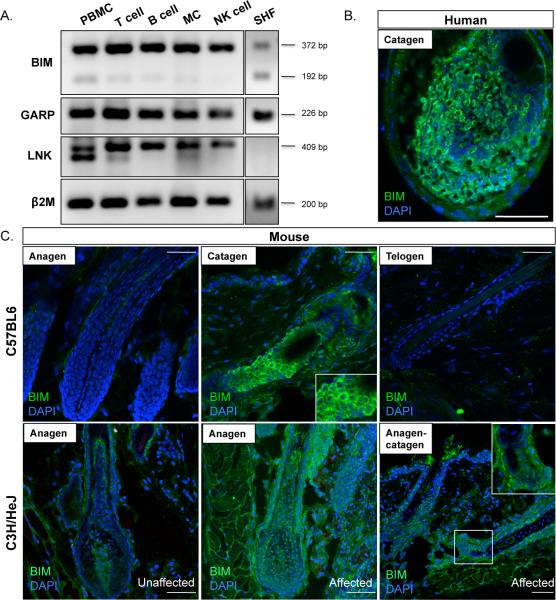
Figure 4. Characterization BIM, GARP, and LNK expression
A. BIM, GARP, and LNK expression in human immune cells and hair follicles. RT-PCR was performed on BIM, GARP, and LNK to determine gene expression in T cells, natural killer cells (NK), B cells, monocytes (MC), peripheral blood mononuclear cells (PBMCs), and scalp hair follicles (SHF). 2M PCR was used as a loading control for each cDNA. Two splice variants are observed for β BIM expression: BIM-S (192 bp) and BIM-L (372 bp). Expected amplicon sizes: BIM (372 bp and 192 bp), GARP (226 bp), LNK (409 bp). B. Immunofluorescence staining in human hair follicles reveals that BIM is highly expressed in matrix cells of the catagen hair bulb. C. In healthy hair follicles from the C67BL6 mouse strain, BIM is strongly expressed in the apoptosing strand of mouse catagen hair follicles and is absent from anagen and telogen hair follicles. Immunofluorescence staining on affected and unaffected skin from the AA mouse model strain, C3H/HeJ, reveals that BIM expression levels and localization pattern are aberrant in affected hair follicles compared to unaffected C3H/HeJ and C57BL6 hair follicles.
Figure 5
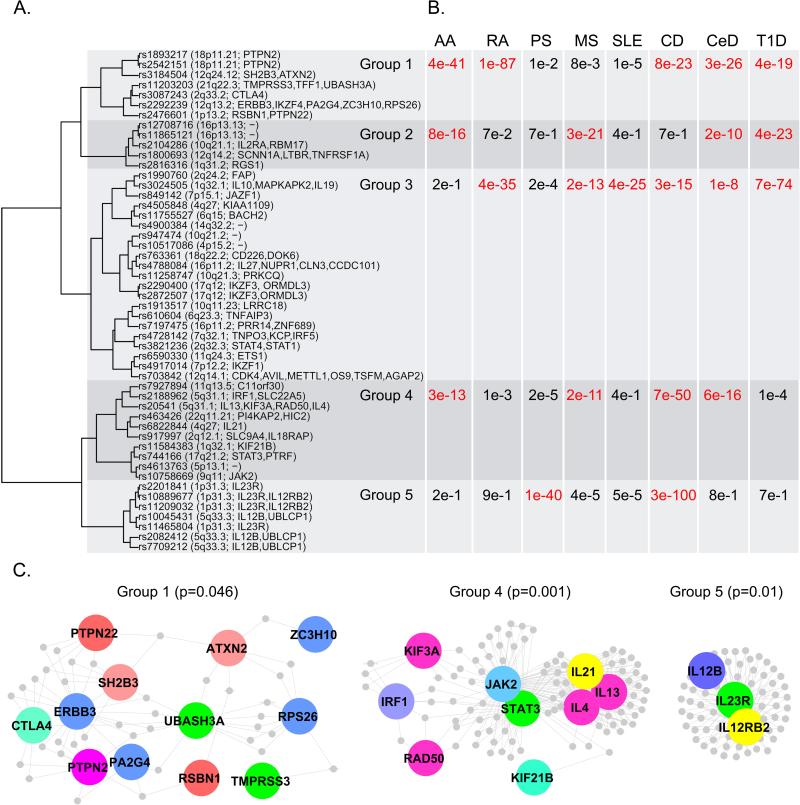
Figure 5. Cross Phenotype Meta-Analysis revealing functional clusters of genes and proteins indicating patterns of shared disease mechanisms across autoimmune diseases
(A). 50 SNPs with evidence of association to more than one autoimmune disease (Pcpma < 0.01) are clustered by association with disease. (B). For each cluster and disease pair, a cumulative association statistic was calculated using Fisher's omnibus test to combine p- values. The varying pattern of disease association for each cluster suggests each group represents a distinct co-morbid mechanism. (C). Proteins coded within a 100 Mb window centered on each SNP within each cluster are depicted in protein-protein interaction maps. Three of the five clusters have significant protein inter-connectivity (permuted P < 0.05).

References

    1. Safavi KH, Muller SA, Suman VJ, Moshell AN, Melton LJ., 3rd Incidence of alopecia areata in Olmsted County, Minnesota, 1975 through 1989. Mayo Clin Proc. 1995;70:628–633. - PubMed
    1. Delamere FM, Sladden MM, Dobbins HM, Leonardi-Bee J. Interventions for alopecia areata. Cochrane database of systematic reviews. 2008:CD004413. - PubMed
    1. Lebwohl M. Treatment of skin disease : comprehensive therapeutic strategies. 2nd edn Mosby/Elsevier; 2006.
    1. Petukhova L, et al. Genome-wide association study in alopecia areata implicates both innate and adaptive immunity. Nature. 2010;466:113–117. - PMC - PubMed
    1. Jagielska D, et al. Follow-Up Study of the First Genome-Wide Association Scan in Alopecia Areata: IL13 and KIAA0350 as Susceptibility Loci Supported with Genome- Wide Significance. The Journal of investigative dermatology. 2012 - PubMed

Publication types

MeSH terms