


Psychosocial determinants of physicians' intention to practice euthanasia in palliative care
- PMID: 25609036
- PMCID: PMC4417253
- DOI: 10.1186/1472-6939-16-6
Psychosocial determinants of physicians' intention to practice euthanasia in palliative care
Abstract
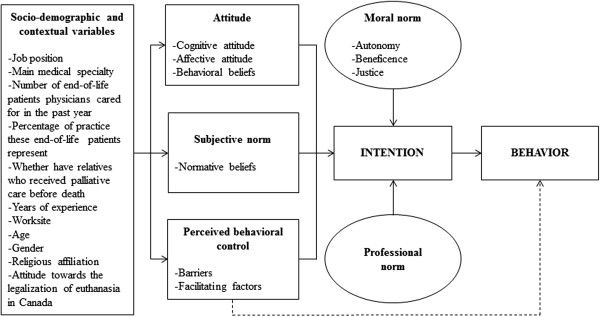
Background: Euthanasia remains controversial in Canada and an issue of debate among physicians. Most studies have explored the opinion of health professionals regarding its legalization, but have not investigated their intentions when faced with performing euthanasia. These studies are also considered atheoretical. The purposes of the present study were to fill this gap in the literature by identifying the psychosocial determinants of physicians' intention to practice euthanasia in palliative care and verifying whether respecting the patient's autonomy is important for physicians.
Methods: A validated anonymous questionnaire based on an extended version of the Theory of Planned Behavior was mailed to a random sample of 445 physicians from the province of Quebec, Canada.
Results: The response rate was 38.3% and the mean score for intention was 3.94 ± 2.17 (range: 1 to 7). The determinants of intention among physicians were: knowing patients' wishes (OR = 10.77; 95%CI: 1.33-86.88), perceived behavioral control-physicians' evaluation of their ability to adopt a given behavior-(OR = 4.35; 95%CI: 1.44-13.15), moral norm-the appropriateness of adopting a given behavior according to one's personal and moral values-(OR = 3.22; 95%CI: 1.29-8.00) and cognitive attitude-factual consequences of the adoption of a given behavior-(OR = 3.16; 95%CI: 1.20-8.35). This model correctly classified 98.8% of physicians. Specific beliefs that might discriminate physicians according to their level of intention were also identified. For instance, physicians' moral norm was related to the ethical principle of beneficence.
Conclusions: Overall, physicians have weak intentions to practice euthanasia in palliative care. Nevertheless, respecting patients' final wishes concerning euthanasia seems to be of particular importance to them and greatly affects their motivation to perform euthanasia.
Figures

References
-
- Bolmsjo I. Existential issues in palliative care–interviews with cancer patients. J Palliat Care. 2000;16(2):20–4. - PubMed
Pre-publication history
-
- The pre-publication history for this paper can be accessed here: http://www.biomedcentral.com/1472-6939/16/6/prepub
Publication types
MeSH terms
Grants and funding
LinkOut - more resources
Full Text Sources
Other Literature Sources
Medical
Molecular Biology Databases
Miscellaneous
