


Glycomic signatures on serum IgGs for prediction of postvaccination response
- PMID: 25612906
- PMCID: PMC4303884
- DOI: 10.1038/srep07648
Glycomic signatures on serum IgGs for prediction of postvaccination response
Abstract
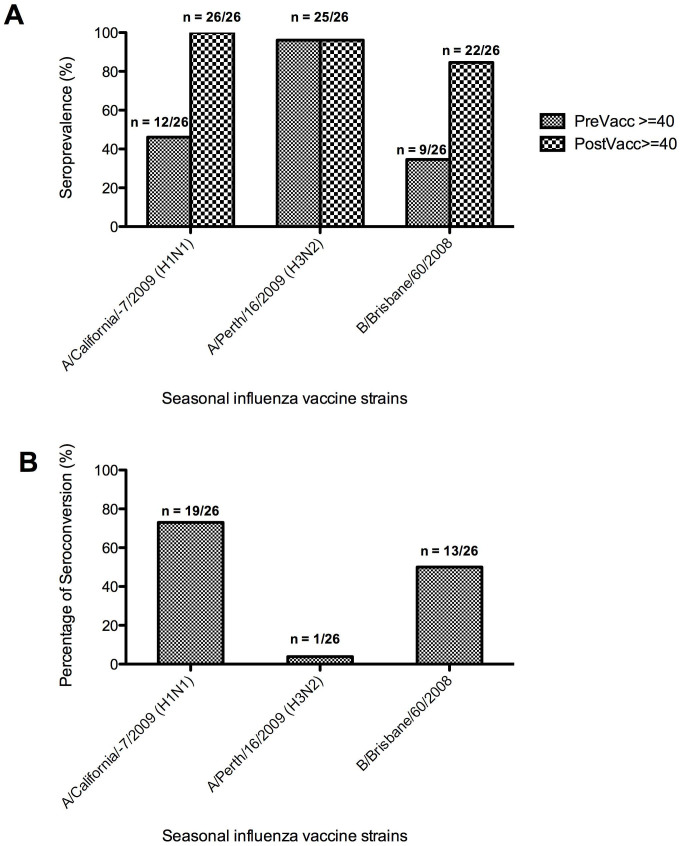
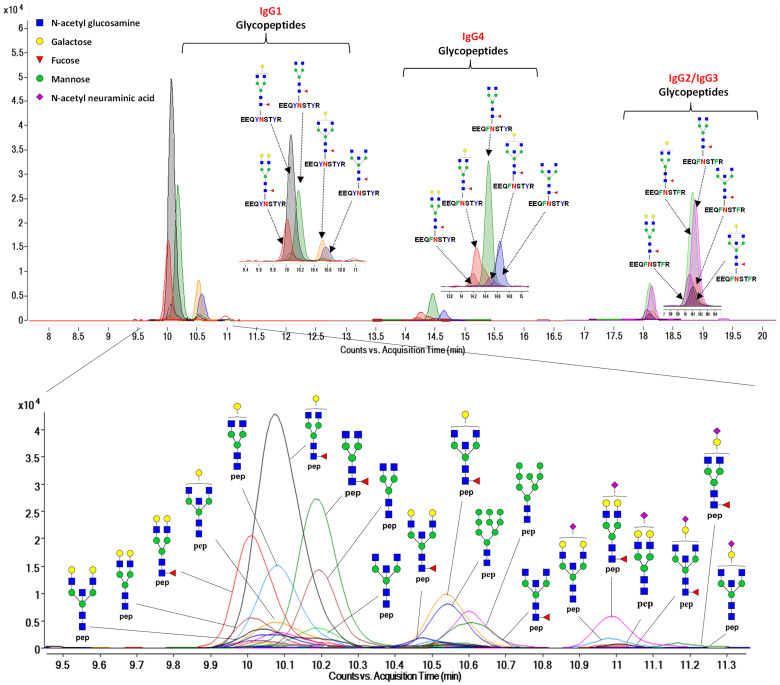
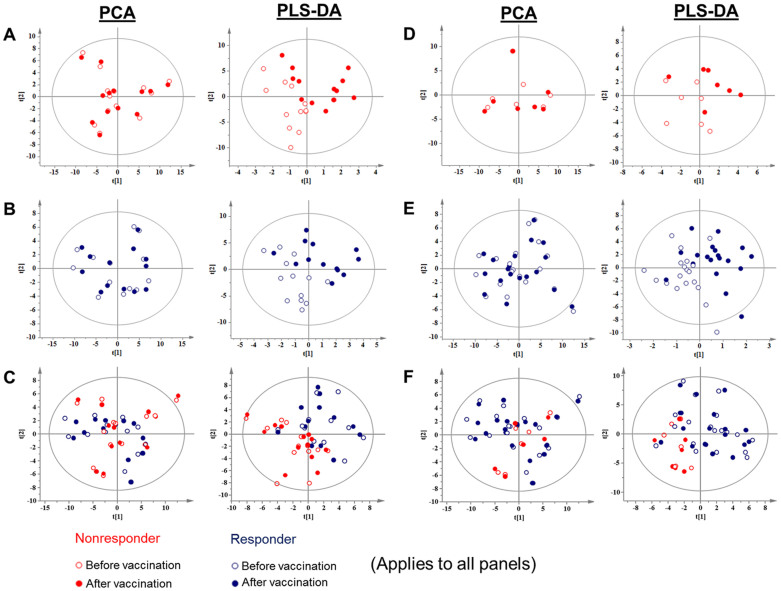
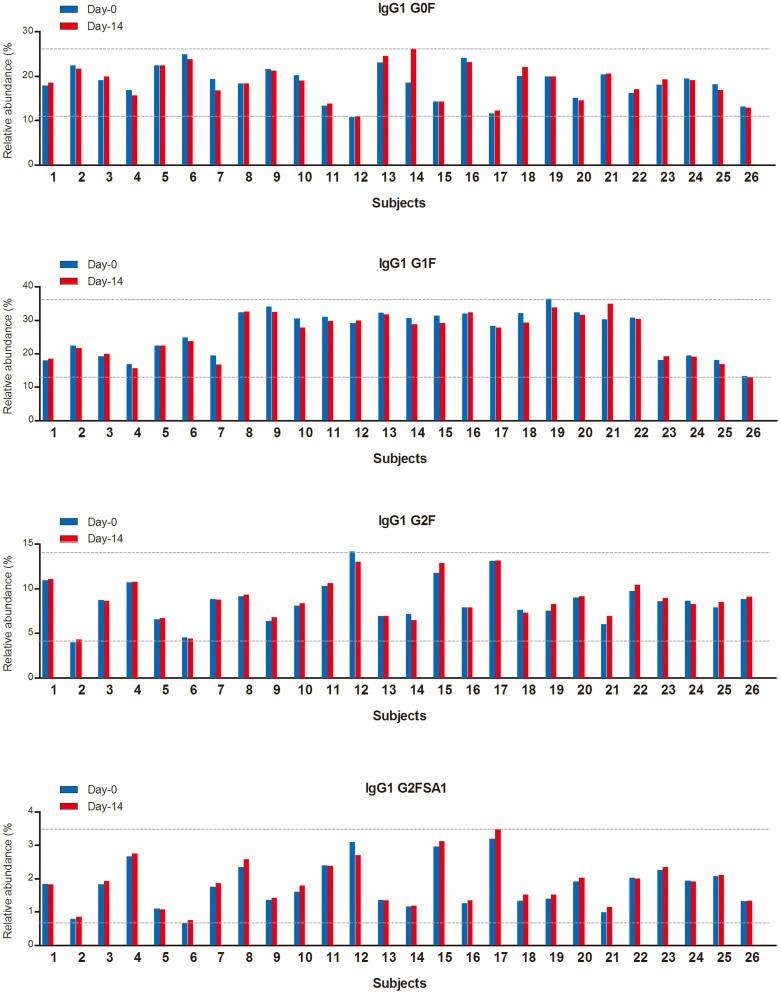
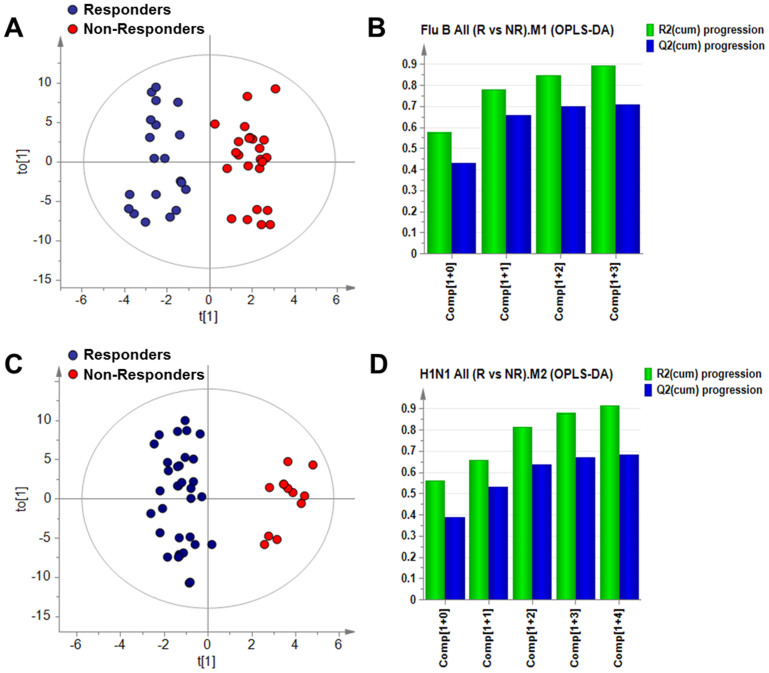
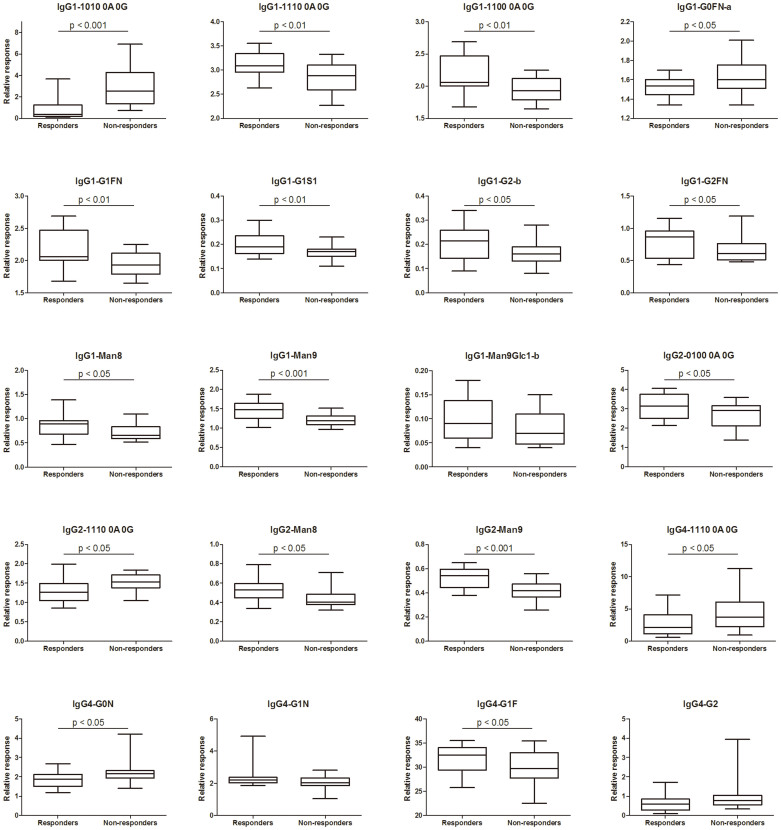
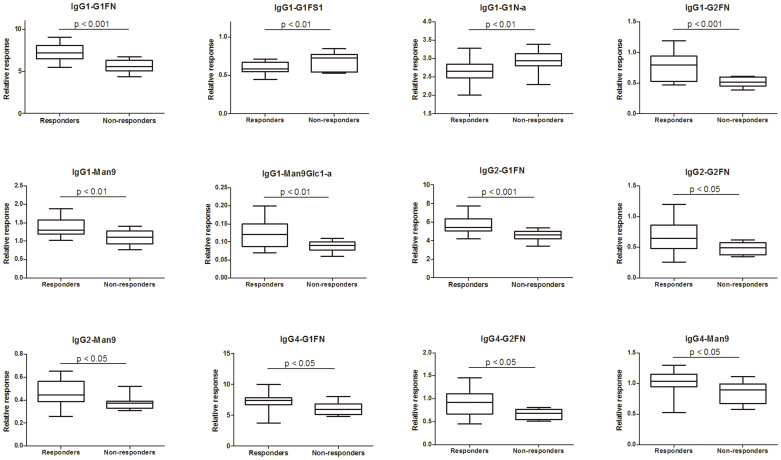
Millions of individuals are vaccinated worldwide each year to stimulate their adaptive immune systems to produce protective antibodies and T-cell response against pathogens. Since glycosylation of the Fc region of immunoglobulin G (IgG) can be influenced by the host's immune status, it was inferred that glycosylation profile of IgG might be altered as a result of the immune response. Therefore, subclass-specific glycosylation profiles of serum IgGs from 26 healthy adults before and after vaccination with a trivalent subunit influenza virus vaccine were comprehensively analyzed to explore glycomic signatures for vaccination. The results showed that no significant changes in the glycosylation of total IgGs took place before and after vaccination, but distinct glycosylation profiles in responders (fourfold or more increase of HI titer after vaccination) and nonresponders (less than fourfold increase of HI titer) were observed. This difference between the responders and nonresponders occurred even in the resting state. On the basis of variable importance parameters, glycosylation markers that distinguish responders from nonresponders were identified. These markers can be used as molecular signatures to predict antibody titers after vaccination. This is the first study of serum IgG glycosylation profiles in healthy adults receiving a trivalent inactivated influenza vaccine.
Figures
References
-
- World-Health-Organization. Vaccine use. http://www.who.int/influenza/vaccines/use/en/ (2014) 15/05/2014.
-
- Osterholm M. T., Kelley N. S., Sommer A. & Belongia E. A. Efficacy and effectiveness of influenza vaccines: a systematic review and meta-analysis. Lancet Infect. Dis. 12, 36–44 (2012). - PubMed
-
- Oxford J. S., Al-Jabri A. A., Lambkin R., Palache A. M. & Fleming D. M. Non-responders to egg grown influenza vaccine seroconvert after booster immunization with MDCK cell grown vaccine. Vaccine 21, 2743–2746 (2003). - PubMed
-
- Eiselt J., Kielberger L., Sedlackova T., Racek J. & Pazdiora P. High ferritin, but not hepcidin, is associated with a poor immune response to an influenza vaccine in hemodialysis patients. Nephron Clin. Pract. 115, c147–153 (2010). - PubMed
Publication types
MeSH terms
Substances
LinkOut - more resources
Full Text Sources
Other Literature Sources
Medical
Molecular Biology Databases
