. 2015 Jan 22;16(1):9.
doi: 10.1186/s12864-014-1209-2.

Genome-wide identification and characterization of the bHLH gene family in tomato

Affiliations

Genome-wide identification and characterization of the bHLH gene family in tomato

Hua Sun et al. BMC Genomics. .

Abstract

Background: The basic helix-loop-helix (bHLH) proteins are a large superfamily of transcription factors, and play a central role in a wide range of metabolic, physiological, and developmental processes in higher organisms. Tomato is an important vegetable crop, and its genome sequence has been published recently. However, the bHLH gene family of tomato has not been systematically identified and characterized yet.

Results: In this study, we identified 159 bHLH protein-encoding genes (SlbHLH) in tomato genome and analyzed their structures. Although bHLH domains were conserved among the bHLH proteins between tomato and Arabidopsis, the intron sequences and distribution of tomato bHLH genes were extremely different compared with Arabidopsis. The gene duplication analysis showed that 58.5% and 6.3% of SlbHLH genes belonged to low-stringency and high-stringency duplication, respectively, indicating that the SlbHLH genes are mainly generated via short low-stringency region duplication in tomato. Subsequently, we classified the SlbHLH genes into 21 subfamilies by phylogenetic tree analysis, and predicted their possible functions by comparison with their homologous genes of Arabidopsis. Moreover, the expression profile analysis of SlbHLH genes from 10 different tissues showed that 21 SlbHLH genes exhibited tissue-specific expression. Further, we identified that 11 SlbHLH genes were associated with fruit development and ripening (eight of them associated with young fruit development and three with fruit ripening). The evolutionary analysis revealed that 92% SlbHLH genes might be evolved from ancestor(s) originated from early land plant, and 8% from algae.

Conclusions: In this work, we systematically identified SlbHLHs by analyzing the tomato genome sequence using a set of bioinformatics approaches, and characterized their chromosomal distribution, gene structures, duplication, phylogenetic relationship and expression profiles, as well predicted their possible biological functions via comparative analysis with bHLHs of Arabidopsis. The results and information provide a good basis for further investigation of the biological functions and evolution of tomato bHLH genes.


Figures
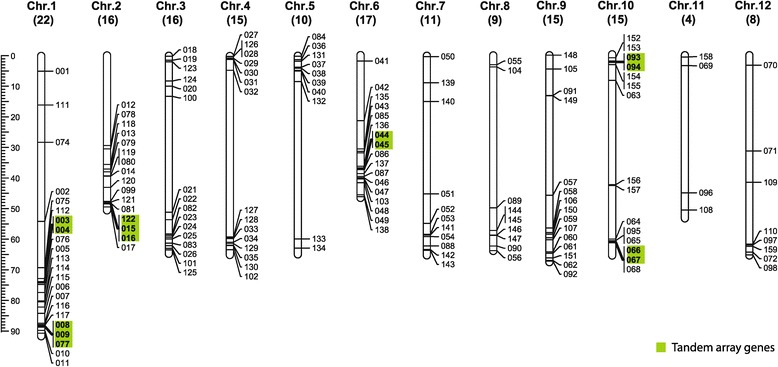
Figure 1
Figure 1
Chromosomal localizations and tandem array of SlbHLH genes. The numbers below the chromosome names show the total number of SlbHLH genes located on each chromosome. The green block indicates tandem array genes.
Figure 2
Figure 2
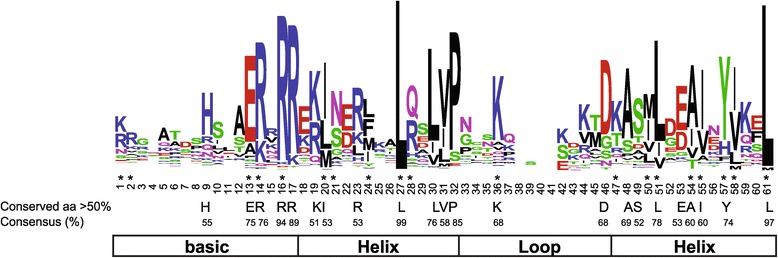
The bHLH domain is highly conserved across all SlbHLH proteins. The overall height of each stack represents the conservation of the sequence at that position. The asterisk indicates the position of the 19 conserved amino acids previously identified by Atchley et al. [5], and capital letters indicate over 50% conservation of amino acids among the 159 SlbHLH domains.
Figure 3
Figure 3
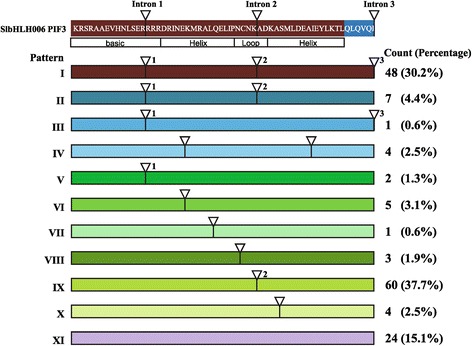
Intron distribution patterns in the coding sequence of the bHLH domain of SlbHLHs. Scheme of the intron distribution patterns (color coded and designated I to XI) within the bHLH domain of SlbHLHs. Position of introns is indicated by triangles and numbered (1 to 3) based on the bHLH region of PIF3, which is shown at the top. When the position of the intron coincides with that found in PIF3, the intron number is given above the triangle. The count and percentage of genes in each pattern are given on the right.
Figure 4
Figure 4
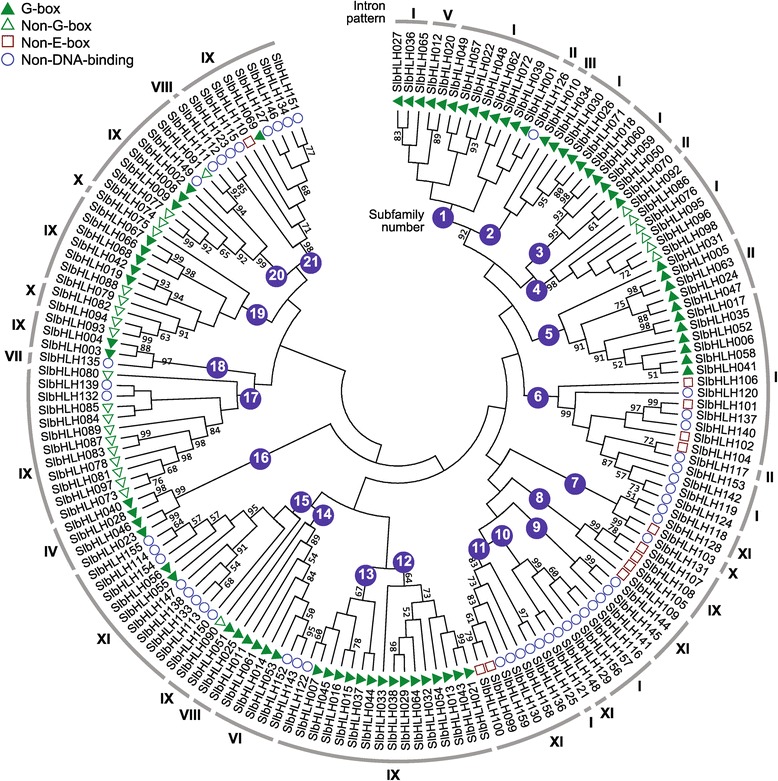
Relationship of neighbor-joining phylogenetic tree of the SlbHLH domains with the predicted DNA-binding activities and the intron distribution patterns. The tree shows the 21 phylogenetic subfamilies marked with white font on a colored background. Roman numerals correspond to the intron patterns shown in Figure 3. The different shape on the left side of SlbHLH represents the predicted DNA-binding activity of each protein.
Figure 5
Figure 5
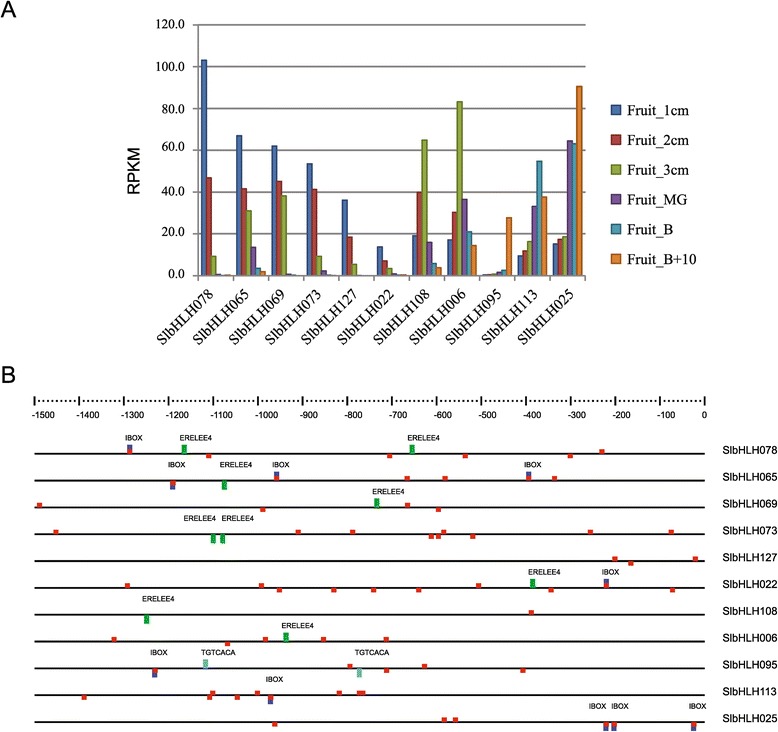
Expression patterns of the SlbHLH genes related fruit development and their cis -element analysis. (A) The expression profiles of the indicated genes at different stages of fruit development and ripening. The expression data of the SlbHLH genes were obtained from the RNA-seq data of Solanaceae Genomics Network (http://solgenomics.net; ITAG Release 2.3). Fruit_1cm, Fruit_2cm and Fruit_3cm mean the RNAs extracted from 1 cm, 2 cm and 3 cm large fruits, respectively. Fruit_MG indicates mature green (MG), Fruit_B is breaker (early ripening), and Fruit_B + 10 means 10 days post-B (red ripe). (B) Cis-element analysis of the indicated genes from upstream 1500 bp sequence to the transcription start site. The upside represents the forward sequence element and downside represents the matching element with the reverse. Red-, blue-, green-, and light blue-colored blocks mean I-box core-, I-box-, Erelee4-, and TGTCACA-elements, respectively.
Figure 6
Figure 6
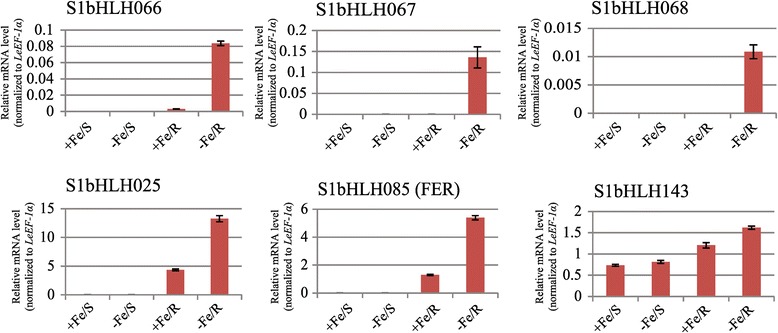
Expression analyses of the six SlbHLH genes under iron-deficient stress by qRT-PCR. For qRT-PCR, the relative amount of mRNA (y-axis) was calculated by according to the description in Methods. The x-axis indicates the shoot (S) and root (R) of tomato under iron-sufficient (+Fe) and iron deficient (-Fe) conditions.
Figure 7
Figure 7
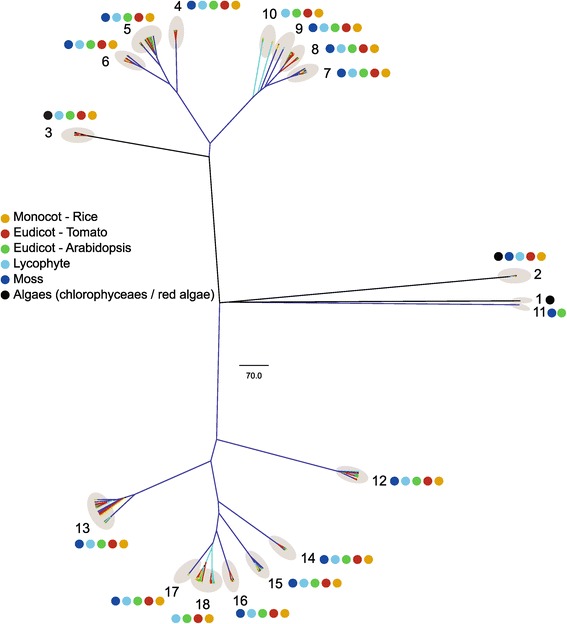
Phylogenetic relationships in the vascular plants, moss, and algaes. Maximum likelihood analysis of 696 plant bHLHs show as cladogram, and was rooted with a node of red algae protein. The gray balloons delineate the 18 subfamilies of bHLH proteins. Colored dots symbolize the species to which the bHLH proteins in each group belong (yellow: Oryza sativa [monocot]; red: Solanum lycopersicum [eudicot]; green: Arabidopsis thaliana [eudicot]; light-blue: Selaginella moellendorffii [lycophyte]; purple: Physcomitrella patens [moss]; black: Volvox carteri, Chlamydomonas reinhardtii, and Cyanidioschyzon merolae [chlorophytes and red algae]). A full tree with protein names is given in Additional file 10.

References

    1. Ledent V, Vervoort M. The basic helix-loop-helix protein family: comparative genomics and phylogenetic analysis. Genome Res. 2001;11:754–70. doi: 10.1101/gr.177001. - DOI - PMC - PubMed
    1. Toledo-Ortiz G, Huq E, Quail PH. The Arabidopsis basic/helix-loop-helix transcription factor family. Plant Cell. 2003;15:1749–70. doi: 10.1105/tpc.013839. - DOI - PMC - PubMed
    1. Sonnenfeld MJ, Delvecchio C, Sun X. Analysis of the transcriptional activation domain of the Drosophila tango bHLH-PAS transcription factor. Dev Genes Evol. 2005;215:221–9. doi: 10.1007/s00427-004-0462-9. - DOI - PubMed
    1. Murre C, McCaw PS, Baltimore D. A new DNA binding and dimerization motif in immunoglobulin enhancer binding, daughterless, MyoD, and myc proteins. Cell. 1989;56:777–83. doi: 10.1016/0092-8674(89)90682-X. - DOI - PubMed
    1. Atchley WR, Terhalle W, Dress A. Positional dependence, cliques, and predictive motifs in the bHLH protein domain. J Mol Evol. 1999;48:501–16. doi: 10.1007/PL00006494. - DOI - PubMed

Publication types

LinkOut - more resources