


The incidence, embryology, and oculofacial abnormalities associated with eyelid colobomas
- PMID: 25613848
- PMCID: PMC4816363
- DOI: 10.1038/eye.2014.335
The incidence, embryology, and oculofacial abnormalities associated with eyelid colobomas
Abstract
Purpose: To describe a cohort of patients with congenital eyelid coloboma, to identify associated ocular and craniofacial abnormalities, and to establish any correlation between the size and location of eyelid colobomas and the presence of such abnormalities.
Methods: An observational case series of 55 patients with eyelid coloboma treated by a single surgeon (JROC) between 1985 and 2005.
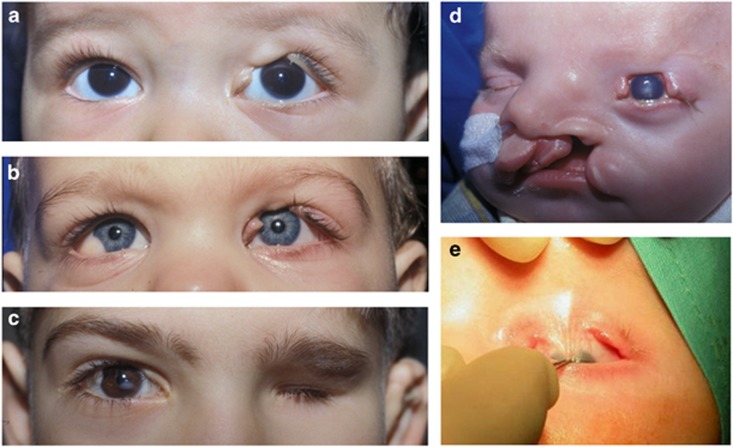
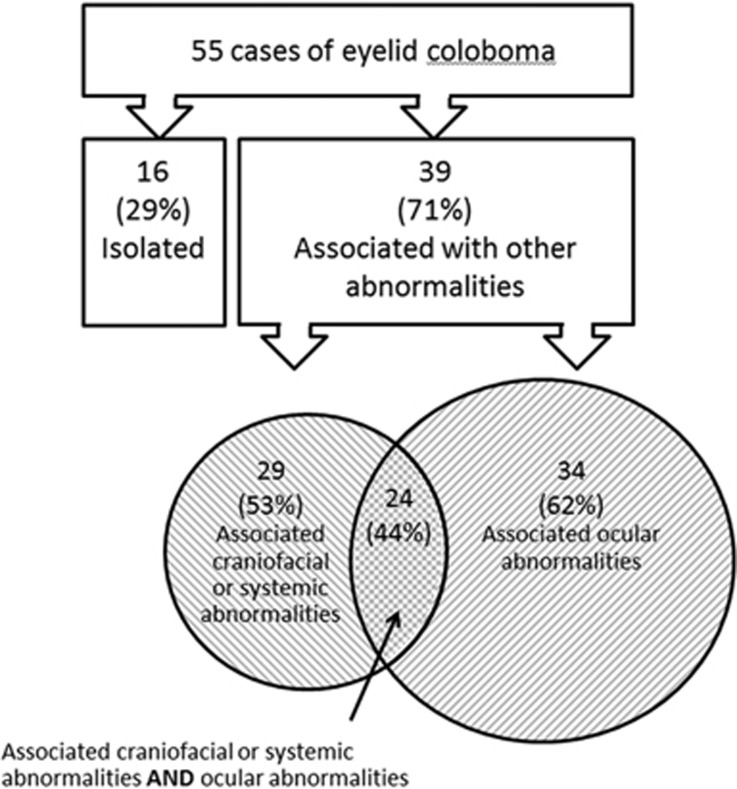
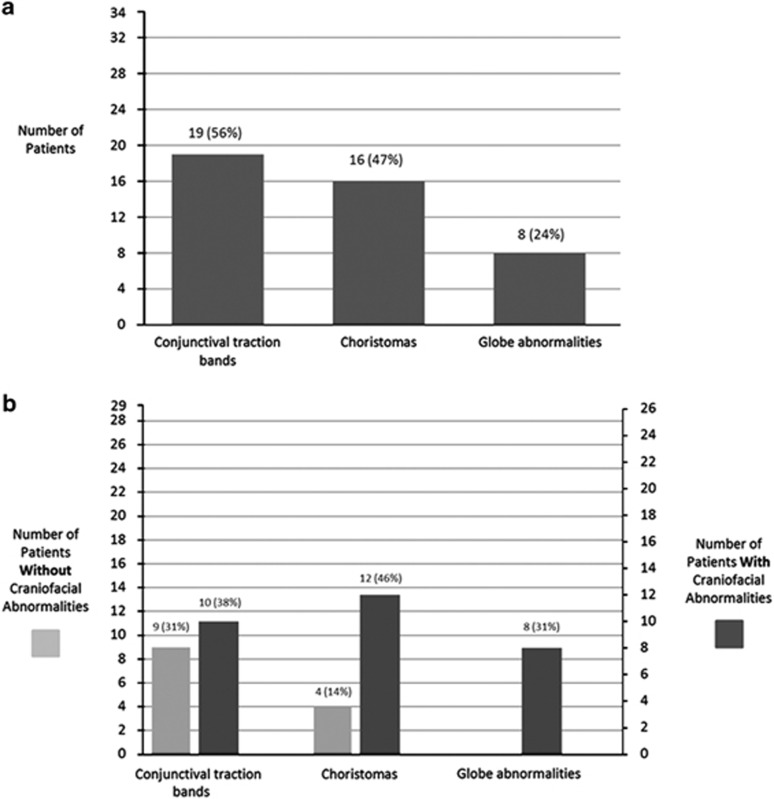
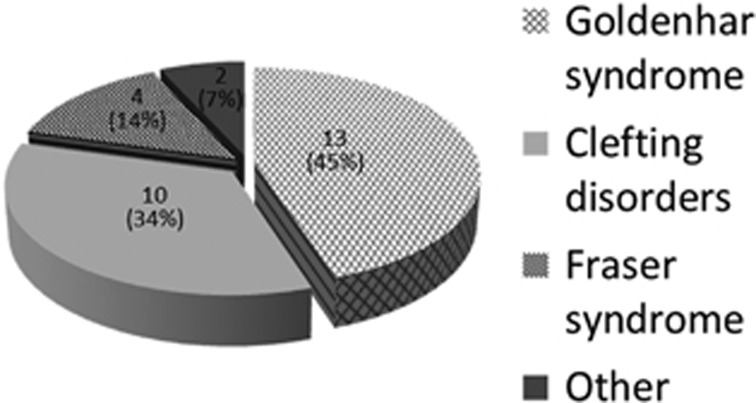
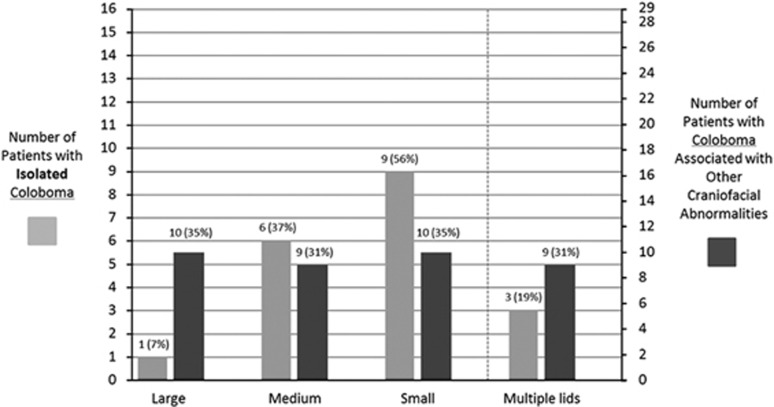
Results: Eyelid colobomas predominantly affected the upper lids (93%), and were typically unilateral (76%). About a third (29%) were an isolated finding, with the remainder associated with other ocular (62%) and/or craniofacial (53%) abnormalities. Of those with ocular abnormalities; 19 (56%) had conjunctival traction bands, 16 (47%) choristomas, and 8 (24%) an abnormal globe. Of those with craniofacial abnormalities; 13 (45%) had Goldenhar Syndrome, 10 (35%) clefting disorders, and 4 (14%) Fraser Syndrome. Clefting disorders were typically associated with more severe colobomas and a higher incidence of conjunctival traction bands, first arch syndromes with smaller colobomas and more choristomas. Overall large colobomas were significantly associated with the presence of other craniofacial defects compared with small colobomas (P<0.01, χ(2)), but coloboma size did not correspond with the presence of other ocular abnormalities.
Conclusions: Coloboma size, location, and associations in this series are consistent with our current understanding of eyelid embryogenesis. It is likely that those colobomas associated with other craniofacial and ocular abnormalities are those which result from errors earlier in embryogenesis during eyelid specification, growth, and closure, whereas isolated colobomas arise later during eyelid separation, and after codependent structures have developed.
Figures
References
-
- Sevel D. A reappraisal of eyelid development. Eye 1988; 2: 123–129. - PubMed
-
- Casey TA. Congenital colobomata of the eyelids. Trans Ophthalmol Soc UK 1976; 96: 65–68. - PubMed
-
- Collin JR. Congenital upper lid coloboma. Aust NZ J Ophthalmol 1986; 14: 313–317. - PubMed
-
- Online Mendelian Inheritance in Man (OMIM) database, http://www.ncbi.nlm.nih.gov/omim (accessed 5 May 2013).
Publication types
MeSH terms
LinkOut - more resources
Full Text Sources
Other Literature Sources
Medical
