. 2015 May;96(Pt 5):1169-1179.
doi: 10.1099/vir.0.000050. Epub 2015 Jan 22.

Escherichia coli and Staphylococcus phages: effect of translation initiation efficiency on differential codon adaptation mediated by virulent and temperate lifestyles

Affiliations

Escherichia coli and Staphylococcus phages: effect of translation initiation efficiency on differential codon adaptation mediated by virulent and temperate lifestyles

Ramanandan Prabhakaran et al. J Gen Virol. 2015 May.

Abstract

Rapid biosynthesis is key to the success of bacteria and viruses. Highly expressed genes in bacteria exhibit a strong codon bias corresponding to the differential availability of tRNAs. However, a large clade of lambdoid coliphages exhibits relatively poor codon adaptation to the host translation machinery, in contrast to other coliphages that exhibit strong codon adaptation to the host. Three possible explanations were previously proposed but dismissed: (1) the phage-borne tRNA genes that reduce the dependence of phage translation on host tRNAs, (2) lack of time needed for evolving codon adaptation due to recent host switching, and (3) strong strand asymmetry with biased mutation disrupting codon adaptation. Here, we examined the possibility that phages with relatively poor codon adaptation have poor translation initiation which would weaken the selection on codon adaptation. We measured translation initiation by: (1) the strength and position of the Shine-Dalgarno (SD) sequence, and (2) the stability of the secondary structure of sequences flanking the SD and start codon known to affect accessibility of the SD sequence and start codon. Phage genes with strong codon adaptation had significantly stronger SD sequences than those with poor codon adaptation. The former also had significantly weaker secondary structure in sequences flanking the SD sequence and start codon than the latter. Thus, lambdoid phages do not exhibit strong codon adaptation because they have relatively inefficient translation initiation and would benefit little from increased elongation efficiency. We also provided evidence suggesting that phage lifestyle (virulent versus temperate) affected selection intensity on the efficiency of translation initiation and elongation.


Figures

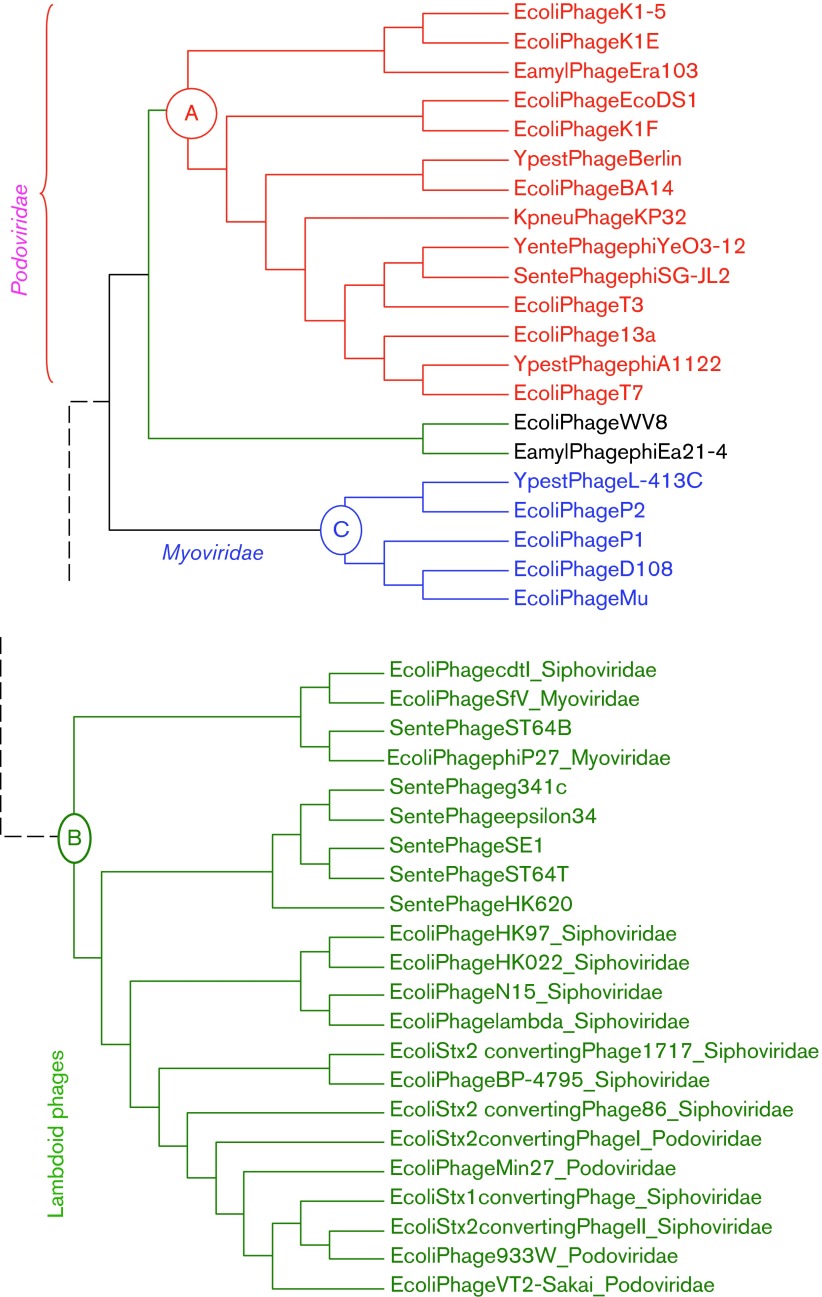
Fig. 1.
Fig. 1.. Partial phylogenetic tree showing two clades of phages (A and B), with Clade A exhibiting stronger codon adaptation to host E. coli than Clade B. Modified from Chithambaram et al. (2014b).
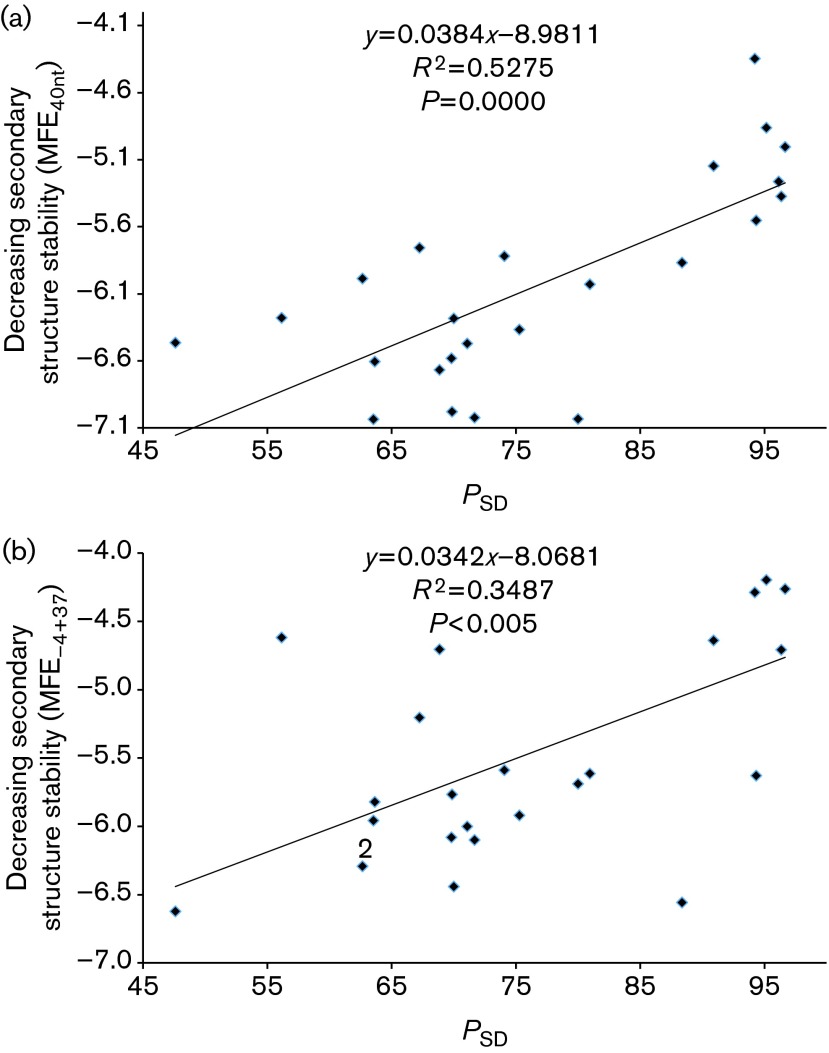
Fig. 2.
Fig. 2.. A high PSD is associated with weak secondary structure around the SD sequence and start codon measured by MFE in E. coli phages at two locations: (a) 40 bases upstream of the start codon (MFE40nt) and (b) from four bases upstream to 37 bases downstream of the start codon (MFE−4+37).
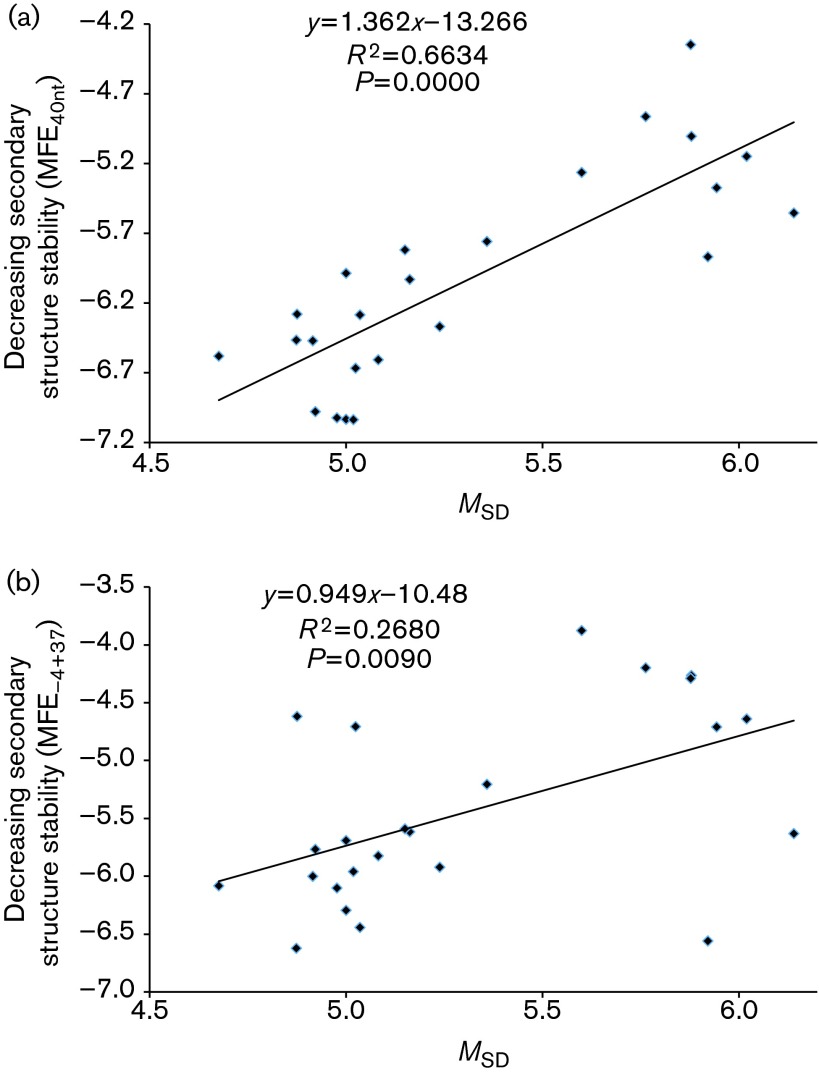
Fig. 3.
Fig. 3.. A large MSD (strong SD with more base pairs with aSD) is associated with weak secondary structure around the SD sequence and start codon measured by MFE in E. coli phages at two locations: (a) 40 bases upstream of the initiation codon (MFE40nt) and (b) from four bases upstream to 37 bases downstream of the initiation codon (MFE−4+37).
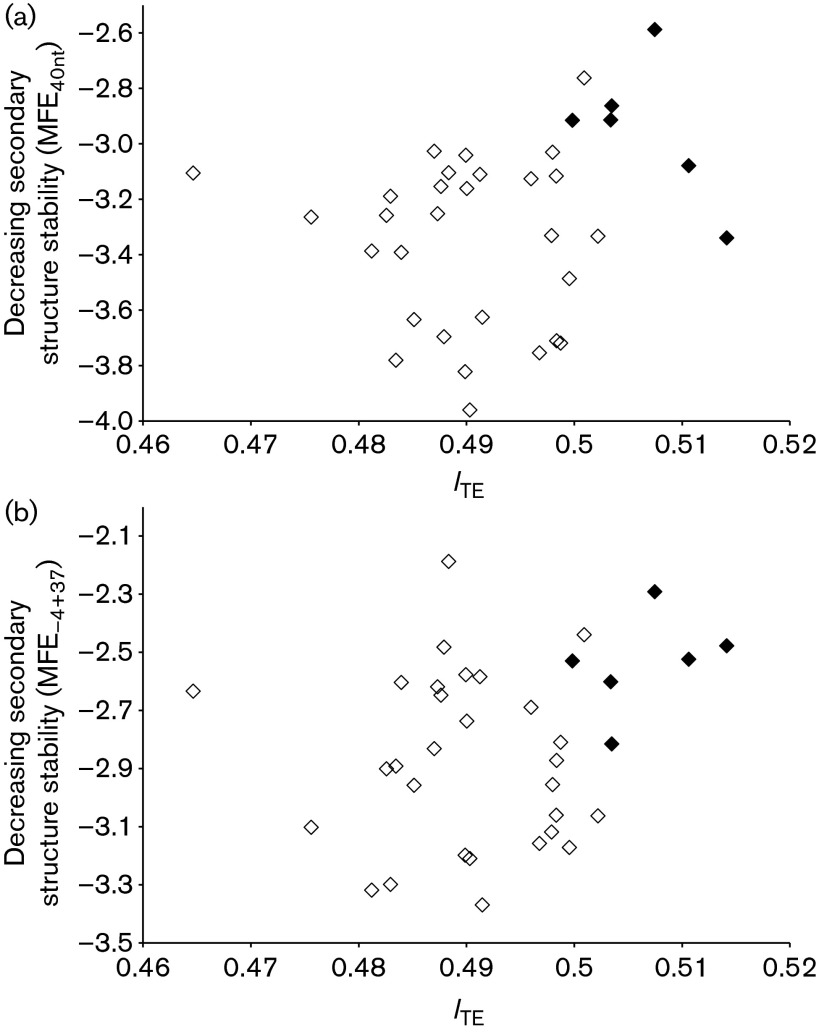
Fig. 4.
Fig. 4.. Virulent Staphylococcus phages (♦) have genes with relatively weaker secondary structure in sequences flanking the SD sequence and start codon as well as better codon adaptation to the host than temperate phages (⋄). (a) MFE40nt. (b) MFE−4+37.
Fig. 5.
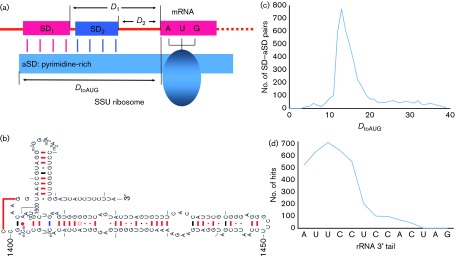
Fig. 5.. (a) Schematic representation of the SD sequence on mRNA pairing with the aSD sequence on the SSU rRNA. (b–d) The free 3′ end of SSU rRNA (b), the frequency distribution of 4577 putative matches of at least four bases between the rRNA 3′ tail and the upstream 30 nt of coding sequences (c), and the number of times each nucleotide site at the rRNA 3′ tail participated in the SD–aSD matches (d).

References

    1. Chithambaram S., Prabhakaran R., Xia X. ( 2014a). Differential codon adaptation between dsDNA and ssDNA phages in Escherichia coli . Mol Biol Evol 31, 1606–1617. 10.1093/molbev/msu087 - DOI - PMC - PubMed
    1. Chithambaram S., Prabhakaran R., Xia X. ( 2014b). The effect of mutation and selection on codon adaptation in Escherichia coli bacteriophage. Genetics 197, 301–315. 10.1534/genetics.114.162842 - DOI - PMC - PubMed
    1. Coghlan A., Wolfe K. H. ( 2000). Relationship of codon bias to mRNA concentration and protein length in Saccharomyces cerevisiae . Yeast 16, 1131–1145. 10.1002/1097-0061(20000915)16:12<1131::AID-YEA609>3.0.CO;2-F - DOI - PubMed
    1. Comeron J. M., Aguadé M. ( 1998). An evaluation of measures of synonymous codon usage bias. J Mol Evol 47, 268–274. 10.1007/PL00006384 - DOI - PubMed
    1. de Smit M. H., van Duin J. ( 1990). Secondary structure of the ribosome binding site determines translational efficiency: a quantitative analysis. Proc Natl Acad Sci U S A 87, 7668–7672. 10.1073/pnas.87.19.7668 - DOI - PMC - PubMed

Publication types

LinkOut - more resources