


Personality Change Pre- to Post- Loss in Spousal Caregivers of Patients with Terminal Lung Cancer
- PMID: 25614779
- PMCID: PMC4299658
- DOI: 10.1177/1948550614524448
Personality Change Pre- to Post- Loss in Spousal Caregivers of Patients with Terminal Lung Cancer
Abstract
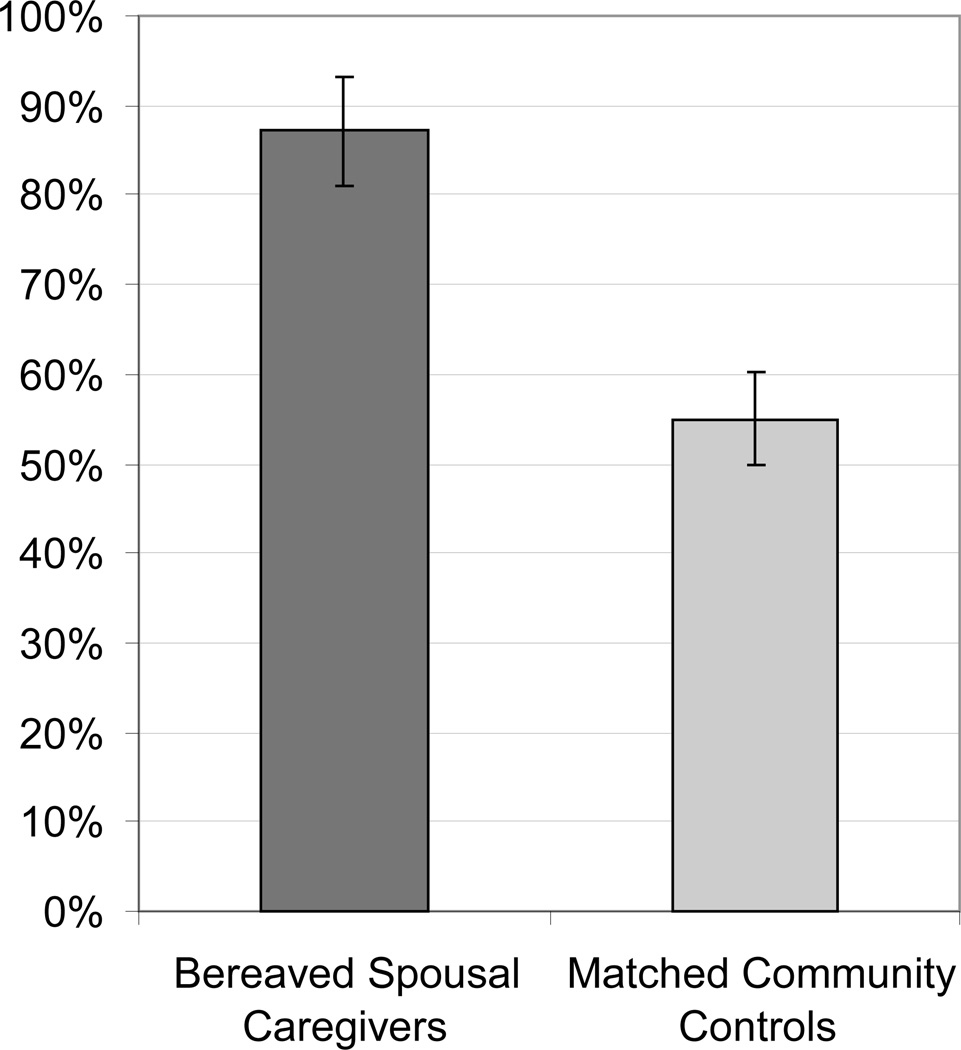
Personality is relatively stable in adulthood but could change in response to life transitions, such as caring for a spouse with a terminal illness. Using a case-control design, spousal caregivers (n=31) of patients with terminal lung cancer completed the NEO-FFI twice, 1.5 years apart, before and after the patient's death. A demographically-matched sample of community controls (n=93) completed the NEO-FFI on a similar timeframe. Based on research and theory, we hypothesized that bereaved caregivers would experience greater changes than controls in interpersonal facets of extraversion (sociability), agreeableness (prosocial, nonantagonistic), and conscientiousness (dependability). Consistent with hypotheses, bereaved caregivers experienced an increase in interpersonal orientation, becoming more sociable, prosocial, and dependable (Cohen's d = .48-.67), though there were no changes in nonantagonism. Changes were not observed in controls (ds ≤ .11). These initial findings underscore the need for more research on the effect of life transitions on personality.
Keywords: Bereavement adjustment; Caregiving; Personality change.
Conflict of interest statement
The author(s) declared no potential conflicts of interests with respect to the authorship and/or publication of this article.
Figures
References
-
- Aldred H, Gott M, Gariballa S. Advanced heart failure: impact on older patients and informal carers. Journal of Advanced Nursing. 2005;49:116–124. - PubMed
-
- Bergman EJ, Haley WE. Depressive symptoms, social network, and bereavement service utilization and preferences among spouses of former hospice patients. Journal of Palliative Medicine. 2009;12:170–176. - PubMed
-
- Braun M, Mikulincer M, Rydall A, Walsh A, Rodin G. Hidden morbidity in cancer: spouse caregivers. Journal of Clinical Oncology. 2007;25:4829–4834. - PubMed
-
- Carr D. Death and dying in the contemporary United States: What are the psychological implications of anticipated death? Social and Personality Psychology Compass. 2012;6:184–195.
-
- Caspi A, Moffitt TE. When do individual differences matter? A paradoxical theory of personality coherence. Psychological Inquiry. 1993;4:247–271.
Grants and funding
LinkOut - more resources
Full Text Sources
Other Literature Sources