


Effector Vγ9Vδ2 T cells dominate the human fetal γδ T-cell repertoire
- PMID: 25617367
- PMCID: PMC4330771
- DOI: 10.1073/pnas.1412058112
Effector Vγ9Vδ2 T cells dominate the human fetal γδ T-cell repertoire
Abstract
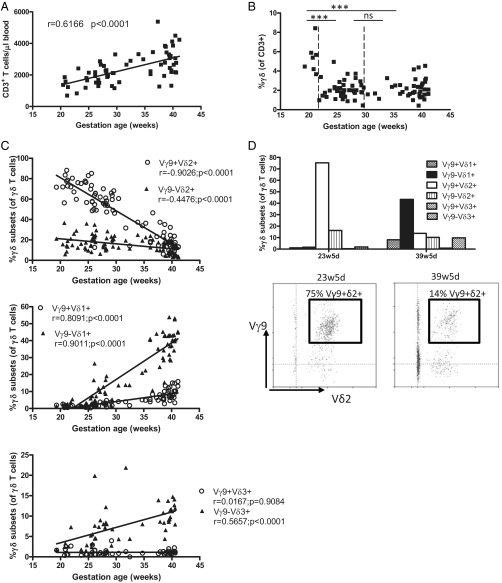
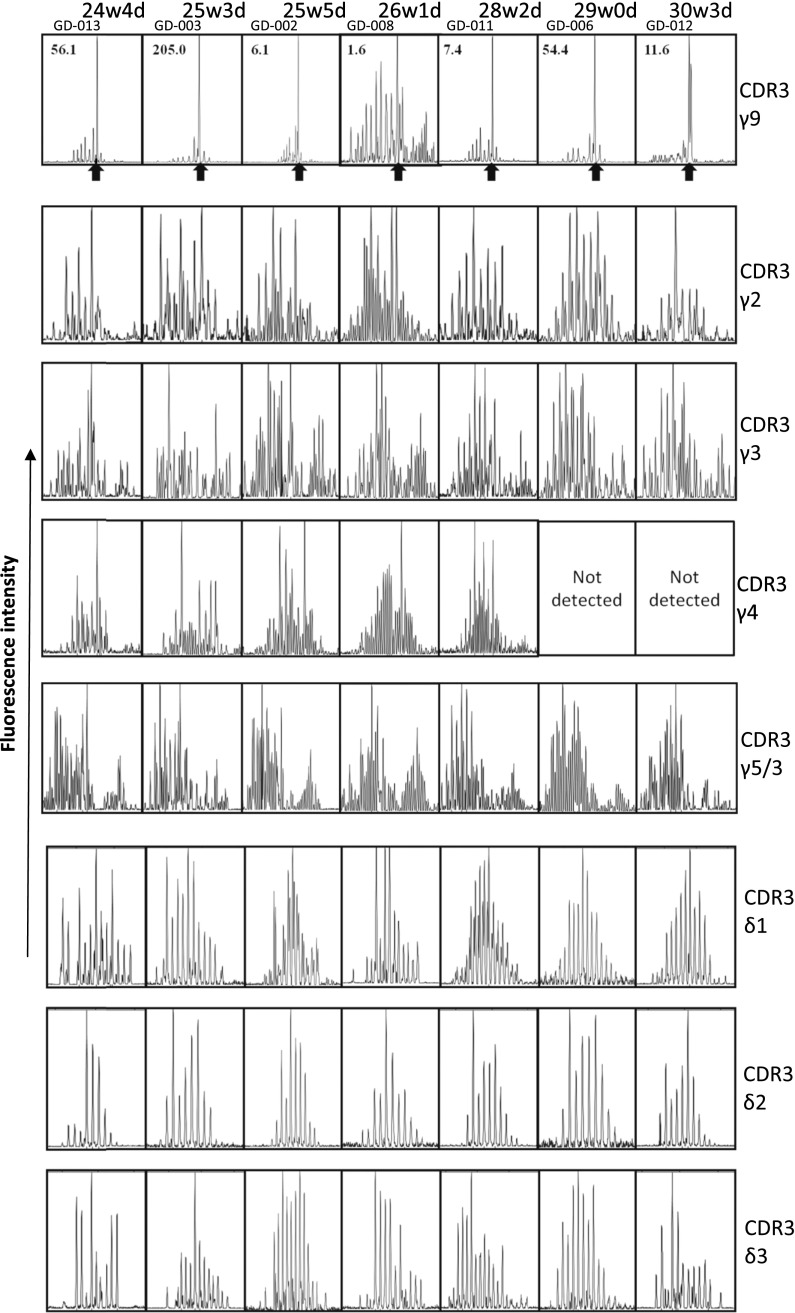
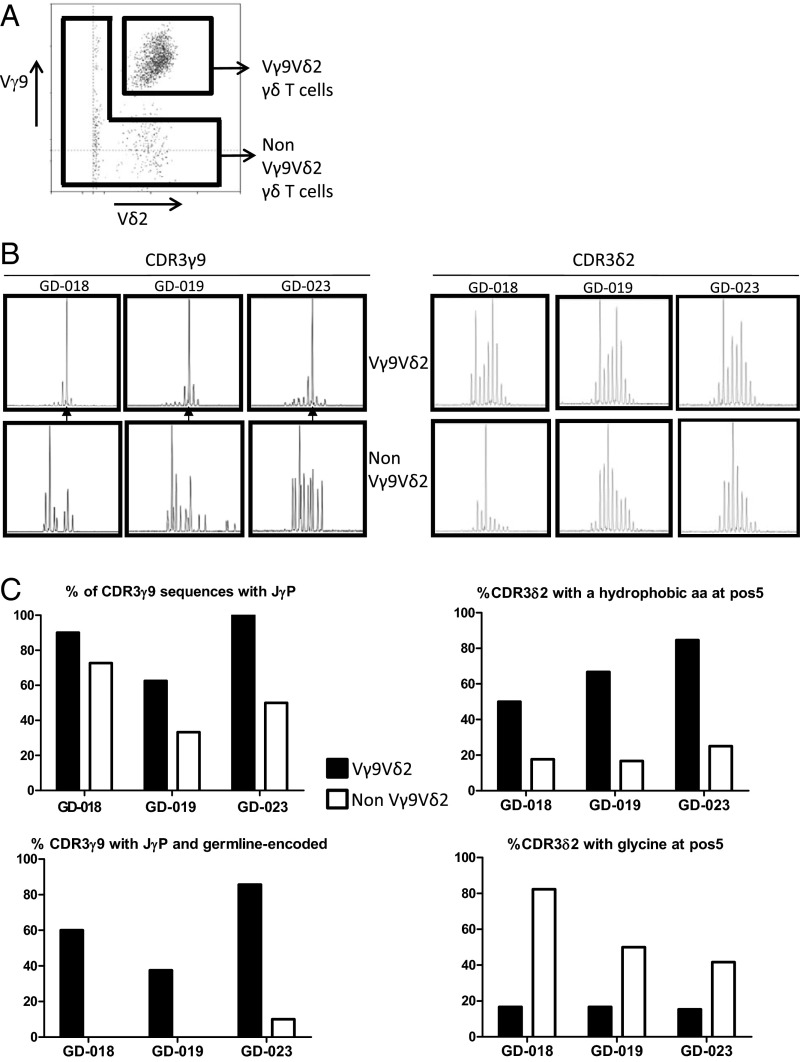
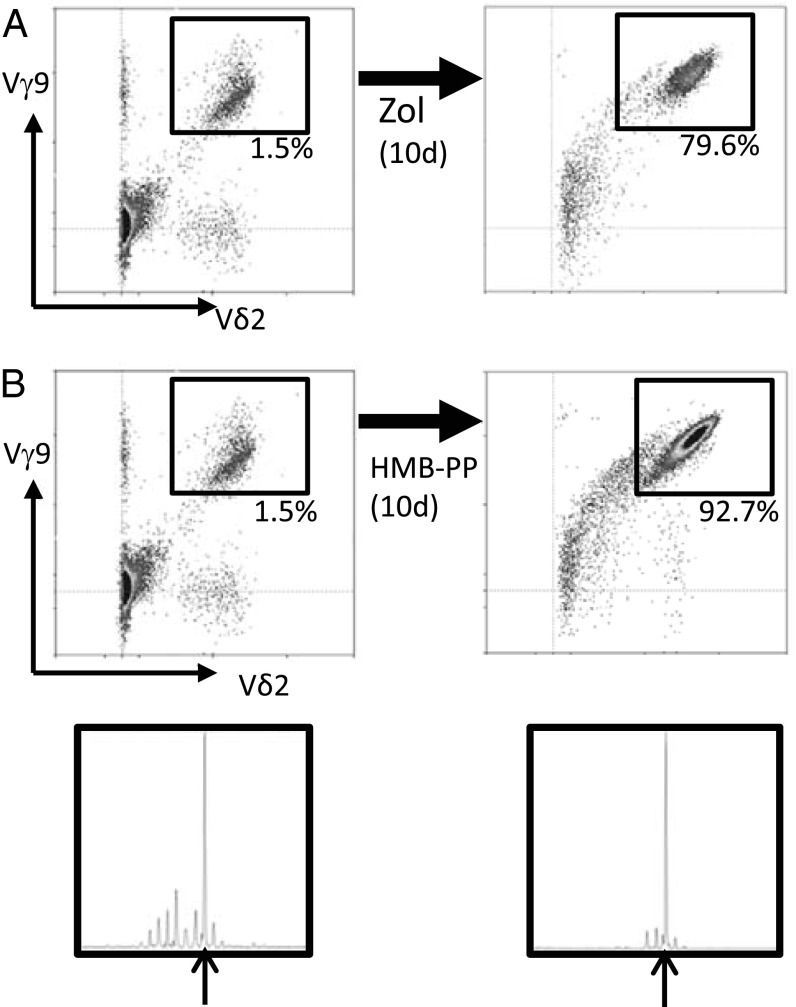
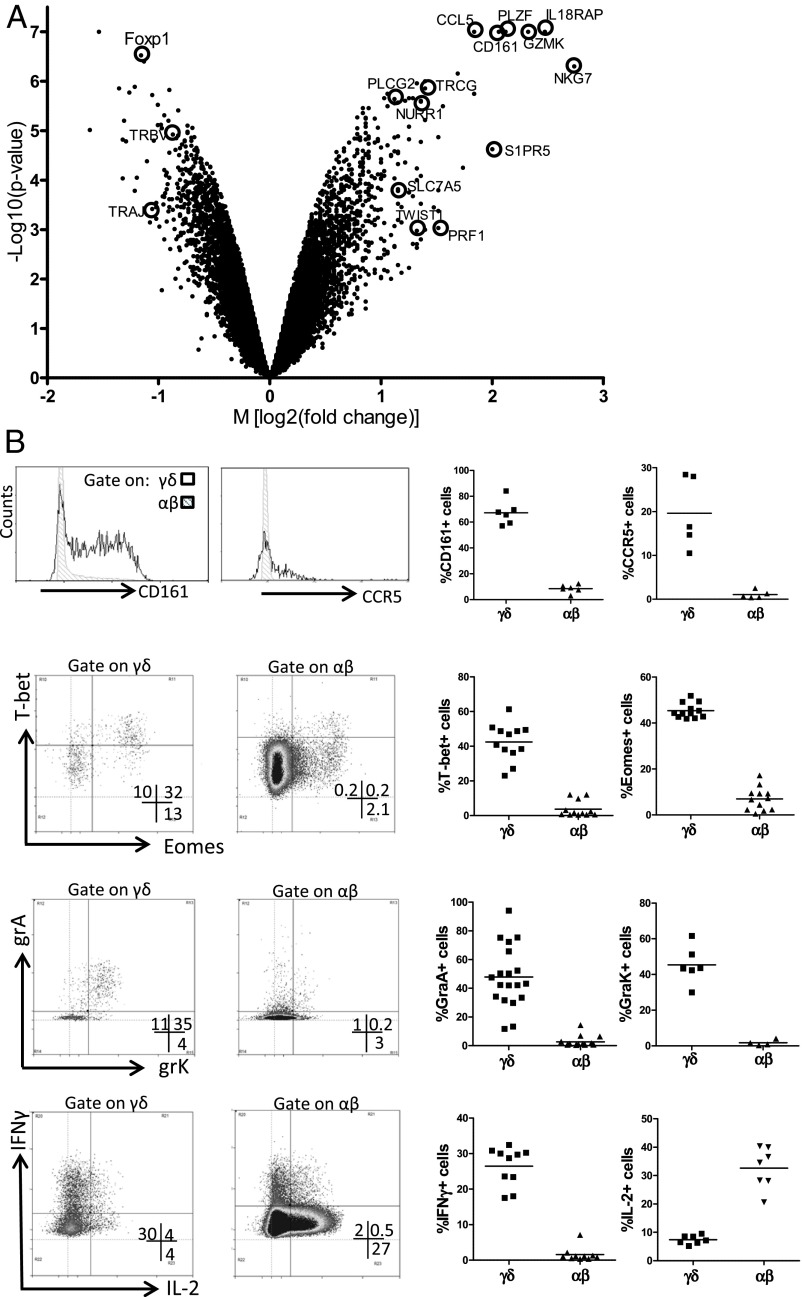
γδ T cells are unconventional T cells recognizing antigens via their γδ T-cell receptor (TCR) in a way that is fundamentally different from conventional αβ T cells. γδ T cells usually are divided into subsets according the type of Vγ and/or Vδ chain they express in their TCR. T cells expressing the TCR containing the γ-chain variable region 9 and the δ-chain variable region 2 (Vγ9Vδ2 T cells) are the predominant γδ T-cell subset in human adult peripheral blood. The current thought is that this predominance is the result of the postnatal expansion of cells expressing particular complementary-determining region 3 (CDR3) in response to encounters with microbes, especially those generating phosphoantigens derived from the 2-C-methyl-d-erythritol 4-phosphate pathway of isoprenoid synthesis. However, here we show that, rather than requiring postnatal microbial exposure, Vγ9Vδ2 T cells are the predominant blood subset in the second-trimester fetus, whereas Vδ1(+) and Vδ3(+) γδ T cells are present only at low frequencies at this gestational time. Fetal blood Vγ9Vδ2 T cells are phosphoantigen responsive and display very limited diversity in the CDR3 of the Vγ9 chain gene, where a germline-encoded sequence accounts for >50% of all sequences, in association with a prototypic CDR3δ2. Furthermore, these fetal blood Vγ9Vδ2 T cells are functionally preprogrammed (e.g., IFN-γ and granzymes-A/K), with properties of rapidly activatable innatelike T cells. Thus, enrichment for phosphoantigen-responsive effector T cells has occurred within the fetus before postnatal microbial exposure. These various characteristics have been linked in the mouse to the action of selecting elements and would establish a much stronger parallel between human and murine γδ T cells than is usually articulated.
Keywords: Vγ9Vδ2; fetus; gammadelta; human; neonate.
Conflict of interest statement
The authors declare no conflict of interest.
Figures
References
-
- Hayday AC. [gamma][delta] cells: A right time and a right place for a conserved third way of protection. Annu Rev Immunol. 2000;18:975–1026. - PubMed
-
- Chien YH, Konigshofer Y. Antigen recognition by gammadelta T cells. Immunol Rev. 2007;215:46–58. - PubMed
-
- Bonneville M, O’Brien RL, Born WK. Gammadelta T cell effector functions: A blend of innate programming and acquired plasticity. Nat Rev Immunol. 2010;10(7):467–478. - PubMed
Publication types
MeSH terms
Substances
LinkOut - more resources
Full Text Sources
Other Literature Sources
Medical
Molecular Biology Databases
