


Randomized phase III trial of piroxicam in combination with mitoxantrone or carboplatin for first-line treatment of urogenital tract transitional cell carcinoma in dogs
- PMID: 25619518
- PMCID: PMC4858101
- DOI: 10.1111/jvim.12533
Randomized phase III trial of piroxicam in combination with mitoxantrone or carboplatin for first-line treatment of urogenital tract transitional cell carcinoma in dogs
Abstract
Background: Reported response rates of transitional cell carcinoma (TCC) in dogs to piroxicam in combination with either mitoxantrone or carboplatin are similar; however, it is unknown whether either drug might provide superior duration of response.
Hypothesis/objectives: To determine if the progression-free interval (PFI) of dogs with TCC treated with mitoxantrone and piroxicam was different than that of dogs receiving carboplatin and piroxicam. The hypothesis was that the efficacy of mitoxantrone is no different from carboplatin.
Animals: Fifty dogs with TCC without azotemia.
Methods: Prospective open-label phase III randomized study. Either mitoxantrone or carboplatin was administered every 3 weeks concurrently with piroxicam with restaging at 6-week intervals. Twenty-four dogs received carboplatin and 26 received mitoxantrone.
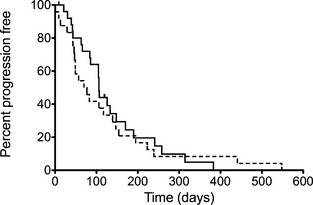
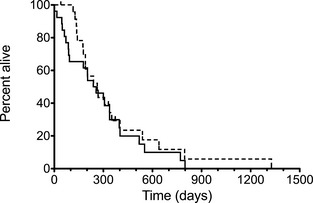
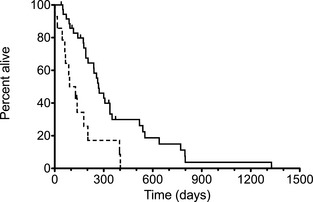
Results: Response was not different between groups (P = .56). None of the dogs showed complete response. In the mitoxantrone group, there were 2 (8%) partial responses (PR) and 18 (69%) dogs with stable disease (SD). In the carboplatin group, there were 3 PR (13%) and 13 (54%) dogs with SD. The PFI was not significantly different between groups (mitoxantrone = 106 days; carboplatin = 73.5 days; P = .62; hazard ratio 0.86; 95% confidence interval 0.47-1.56). Dogs with prostatic involvement experienced a shorter survival (median, 109 days) compared to dogs with urethral, trigonal, or apically located tumors; this difference was significant (median 300, 190, and 645 days, respectively; P = .005).
Conclusions and clinical importance: This study did not detect a different in outcome in dogs with TCC treated with either mitoxantrone or carboplatin in combination with piroxicam.
Keywords: Bladder cancer; Chemotherapy; cancer; canine; dog species; oncology.
Copyright © 2015 by the American College of Veterinary Internal Medicine.
Figures
References
-
- Priester WA, McKay FW. The occurrence of tumors in domestic animals. Natl Cancer Inst Monogr 1980;54:1–210. - PubMed
-
- Mutsaers AJ, Widmer WR, Knapp DW. Canine transitional cell carcinoma. J Vet Intern Med 2003;17:136–144. - PubMed
-
- Knapp DW, Glickman NW, Denicola DB, et al. Naturally‐occurring canine transitional cell carcinoma of the urinary bladder A relevant model of human invasive bladder cancer. Urol Oncol 2000;5:47–59. - PubMed
-
- Knapp D. Animal models of naturally occuring canine urinary bladder cancer In: Lerner S, Schoenberg M, Sternberg C, eds. Textbook of Bladder Cancer. Oxon: Taylor and Francis; 2006:171–175.
-
- Valli VE, Norris A, Jacobs RM, et al. Pathology of canine bladder and urethral cancer and correlation with tumour progression and survival. J Comp Pathol 1995;113:113–130. - PubMed
Publication types
MeSH terms
Substances
Grants and funding
LinkOut - more resources
Full Text Sources
Other Literature Sources
Research Materials
