Id1 Deficiency Protects against Tumor Formation in Apc(Min/+) Mice but Not in a Mouse Model of Colitis-Associated Colon Cancer
- PMID: 25623217
- PMCID: PMC4832599
- DOI: 10.1158/1940-6207.CAPR-14-0411
Id1 Deficiency Protects against Tumor Formation in Apc(Min/+) Mice but Not in a Mouse Model of Colitis-Associated Colon Cancer
Retraction in
-
Retraction: Id1 Deficiency Protects Against Tumor Formation in ApcMin/+ Mice but not in a Mouse Model of Colitis-associated Colon Cancer.Cancer Prev Res (Phila). 2022 Jun 2;15(6):407. doi: 10.1158/1940-6207.CAPR-22-0208. Cancer Prev Res (Phila). 2022. PMID: 35652224 Free PMC article. No abstract available.
Abstract
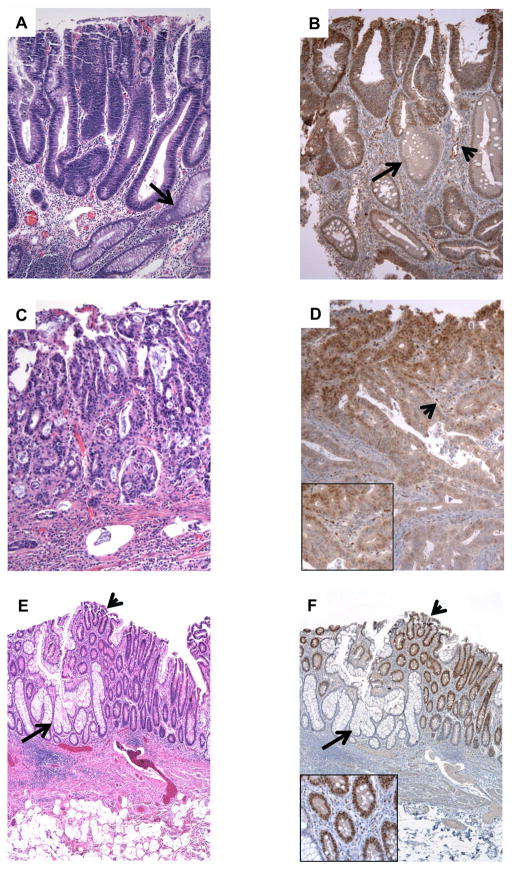
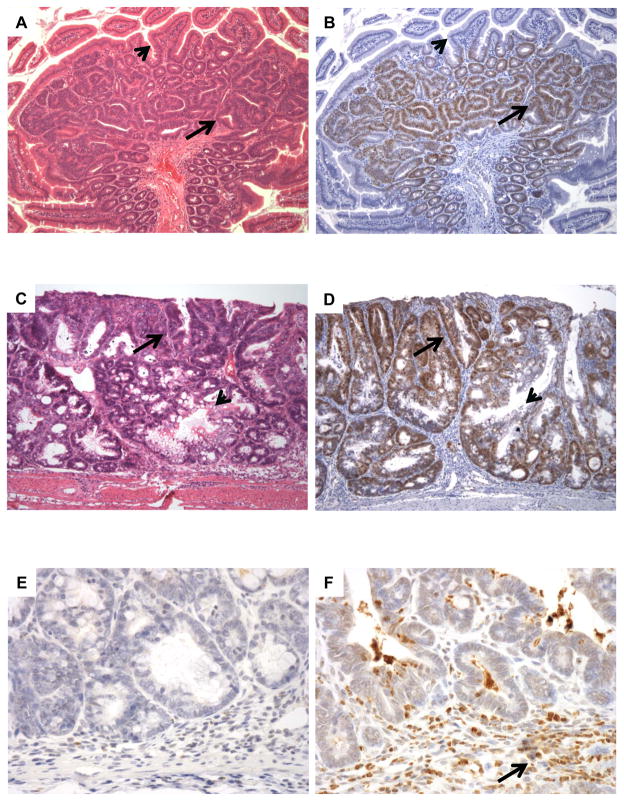
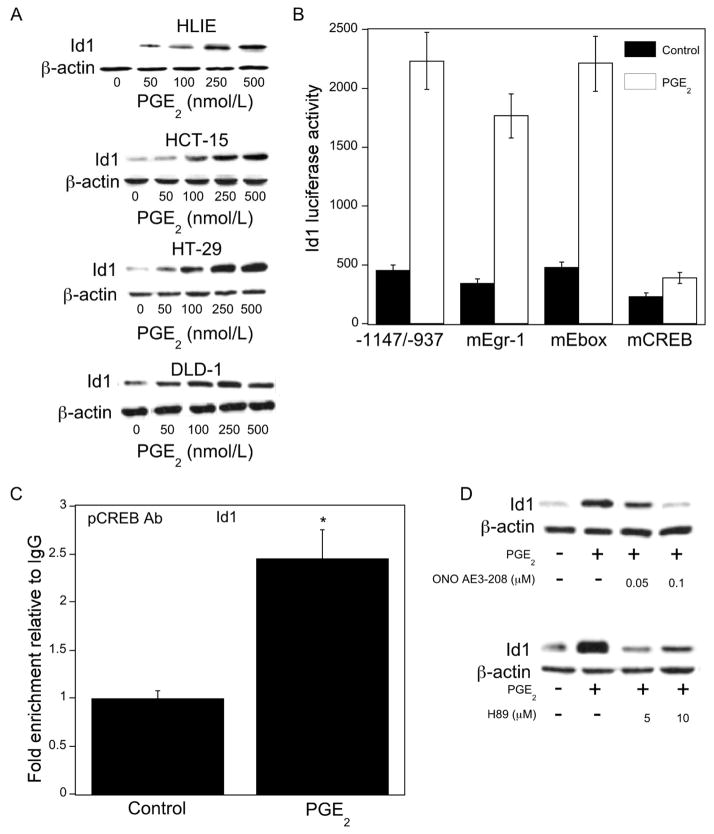
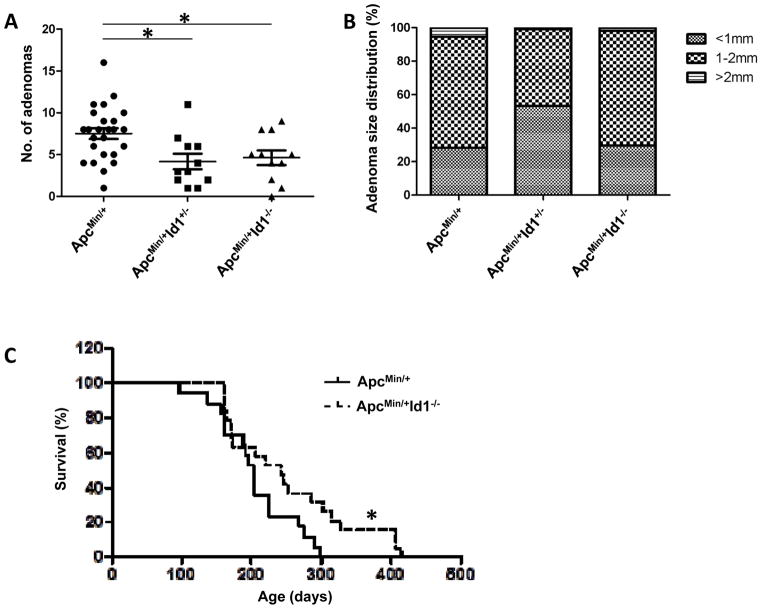
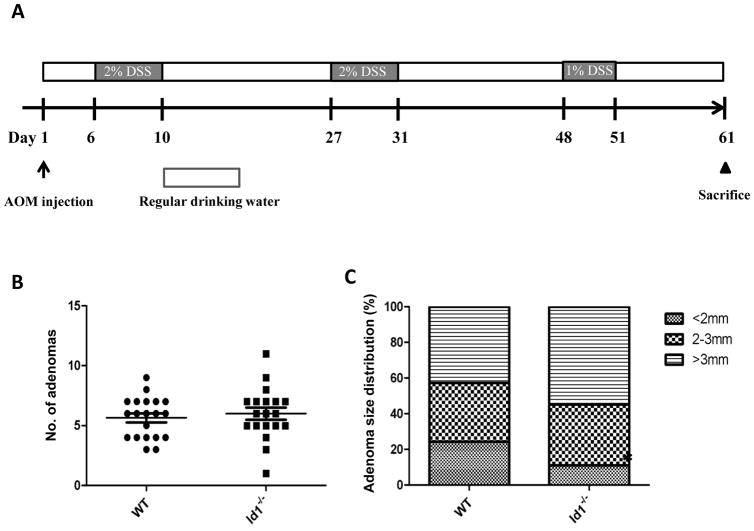
Different mechanisms contribute to the development of sporadic, hereditary and colitis-associated colorectal cancer. Inhibitor of DNA binding/differentiation (Id) proteins act as dominant-negative antagonists of basic helix-loop-helix transcription factors. Id1 is a promising target for cancer therapy, but little is known about its role in the development of colon cancer. We used immunohistochemistry to demonstrate that Id1 is overexpressed in human colorectal adenomas and carcinomas, whether sporadic or syndromic. Furthermore, elevated Id1 levels were found in dysplasia and colon cancer arising in patients with inflammatory bowel disease. Because levels of PGE2 are also elevated in both colitis and colorectal neoplasia, we determined whether PGE2 could induce Id1. PGE2 via EP4 stimulated protein kinase A activity resulting in enhanced pCREB-mediated Id1 transcription in human colonocytes. To determine the role of Id1 in carcinogenesis, two mouse models were used. Consistent with the findings in humans, Id1 was overexpressed in tumors arising in both Apc(Min) (/+) mice, a model of familial adenomatous polyposis, and in experimental colitis-associated colorectal neoplasia. Id1 deficiency led to significant decrease in the number of intestinal tumors in Apc(Min) (/+) mice and prolonged survival. In contrast, Id1 deficiency did not affect the number or size of tumors in the model of colitis-associated colorectal neoplasia, likely due to exacerbation of colitis associated with Id1 loss. Collectively, these results suggest that Id1 plays a role in gastrointestinal carcinogenesis. Our findings also highlight the need for different strategies to reduce the risk of colitis-associated colorectal cancer compared with sporadic or hereditary colorectal cancer.
©2015 American Association for Cancer Research.
Conflict of interest statement
None of the other authors have potential conflicts of interest to disclose.
Figures
Comment in
-
Findings of Research Misconduct.Fed Regist. 2023 Sep 13;88(176):62800-62803. Fed Regist. 2023. PMID: 37736072 Free PMC article. No abstract available.
-
Findings of Research Misconduct.Fed Regist. 2023 Sep 13;88(176):62803-62807. Fed Regist. 2023. PMID: 37736073 Free PMC article. No abstract available.
References
-
- Ullman TA, Itzkowitz SH. Intestinal inflammation and cancer. Gastroenterology. 2011;140(6):1807–16. - PubMed
-
- Lasorella A, Benezra R, Iavarone A. The ID proteins: master regulators of cancer stem cells and tumour aggressiveness. Nat Rev Cancer. 2014;14(2):77–91. - PubMed
-
- Perk J, Iavarone A, Benezra R. Id family of helix-loop-helix proteins in cancer. Nat Rev Cancer. 2005;5(8):603–14. - PubMed
Publication types
MeSH terms
Substances
Grants and funding
LinkOut - more resources
Full Text Sources
Medical