


The comparison of extemporaneous preparations of omeprazole, pantoprazole oral suspension and intravenous pantoprazole on the gastric pH of critically ill-patients
- PMID: 25624646
- PMCID: PMC4296406
- DOI: 10.4103/0972-5229.148635
The comparison of extemporaneous preparations of omeprazole, pantoprazole oral suspension and intravenous pantoprazole on the gastric pH of critically ill-patients
Abstract
Background: Stress-related mucosal disease occurs in many critically ill-patients within 24 h of admission. Proton pump inhibitor therapy has been documented to produce more potent inhibition of gastric acid secretion than histamine 2 receptor antagonists. This study aimed to compare extemporaneous preparations of omeprazole, pantoprazole oral suspension and intravenous (IV) pantoprazole on the gastric pH in intensive care unit patients.
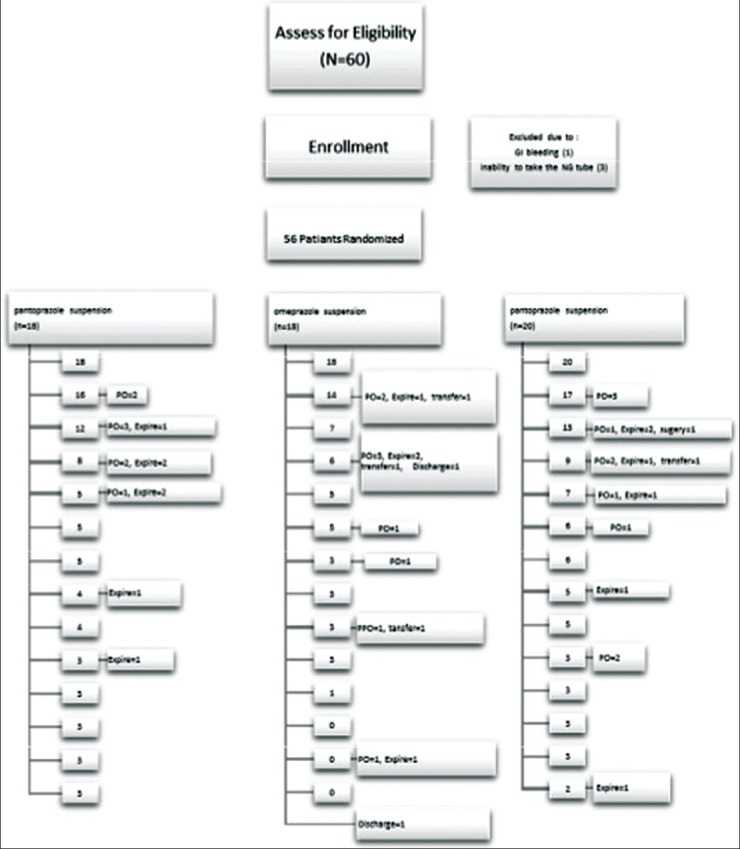
Materials and methods: This was a randomized single-blind-study. Patients of ≥ 16 years of age with a nasogastric tube, who required mechanical ventilation for ≥ 48 h, were eligible for inclusion. The excluded patients were those with active gastrointestinal bleeding, known allergy to omeprazole and pantoprazole and those intolerant to the nasogastric tube. Fifty-six patients were randomized to treatment with omeprazole suspension 2 mg/ml (40 mg every day), pantoprazole suspension 2 mg/ml (40 mg every day) and IV pantoprazole (40 mg every day) for up to 14 days. Gastric aspirates were sampled before and 1-2.5 h after the drug administration for the pH measurement using an external pH meter. Data were analyzed using SPSS (version 21.0).
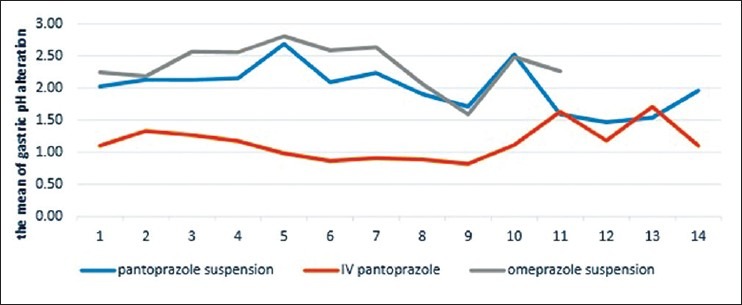
Results: In this study, 56 critically ill-patients (39 male, 17 female, mean age: 61.5 ± 15.65 years) were followed for the control of the gastric pH. On each of the 14 trial days the mean of the gastric pH alteration was significantly higher in omeprazole and pantoprazole suspension-treated patients than in IV pantoprazole-treated patients (P < 0.001).
Conclusion: Omeprazole and pantoprazole oral suspension are more effective than IV pantoprazole in increasing the gastric pH.
Keywords: Gastrointestinal bleeding; omeprazole; pantoprazole; stress-related mucosal disease; suspension.
Conflict of interest statement
Figures
References
-
- Metz DC. Potential uses of intravenous proton pump inhibitors to control gastric acid secretion. Digestion. 2000;62:73–81. - PubMed
-
- Fennerty MB. Pathophysiology of the upper gastrointestinal tract in the critically ill patient: Rationale for the therapeutic benefits of acid suppression. Crit Care Med. 2002;30:S351–5. - PubMed
-
- Steinberg KP. Stress-related mucosal disease in the critically ill patient: Risk factors and strategies to prevent stress-related bleeding in the intensive care unit. Crit Care Med. 2002;30:S362–4. - PubMed
-
- Yasue N, Guth PH. Role of exogenous acid and retransfusion in hemorrhagic shock-induced gastric lesions in the rat. Gastroenterology. 1988;94:1135–43. - PubMed
LinkOut - more resources
Full Text Sources
Other Literature Sources