


Long-term efficacy of intensive cycle ergometer exercise training program for advanced COPD patients
- PMID: 25624757
- PMCID: PMC4296915
- DOI: 10.2147/COPD.S73398
Long-term efficacy of intensive cycle ergometer exercise training program for advanced COPD patients
Abstract
Background: Exercise training has been incorporated into the international guidelines for the treatment of chronic obstructive pulmonary disease (COPD). However, the long-term efficacy of the training program for patients with advanced COPD has never been evaluated in Thailand.
Purpose: To determine the long-term efficacy of intensive cycle ergometer exercise program on various clinical parameters of patients with advanced COPD.
Materials and methods: The patients with advanced COPD were separated into two groups: the intensive ergometer exercise program group and the control group. The clinical parameters of all the patients were assessed at baseline, every month for the first 3 months, and then every 3 months until they had completed the 24-month follow-up. Mann-Whitney U test was used to compare baseline mean differences between the groups. Repeated measure analysis was applied to determine the progress in all parameters during the entire follow-up period. Mean incase imputation method was applied to estimate the parameters of dropout cases.
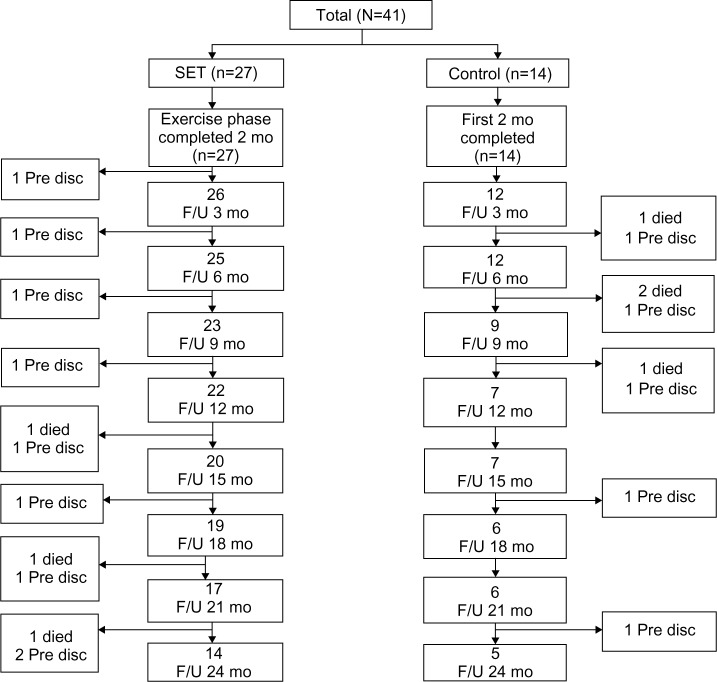
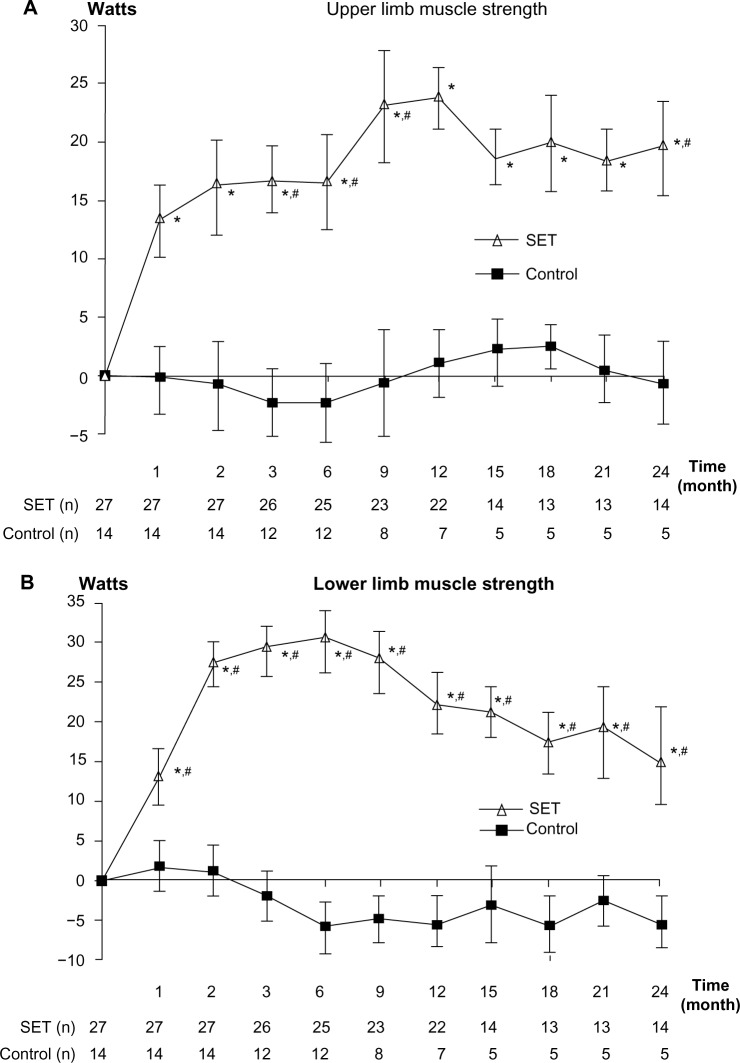
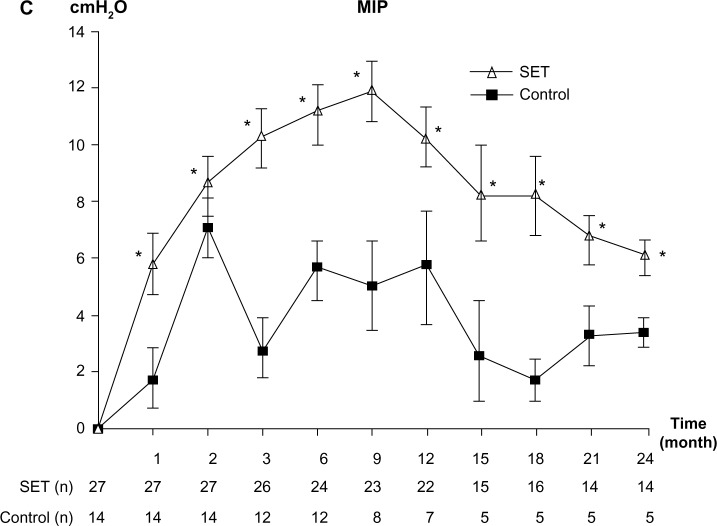
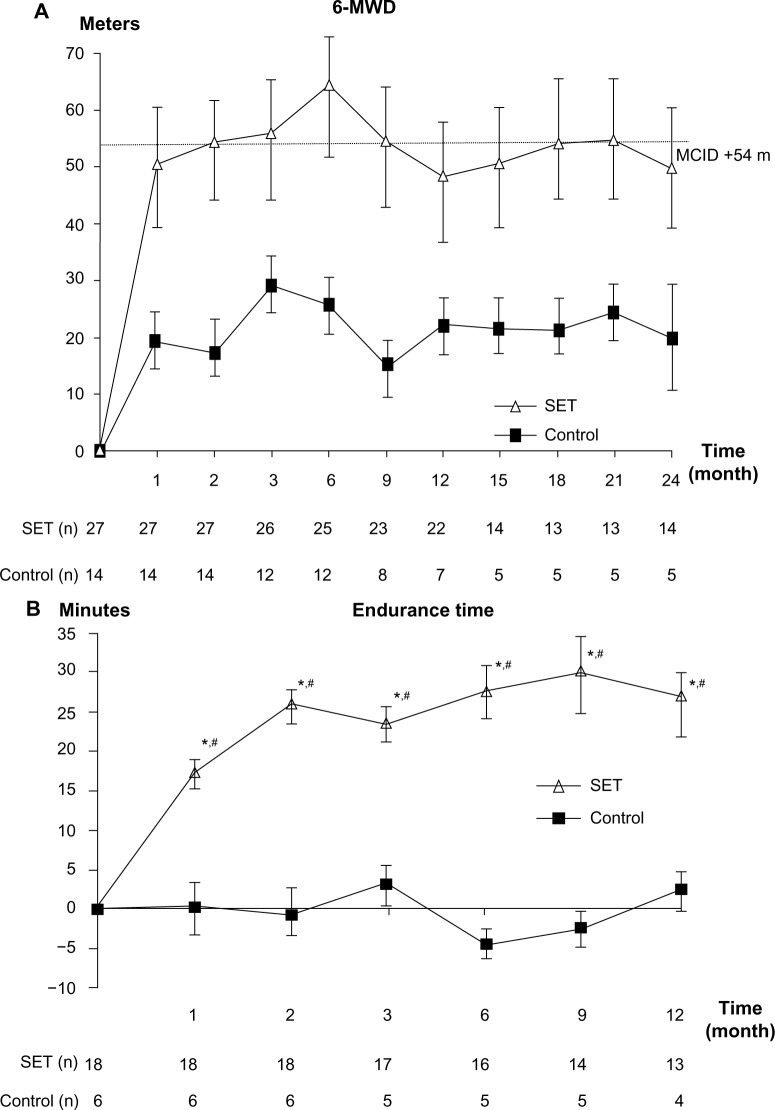
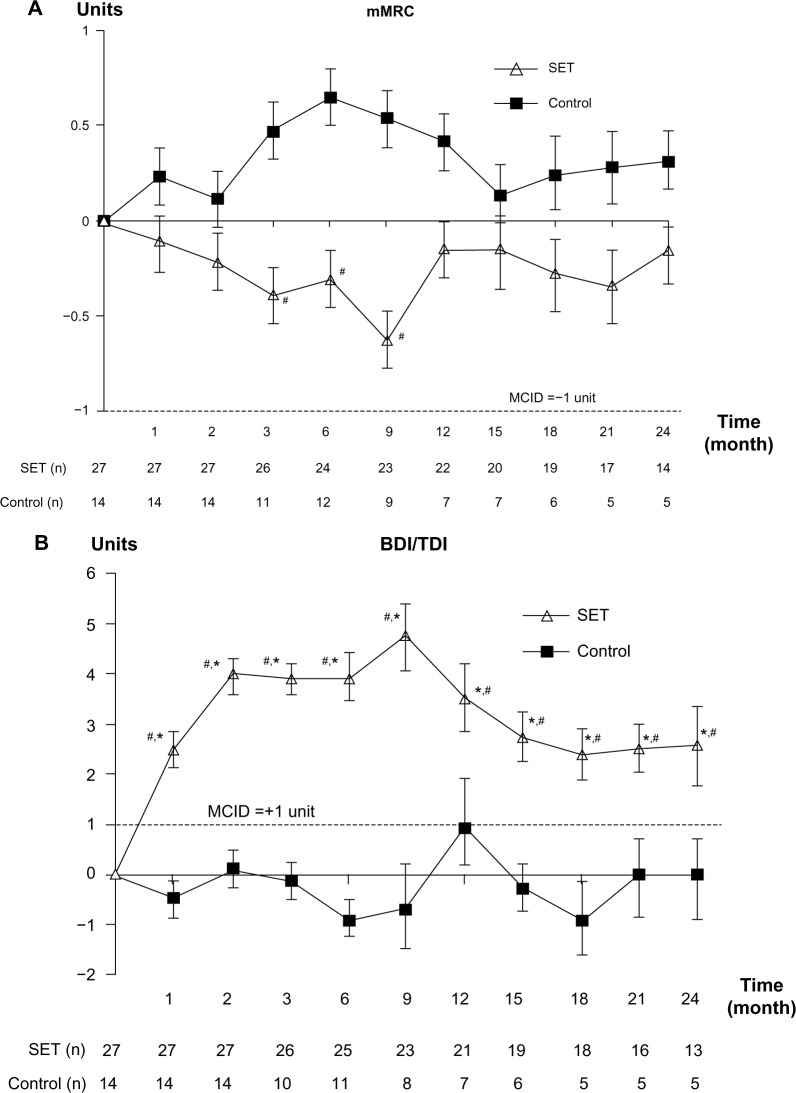
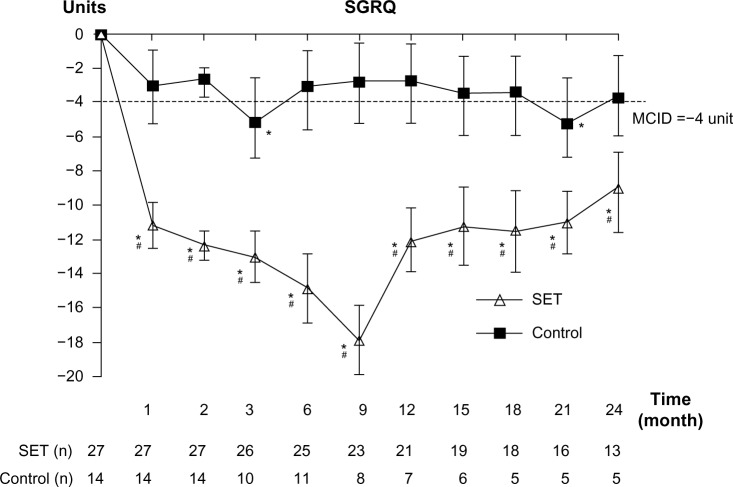
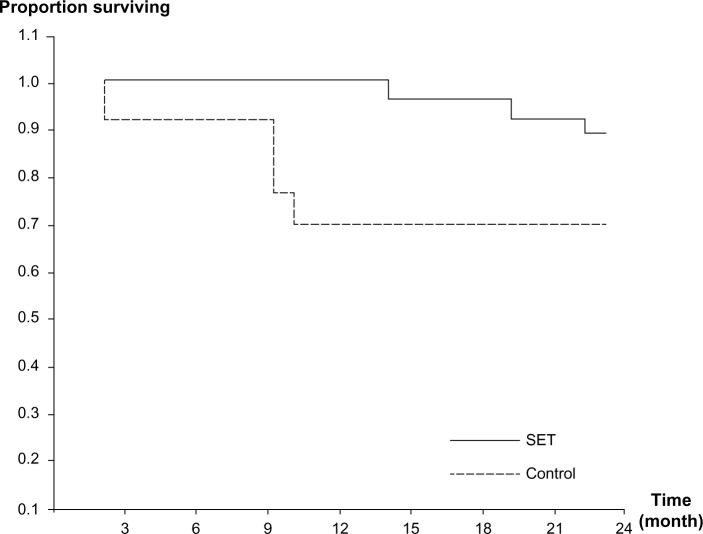
Results: A total of 41 patients were enrolled: 27 in the intensive ergometer exercise program group and 14 in the control group. The intensive cycle ergometer exercise program group showed statistically significant improvements in muscle strength (from month 1 till the end of the study, month 24), endurance time (from month 1 till the end of measurement, month 12) and clinically significant improvements in 6-minute walk distance (from month 2 until month 9), dyspnea severity by transitional dyspnea index (from month 1 till the end of the study, month 24), and quality of life (from month 1 till the end of the study, month 24). There was no significant difference in survival rates between the groups.
Conclusion: The intensive ergometer exercise training program revealed meaningful long-term improvements in various clinical parameters for up to 2 years. These promising results should encourage health care professionals to promote exercise training for patients with advanced COPD who have limited daily activities despite optimal medication control.
Keywords: chronic obstructive pulmonary disease; ergometer training; physical endurance; pulmonary rehabilitation; strength training.
Figures
References
-
- Ries AL. Position paper of the American Association of Cardiovascular and Pulmonary Rehabilitation: scientific basis of pulmonary rehabilitation. J Cardiopulm Rehabil. 1990;10:418–441.
-
- Pulmonary rehabilitation: joint ACCP/AACVPR evidence-based guidelines ACCP/AACVPR pulmonary rehabilitation guidelines panel. American College of Chest Physicians. American Association of Cardiovascular and Pulmonary Rehabilitation. Chest. 2007;131:4–42. - PubMed
-
- Lacasse Y, Brosseau L, Milne S, et al. Pulmonary rehabilitation for chronic obstructive pulmonary disease. Cochrane Database Syst Rev. 2002;3:CD003793. - PubMed
-
- Troosters T, Grosselink R, Decramer M. Short and long-term effects of outpatient rehabilitation in patients with chronic obstructive pulmonary disease: a randomized trial. Am J Med. 2000;109:207–212. - PubMed
Publication types
MeSH terms
LinkOut - more resources
Full Text Sources
Medical
